Persona Runner: Master Transformation in This Endless Arcade Sprint
What Kind of Game Is This?
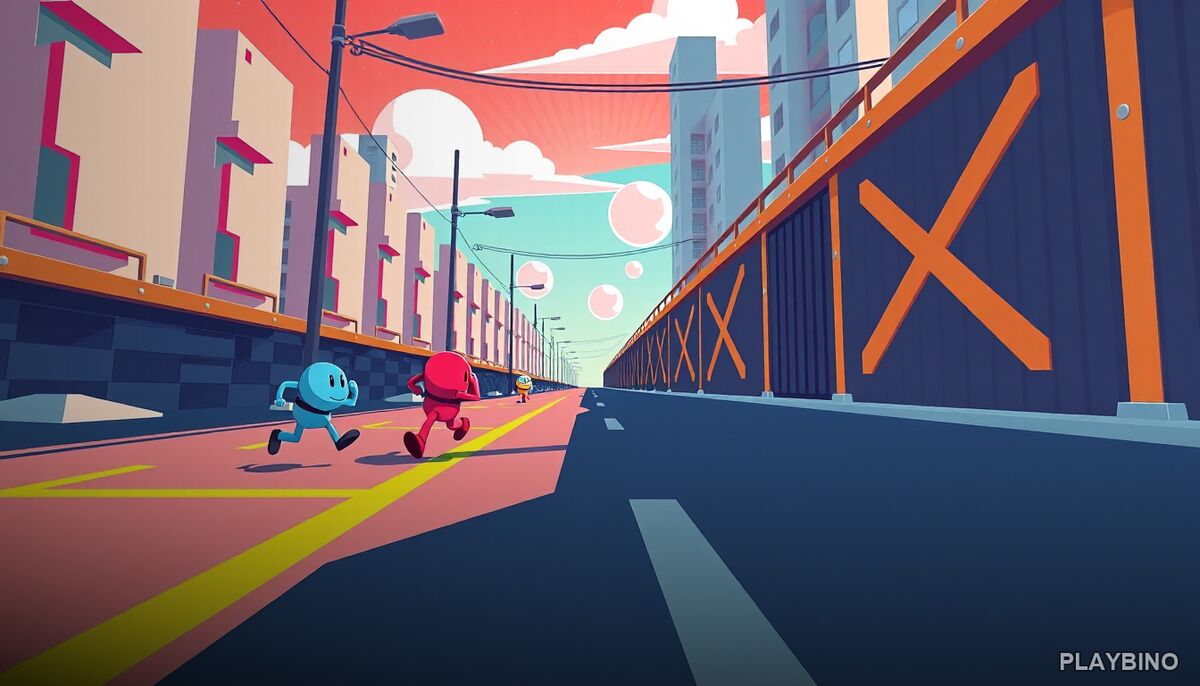
Persona Runner drops you into a stylized urban environment and asks one simple question: how long can you last? The answer depends less on reflexes alone and more on your ability to read the environment and switch between character forms at the right moment. This is an endless runner built around transformation mechanics, where each persona you carry changes how you move, jump, and interact with the obstacles in your path. Try the full run and see how far your instincts take you before the city catches up.
The Persona System Explained
The core mechanic that separates this game from a standard arcade runner is the persona switch. Each form you can take has a distinct movement profile. One might give you a burst of speed to outrun a collapsing section of rooftop. Another might let you phase through a barrier or clear a wide gap that a normal jump cannot reach.
Reading the Environment
The game communicates which persona you need through visual cues. Bold color contrasts and glowing elements highlight hazards and pathways, giving you a fraction of a second to decide which form fits the situation. Learning to read these signals quickly is what separates early runs from deep ones.
Chaining Transformations
As the run progresses, obstacle arrangements become layered. A single switch is rarely enough. You might need to shift into a fast form, clear a gap, then immediately switch again to handle what comes next. The rhythm of chaining transformations smoothly is where the real skill ceiling lives.
Movement and Controls
The controls stay tight and responsive. Sharp turns, sudden drops, and narrow rooftop paths demand precise timing on jumps and switches. Button mashing does not work here. The game actively punishes it by placing obstacles that require specific abilities at specific moments. Once you internalize the control feel, runs start to develop a flow state quality where decisions happen almost automatically.
Obstacle Design and Progression
Early sections introduce hazards at a manageable pace, giving you time to learn what each persona handles best. The further you push, the more complex the arrangements become. Obstacles begin to overlap, requiring you to plan two or three moves ahead rather than reacting to one thing at a time. This escalation keeps the arcade loop engaging without feeling unfair, since the patterns are learnable with enough attempts.
- Speed-based hazards that require a fast persona to outrun
- Barriers and gaps that only specific forms can clear
- Narrow pathways demanding precise jump timing
- Layered obstacle sequences that punish single-form play
Strategy for Longer Runs
The most consistent approach to improving your distance is to focus on one persona pairing at a time. Pick two forms and practice switching between them until the timing feels natural. Then introduce a third. Trying to master all personas at once leads to hesitation, and hesitation ends runs quickly. Prioritize learning the visual triggers for each hazard type before worrying about maximizing speed.
Robot Runner Fight takes a different structural approach to the runner format — that arcade runner experience is worth comparing if you want to see how combat layers into the same genre framework.
Who Will Enjoy Persona Runner
This game suits players who like arcade action with a layer of decision-making underneath. The endless runner format keeps sessions short and replayable, while the persona system adds enough complexity to make improvement feel meaningful. If you enjoy games where mastering a mechanic produces a visible payoff in performance, PlayBino has this one positioned well as a quick but deep browser challenge. The visual style is sharp, the pacing is aggressive, and the transformation loop stays satisfying well past the first few runs.
"