Prehistoric Jumper: Survive the Stone Age One Leap at a Time
What Kind of Game Is This?
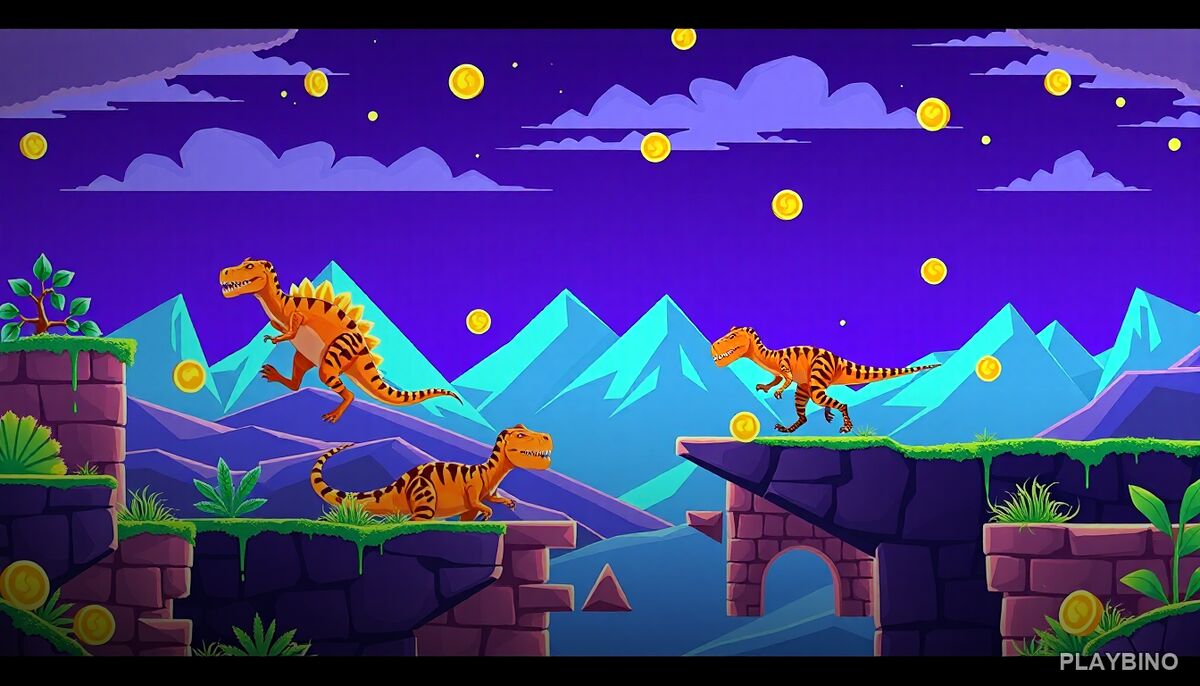
Prehistoric Jumper drops you into a pixelated Stone Age world where the ground is never safe for long. Crumbling platforms, hungry dinosaurs, and widening gaps make every second feel urgent. It sits firmly in the endless runner and arcade tradition — one-button input, escalating difficulty, and the constant pull of one more attempt. Play it directly in your browser and the simplicity hits immediately, but the depth reveals itself run by run.
The Jump Mechanic and Why It Matters
The entire game revolves around a single action: jumping. That sounds straightforward until platforms start shrinking and hazards stack on top of each other. The one-button control scheme means the challenge lives entirely in your timing. Jump too early and you overshoot. Too late and you fall into a gap or land on a dinosaur.
Reading the Rhythm
Prehistoric Jumper rewards players who stop reacting and start anticipating. Obstacle patterns repeat with variations, so after a few runs you begin to recognize sequences. That recognition is where the real skill develops — not raw reflexes, but the ability to read what's coming and pre-time your leap half a second before it's needed.
Platform Shrinkage and Hazard Stacking
Later levels introduce platforms that are barely wide enough to land on, combined with dinosaurs positioned right at the edge. These moments demand precision that pure button-mashing cannot solve. Slowing your mental pace while the visual pace accelerates is the key adjustment most players need to make.
Ancient Artifacts and Character Unlocks
Scattered across each run are ancient artifacts — collectible relics that reward risky detours off the main path. Grabbing them isn't just cosmetic. Accumulating enough artifacts unlocks additional prehistoric characters, each with slightly different jumping height and movement speed. These differences are subtle but meaningful at higher difficulty levels where a fraction more height can clear a gap that otherwise ends your run.
- Artifacts reward exploration and off-path jumps
- Unlockable characters offer varied jump height and speed
- Pixel art style keeps visuals clean and readable during fast sequences
- Controls remain responsive even as obstacle density increases
Survival Strategy
Surviving longer runs in this kind of arcade game comes down to a few consistent habits. First, prioritize safe landings over artifact collection early in a run — getting a feel for the current obstacle rhythm matters more than bonus items. Second, treat each death as information. If the same gap keeps ending your run, the game is telling you to adjust your jump timing slightly earlier.
As the run extends, resist the urge to speed up mentally. The game accelerates visually, but your decision window doesn't shrink as fast as it feels. Staying calm and trusting the rhythm you've built is what separates longer runs from short ones.
Who Plays This and Why They Come Back
Prehistoric Jumper fits naturally into short-session gaming. A single run takes one to three minutes, which makes it easy to pick up between other tasks. The arcade loop — run, fail, improve, retry — is tight and satisfying. The pixel art aesthetic adds a nostalgic texture without slowing anything down.
Players who enjoy action-arcade challenges with a clear skill curve will find the progression here genuinely rewarding. Eggstreme Eggscape follows a similar one-more-run structure, and that arcade experience is worth a look if quick reflex-based gameplay is what you're after.
Getting the Most Out of Each Run
PlayBino hosts the game with no download required, so starting a new run takes seconds. Use early runs to map obstacle patterns rather than chase high scores. Once you recognize two or three repeating sequences, your survival rate climbs quickly. Focus on one character until you understand the jump physics fully before switching to an unlocked variant — the subtle stat differences become more useful once the base mechanics feel natural.