Prison Escape Online: Jailbreak Puzzle Logic Guide
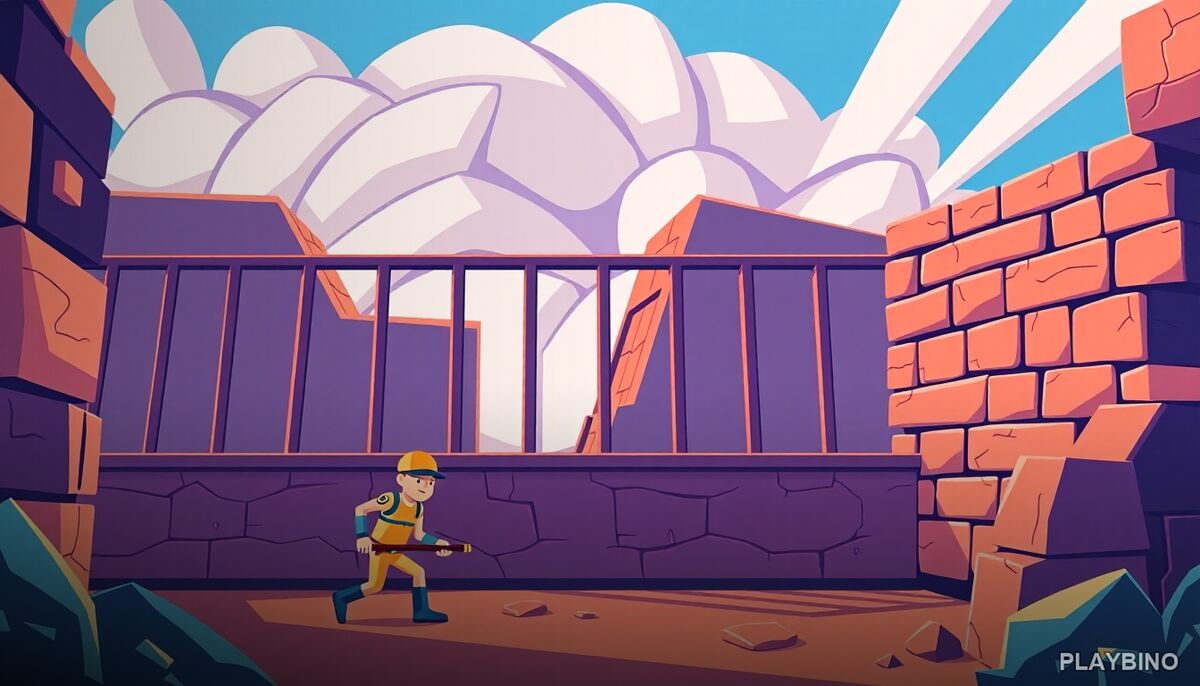
The Setup
Most puzzle games ask you to move blocks or match tiles. Prison Escape Online takes a different angle — you play as a stickman trying to break out of increasingly tricky jailbreak scenarios, and every wrong decision brings a guard running. The scenarios are short but dense with choices, and the logic behind each one rewards careful thinking over button-mashing. Try the full challenge and see how many scenarios you can clear on the first attempt.
How the Decision System Works
Each scenario presents a frozen moment with multiple interactive elements — objects, characters, doors, and environmental details. You tap or click on things to trigger actions, but the game doesn't tell you which actions are safe. Choosing the wrong object at the wrong moment alerts a guard and resets the scenario immediately.
This creates a logic puzzle structure built around elimination and observation. You read the scene, form a hypothesis about what sequence of actions leads to escape, and test it. When something fails, the failure itself is informative — it tells you what not to do next time, narrowing the solution space with each attempt.
Reading the Scene
Before clicking anything, scan the full screen. Guards have patrol patterns or line-of-sight cues. Objects that seem irrelevant often become critical once you understand the sequence. The game rewards players who pause and think before acting rather than clicking through options randomly.
Trial and Error as a Mechanic
The design intentionally uses failure as a teaching tool. Some scenarios have two or three plausible-looking paths, but only one correct sequence. Getting caught isn't punishing in terms of progress — it's part of the puzzle logic itself. Each failed attempt chips away at the uncertainty until the correct path becomes clear.
Scenario Variety and Replayability
What keeps the game engaging across multiple scenarios is that no single strategy carries over. One scenario might require you to distract a guard using an object, while the next asks you to time a movement through a doorway or interact with a character to trigger a chain reaction. The brain-puzzle structure shifts enough between stages that players can't rely on pattern recognition alone.
- Each scenario has a distinct layout and set of interactive elements
- Guard behaviors and obstacles change between levels
- Solutions often involve two or three steps in a specific order
- The stickman art style keeps the tone light even when the logic gets tricky
Why the Stickman Style Works Here
The visual presentation is deliberately simple. Stickman characters and flat environments strip away visual noise, which actually helps with the puzzle logic. There's nothing decorative to distract you — every object on screen is either part of the solution or a deliberate red herring. The lighthearted art also softens the frustration of repeated failures, making the experience feel more playful than punishing.
Who This Game Suits
If you enjoy logic puzzles that reward observation over reflexes, this is a strong fit. The scenarios are short enough to replay quickly, which makes it easy to pick up for a few minutes and still feel like you're making progress. Players who like escape room mechanics or choose-your-own-path puzzles will find the format familiar and satisfying.
Save My Girl follows a similar interactive decision-based structure — that puzzle experience is worth exploring if you enjoy scenarios where every choice carries a consequence.
Strategy Tips for Tougher Scenarios
As scenarios grow more complex, a few habits help. Always interact with passive objects before approaching characters or guards — environmental interactions rarely trigger a fail state on their own. When a scenario resets, try a completely different starting action rather than repeating the same sequence. And watch for timing cues: some escapes depend on acting during a specific window rather than just choosing the right object.
PlayBino hosts the game in the browser with no download needed, so you can jump into a scenario and back out quickly. The short-session format makes it easy to return to a stubborn puzzle without losing momentum.