Real Driving Simulator: Handling, Physics, and What Makes It Click
What Kind of Game Is This?
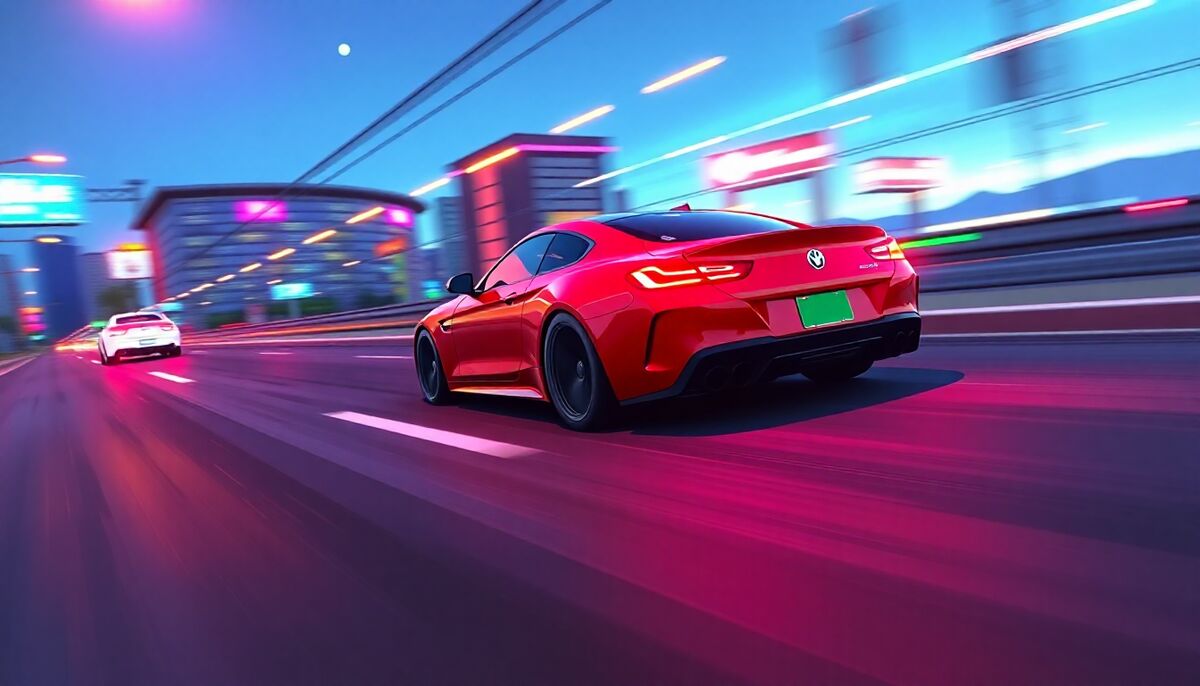
Real Driving Simulator sits in an interesting space between casual racing and genuine simulation. It is not a pure arcade racer where you hold a direction and tap boost. The physics respond to how you enter corners, when you brake, and how aggressively you accelerate out of a turn. That responsiveness is what separates it from most browser-based car games. You can play it directly in your browser on PlayBino without any download or setup.
Environments and Conditions
The game splits its driving across two distinct settings: city streets filled with moving traffic and professional racing circuits where lap times and clean lines matter. Each environment demands a different mindset.
City Driving
Urban sections require constant attention. Traffic moves unpredictably, intersections create split-second decisions, and the roads are narrower than open tracks. Patience matters here more than raw speed. Weaving through downtown districts without clipping other vehicles is a skill in itself.
Circuit Racing
On professional tracks, the focus shifts to consistency. Braking points become critical — brake too early and you lose time, too late and you run wide. Cornering technique and acceleration timing determine whether a lap improves or stays flat. Weather changes and time-of-day variations mean the same circuit can feel different across sessions, which keeps the challenge from going stale.
Vehicle Selection and Handling
Each car in the roster handles differently. Some are more forgiving on corner entry, while others demand precise inputs. Cockpit views add a layer of immersion — engine sounds and visual speed cues help calibrate how fast you are actually moving, which matters when approaching a tight bend at high speed. Switching vehicles is not just cosmetic; it genuinely changes how you approach each track or city route.
Learning the Physics
The simulation leans toward accessibility without stripping out depth. New players can get moving quickly, but improving lap times or surviving city traffic without incidents requires learning the underlying physics. A few things worth understanding early:
- Braking distance increases significantly at higher speeds — start braking earlier than feels natural until you know each corner.
- Cornering rewards smooth steering inputs rather than sharp corrections mid-turn.
- Acceleration timing out of a corner affects your top speed on the following straight.
- Weather conditions reduce grip, so the same braking point that works in dry conditions may not hold when the road is wet.
Who Plays This and Why
Players who enjoy skill-based single-player games and want something more deliberate than a typical arcade racer will find a lot to work with here. The progressive difficulty means early sessions are manageable, but mastering the faster circuits or navigating heavy city traffic cleanly takes real effort. The 1-player format keeps the focus entirely on personal improvement — beating your own lap times, reducing traffic incidents, and learning each vehicle's limits.
If city driving in a more focused setting sounds appealing, this look at Mustang City Driver 2024 covers a comparable urban driving experience worth considering alongside this one.
Driving Feel and Immersion
The combination of engine audio, cockpit perspective, and physics feedback creates a driving environment that feels grounded. Speed reads as speed. A bad corner entry has consequences. That feedback loop — input, response, result — is what makes the simulation side of the game work. It rewards players who pay attention and adjust, rather than those who simply repeat the same inputs and hope for a better outcome.