RealEstate Giant: Property Investment Strategy Guide
What Kind of Game Is This?
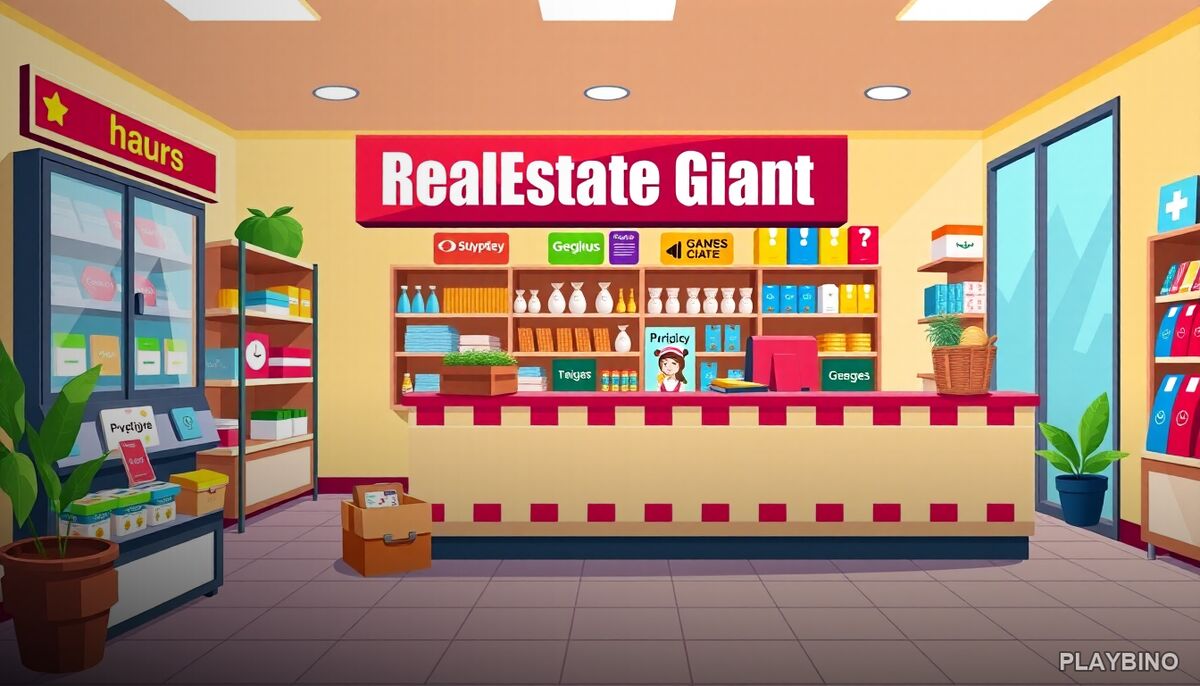
RealEstate Giant is a strategy and simulation game built around one core loop: buy properties at the right moment, hold them through market shifts, and sell when conditions peak. It sits comfortably in the idle and simulation space, meaning progress continues as you observe and react rather than constantly clicking. The game rewards patience and calculated thinking over fast reflexes. Play it directly in your browser and you'll quickly see how much depth a property market simulation can carry.
Reading the Market
The central mechanic is price movement. Buildings and neighborhoods fluctuate in value, and the player's job is to interpret those signals before committing capital. Prices cycle through dips and peaks, and the window for a profitable buy is often narrow. Waiting too long means paying more. Moving too early means missing a better entry point.
Spotting the Dip
A dip is not just a lower price — it's a lower price with signs of recovery ahead. Learning to distinguish a genuine dip from a continued decline is one of the first real skills the game teaches. Watch multiple properties at once rather than fixating on one, because opportunities often appear in different neighborhoods at different times.
Timing the Sale
Holding too long is just as costly as buying at the wrong moment. Prices that climb will eventually plateau or reverse. Recognizing when a peak is forming and acting before the drop takes discipline, especially when the numbers look tempting to hold further.
Capital Management Across Multiple Deals
One of the more demanding aspects of the game is managing available funds across several potential investments simultaneously. Early on, capital is limited, so every decision carries real weight. Spreading too thin leaves you unable to act on the best opportunities. Concentrating too heavily on one property creates unnecessary risk if the market turns.
As the portfolio grows, the stakes scale accordingly. A larger bankroll opens more doors but also means larger potential losses if the market moves against you. The simulation layer keeps this feeling grounded — each transaction genuinely changes your financial position rather than just incrementing a score.
Idle Progression and Portfolio Expansion
The idle element means the market keeps moving even during quieter moments. This design choice suits the property investment theme well. Real markets don't pause, and neither does this one. Returning after a short break to find prices have shifted creates a sense of ongoing consequence that pure idle games sometimes lack.
Portfolio expansion is the long-term goal. More properties mean more income streams but also more complexity in tracking which assets are performing and which are dragging. Managing a growing portfolio without losing sight of the fundamentals — buy low, sell high, preserve capital — is where the strategy depth really opens up.
Who Plays This Well
Players who enjoy economic simulations, idle games with meaningful decisions, and strategy titles that reward observation over reaction will find a lot to engage with here. The game doesn't demand constant input, but it does reward players who check in consistently and act on what they see rather than guessing.
Real Estate Sim — a comparable simulation on PlayBino — explores similar property themes with its own mechanics, and players who enjoy one often find the other worth exploring as a different angle on the same concept.
Strategy Tips to Build Wealth Faster
- Never spend your entire capital on one property — keep reserves for unexpected opportunities.
- Watch multiple neighborhoods simultaneously rather than tracking a single building.
- Sell before the peak, not after — waiting for the absolute top usually costs more than it gains.
- Reinvest profits quickly to compound growth across the portfolio.
- Prioritize properties showing early recovery signals over those already climbing steeply.
The game's market-driven design means no two sessions play out identically. Conditions shift, priorities change, and the decisions that worked last time may not work the same way again. That variability is what keeps the strategy layer fresh across multiple playthroughs.
"