Red And Blue Stickman Spy Puzzles: Archery Strategy and Tactical Shooting
What Kind of Game Is This?
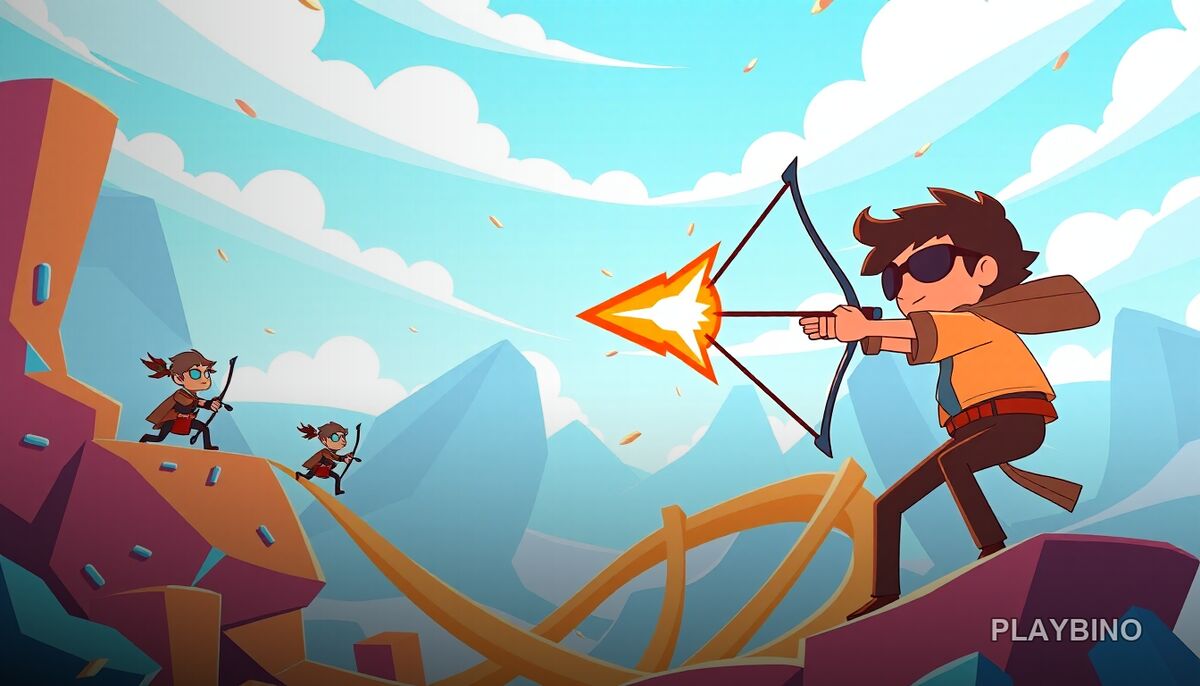
Not every puzzle game hands you a sword or a magic wand. This one gives you a bow, a spy mission, and a room full of red enemies who need to be eliminated before you move on. Red And Blue Stickman Spy Puzzles blends archery mechanics with tactical puzzle logic, asking you to think carefully about angles, timing, and shot order before you fire a single arrow.
The spy framing keeps things tense. You are not just shooting at targets — you are clearing threat zones, navigating obstacle-filled rooms, and figuring out the most efficient path to eliminating every red adversary on screen. The stickman art style keeps the visuals clean, which actually helps when you need to focus on geometry and positioning.
Archery Mechanics and Shot Control
The core of every level is the shot itself. You adjust the angle and power of each arrow before releasing, and both variables matter. A slight change in trajectory can mean the difference between a clean hit and a wasted shot that bounces off a wall harmlessly.
Bouncing and Ricochet Shots
Walls are not just obstacles here — they are tools. Many levels are designed specifically around the idea that a direct shot is impossible or inefficient. You will need to bounce arrows off surfaces, using the geometry of the room to reach enemies tucked behind cover. Finding the right ricochet angle is often the central puzzle of a given stage.
Power and Distance
Pulling back too hard sends an arrow flying past its target. Too little power and it drops short. Learning to calibrate both angle and force simultaneously is the main skill this game develops. Early levels teach the basics gently, but later stages demand much more precise control.
Puzzle Logic and Level Design
What separates this from a straightforward shooting game is the puzzle layer underneath the action. Each room is a scenario with a specific solution — or sometimes a few possible solutions — and finding the right one requires observation before action.
Enemy placement matters a great deal. Some adversaries are shielded by barriers, others are grouped in ways that invite multi-target shots, and a few are positioned so that only a specific bounce route will reach them. The sequence of shots also counts. Taking out enemies in the wrong order can block your path to others or create new obstacles.
- Adjust arrow angle and power before each shot
- Use walls and barriers for ricochet opportunities
- Plan shot sequences to avoid blocking your own routes
- Account for enemy positioning and cover when choosing angles
- Difficulty increases with each new level layout
Strategy Tips for Harder Levels
Once the level count climbs, improvising becomes unreliable. A few habits that help:
Scan the room before shooting. Look at every enemy position and every wall surface before committing to a shot. Most failed attempts come from rushing the first obvious angle.
Prioritize exposed targets first. Clearing enemies in the open before tackling shielded ones keeps your options open and reduces the chance of accidental blocks.
Use barriers as aiming guides. Walls that run at specific angles can act as predictable deflection points. Once you identify a reliable bounce surface, you can use it repeatedly across different shot attempts.
Patience over speed. This is a single-player strategy puzzle, not a reflex test. Taking extra time to visualize a shot path before releasing is always worth it.
Who Plays This Kind of Game
If you enjoy puzzle games that reward spatial thinking and careful planning over fast reactions, this fits naturally into that category. The spy theme adds a bit of narrative tension, but the real satisfaction comes from cracking a difficult room configuration and watching every enemy fall in sequence.
Players who have spent time with physics-based puzzles or angle-shooting games will feel at home immediately. The challenge scales well, so newcomers are not overwhelmed early while experienced puzzle fans still find genuine difficulty in later stages. For a different angle on strategic puzzle gameplay, Protect The Thief offers another browser puzzle worth exploring on PlayBino.