RedPool Legend 2 Player: Cooperative Platforming That Demands Real Teamwork
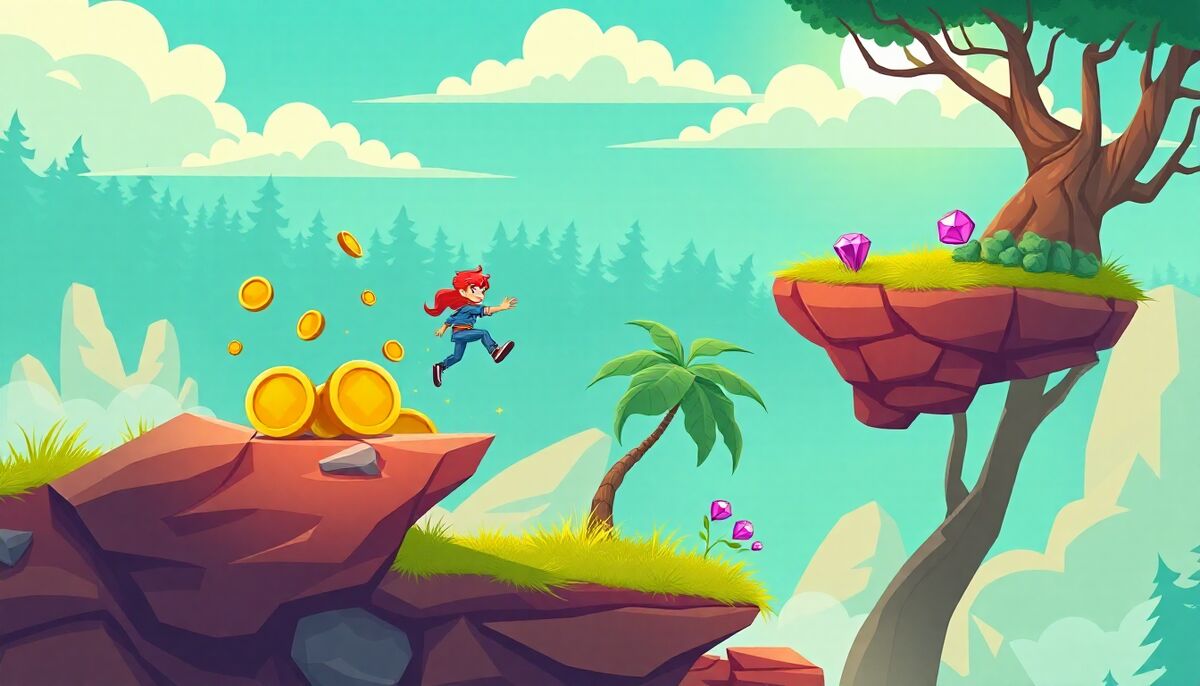
What Kind of Game Is This?
Most browser platformers are solo experiences. RedPool Legend 2 Player flips that entirely. Two players share the screen, each controlling a separate character — one red, one yellow — and neither can succeed without the other. The puzzle and arcade elements blend together in a way that makes every stage feel like a small coordination problem rather than a simple obstacle course.
If you want to jump straight in, the full cooperative experience is available on PlayBino. It runs directly in the browser with no setup required.
The Core Mechanic: Two Characters, One Goal
Each level places both characters inside the same environment, but the challenge is rarely about raw platforming skill. The real work is figuring out how both players need to position themselves to unlock progress. Coins are scattered across each stage and must be collected, but the most interesting element is the hidden exit door.
The exit stays invisible until both characters reach the correct positions simultaneously. That single mechanic changes everything. It means players cannot just rush through a level independently — they have to communicate, wait, and move in sync to reveal the path forward.
Split-Second Timing
Several obstacles require both characters to act at exactly the same moment. A trap that one player triggers might only be safe to cross if the other player is already in position. This creates natural moments of tension where one wrong move sends both back to the start.
Positioning Puzzles
Beyond timing, some sections are pure positioning logic. Both players need to stand in specific spots, activate switches, or hold platforms steady while the other crosses. The puzzle layer sits on top of the platforming, and that combination is what separates this from a standard arcade runner.
Controls and Setup
The game is designed for two people sharing one keyboard or device. Each player controls their character independently using separate key sets, which means physical proximity matters. Playing side by side with someone you can actually talk to makes a significant difference — shouting across a room is not ideal when split-second timing is involved.
The controls themselves are straightforward: move, jump, and interact. The complexity comes entirely from the level design and the need for coordination, not from complicated inputs.
Why the Difficulty Scales Naturally
Early stages introduce the mechanics gently. Both characters can move around, collect coins, and get a feel for how the hidden exit works. As levels progress, the traps become more aggressive, the timing windows tighten, and the positioning puzzles require more lateral thinking.
- Coin collection adds a secondary objective beyond just reaching the exit
- Trap placement forces players to plan routes before moving
- Hidden exit mechanic rewards players who explore and communicate
- Increasing stage complexity keeps the challenge growing without changing the core rules
That progression feels fair. The game never introduces a rule mid-stage that was not hinted at earlier, which makes failures feel like coordination problems rather than unfair design.
Who This Works Best For
RedPool Legend 2 Player suits players who enjoy skill-based puzzle games and want something that genuinely requires a second person. It is not a game where one skilled player can carry the other — both need to engage with the logic of each stage. That makes it a strong pick for couch co-op sessions where communication and light competition mix together.
Players who enjoy this kind of two-player puzzle format might also find value in another cooperative browser challenge built around the same shared-screen concept. The Silly Team 2 Player experience takes a different tone but shares the same fundamental reliance on teamwork.
The Hidden Exit as a Design Choice
It is worth focusing on the invisible exit mechanic because it defines the game's identity. In most platformers, the goal is visible. You can see the flag, the door, the finish line. Here, the exit only appears when both players are correctly positioned, which means every level ends with a moment of discovery rather than a straightforward sprint to the finish.
That single design decision makes the game feel more like a puzzle than a platformer, even though the movement and obstacle avoidance are very much arcade in nature. The tags — 2 Player, Puzzle, Arcade, Skill — all apply simultaneously, and that overlap is what makes the format work.