Reef Color Challenge: Match, Clear, and Survive the Stack
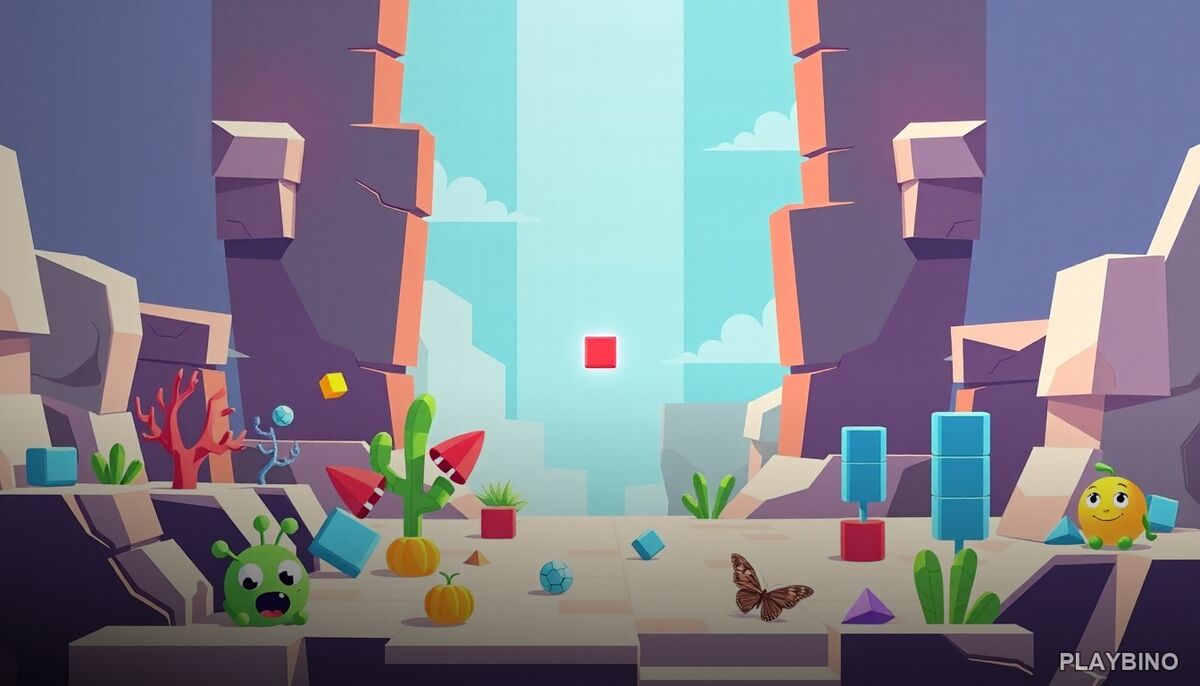
What Kind of Game Is This?
Reef Color Challenge sits at the crossroads of match-3 logic and arcade reflex gaming. The setting is a colorful underwater world, but the pressure is very real. A stack of colored blocks grows from below, and you control a single floating block above it, shifting left and right as its color cycles automatically. Your job is to drop it onto a matching color, clear rows, and keep the stack from reaching the top. Play it directly in your browser and the concept clicks within seconds — but staying alive past the early rounds takes genuine focus.
How the Matching Mechanic Works
The core loop is simple on paper. Your hovering block changes color on its own cycle, and the stack below holds a mix of colors arranged in rows. When you position your block over a matching color and drop it, that row clears and the stack shifts. The satisfying part is that a successful match doesn't just remove one block — it triggers a cascade that reshapes the entire column, creating new alignment opportunities.
What makes this more than a casual tap game is the timing layer. You can't just wait for the right color and drop — the stack keeps rising. Every second you spend repositioning is a second the pile climbs higher. The color cycling on your block adds a second timing dimension, so you're managing two rhythms at once: where to be and when to drop.
Clearing Rows vs. Buying Time
Early on, clearing any row feels like progress. Later, you start to see that some clears set up chain opportunities while others leave awkward color clusters that are harder to resolve. Choosing which row to target — rather than just reacting to whatever color appears — is where the real puzzle thinking begins.
Stack Pressure and Pacing
The difficulty in Reef Color Challenge isn't a sudden spike — it builds steadily. The stack rises at a consistent pace, but as you clear rows, the remaining blocks shift and compress, sometimes creating color patterns that are easier to chain and sometimes bunching up problem colors near the top. The game never feels unfair, but it does punish hesitation.
Speed and precision become equally important as the stack grows. Rushing a drop onto the wrong color wastes your position and adds a block rather than removing one. Waiting too long for the perfect color match lets the stack creep dangerously close to the limit. The tension between those two mistakes is what drives the arcade feel.
Visual Design and Underwater Theme
The aquatic aesthetic isn't just decoration. Bright coral colors, clean block shapes, and fluid animations make it easy to read the stack at a glance — which matters when you're making fast decisions. The color palette is distinct enough that matching is never ambiguous, even when the stack gets tall and complex. The underwater framing gives the puzzle a calm visual identity that contrasts nicely with the rising pressure of the gameplay.
Who This Game Suits
- Players who enjoy match-3 puzzles but want more real-time pressure than a turn-based format offers.
- Arcade fans looking for a short session game that rewards pattern recognition.
- Anyone who likes the idea of a simple rule set that reveals hidden depth over repeated runs.
- Browser gamers who want something visually clean and immediately playable without a tutorial wall.
SARUPA is another color-based puzzle on PlayBino that takes a different structural approach — that puzzle experience is worth exploring if the color-logic format appeals to you.
Strategy That Actually Helps
Watch the Cycle, Not Just the Stack
Your block's color cycle is predictable. Once you recognize the pattern, you can start pre-positioning — moving to where you want to be before the right color arrives rather than scrambling after it appears. This small shift in thinking dramatically reduces wasted movement.
Target the Highest Matching Row
When multiple rows contain your current color, prioritize the one closest to the top of the stack. Clearing high rows buys more time than clearing low ones, even if the lower clear looks more satisfying in the moment.
The game rewards players who stay slightly ahead of the stack mentally rather than reacting block by block. A few seconds of forward planning can turn a near-loss into a clean chain of clears.