Resolve Images: A Brain Puzzle Game Built on Pattern Recognition
What the Game Actually Asks You to Do
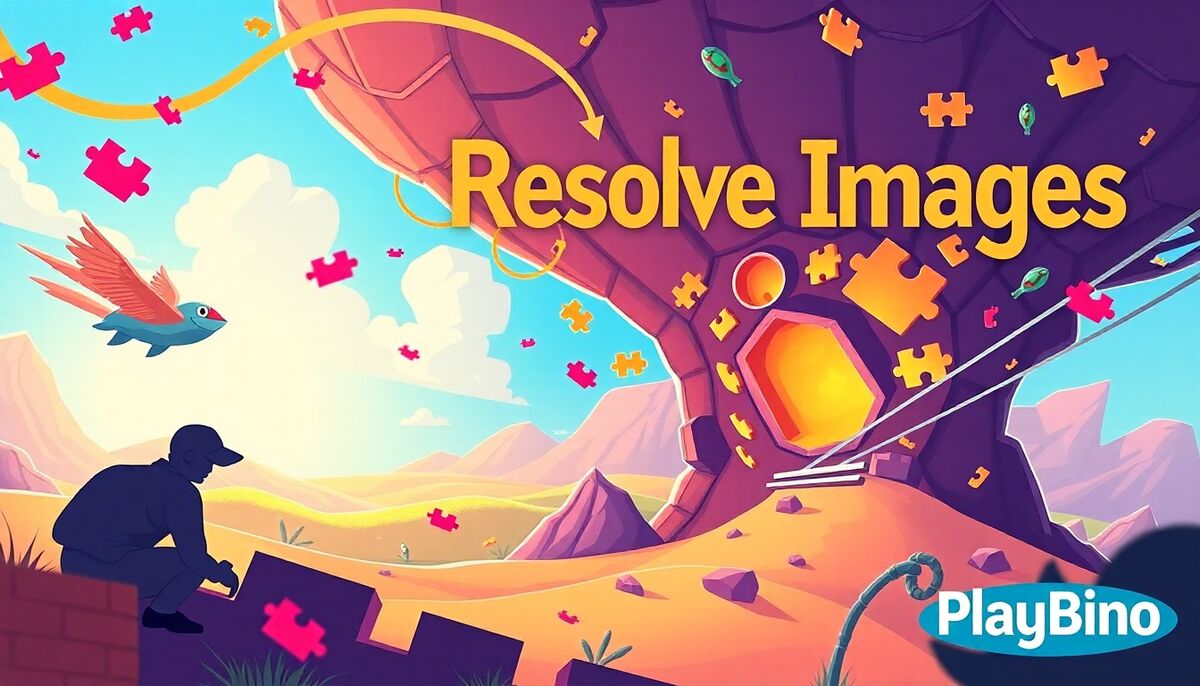
Resolve Images is a logic and brain puzzle game centered on one clear task: take a fragmented image and put it back together. Scattered pieces appear on screen, and you drag each one to its correct position within the frame. The original image is partially visible throughout, giving you just enough reference to orient yourself without making the process trivial. Spatial awareness and careful observation carry you through every stage.
The mechanic is simple to grasp in the first few seconds, but the challenge builds steadily. You can try the full puzzle experience directly in your browser without any setup or download.
How the Difficulty Curve Works
Sixty levels form the backbone of the game, and the progression is deliberate. Early puzzles use simpler images with fewer pieces, letting you build confidence in reading the partial reference and matching shapes. By the midpoint, the images grow more complex and the number of pieces increases, which means a single misplaced fragment can throw off your entire read of the composition.
Early Stages
The opening levels prioritize familiarity. Images tend to have strong visual contrast and clear edges, so positioning pieces feels intuitive. These stages train your eye without demanding precision.
Later Stages
Later puzzles introduce images with subtle color gradients, repeating patterns, or dense detail. Pieces that look similar at a glance may differ in small but critical ways. Patience and methodical comparison become more valuable than speed here.
Pattern Recognition as the Core Skill
Unlike many puzzle games that rely on matching colors or following rules, Resolve Images asks you to build a mental model of what the complete image should look like. You scan the reference, identify where a piece belongs based on shape, color tone, and surrounding context, then place it. When you get it right, that section of the image snaps into clarity.
This loop rewards players who slow down and study rather than those who guess quickly. The brain-puzzle tag fits well here because the challenge is genuinely cognitive rather than reflexive.
Puzzle Logic and Placement Strategy
Start with Edges and Landmarks
A reliable approach is to identify anchor points first — distinctive colors, sharp lines, or recognizable objects within the image. Placing these landmark pieces early gives you a spatial grid to work from, making the remaining pieces easier to position by process of elimination.
Use the Reference Continuously
The partial image display is not just decorative. Returning to it repeatedly as you place each piece prevents the compounding errors that come from trusting memory alone. Treat it as a tool, not a hint.
Players who enjoy stacking and sorting logic puzzles may also find value in another brain-focused challenge like Hoop Stack, which approaches spatial reasoning from a different angle.
Who This Game Suits
Resolve Images works well for anyone who enjoys quiet, focused puzzle sessions. There is no timer pressure and no penalty for taking your time, which makes it a comfortable fit for casual play between tasks or during short breaks. The 60-level structure also gives it enough depth to sustain interest over multiple sessions rather than feeling like a one-sitting novelty.
- 60 levels with a gradual difficulty increase
- Drag-and-drop mechanics with no complex controls
- Pattern recognition and spatial logic as primary skills
- Accessible in any browser on PlayBino without installation
- Satisfying image reveal on each completed puzzle
The Satisfaction of Completion
Each finished puzzle delivers a clean payoff: the full image appears in complete detail after the final piece locks into place. That moment of resolution — seeing the fragmented become whole — is what keeps the loop engaging across all 60 stages. The variety of images also helps, since no two puzzles present the same visual problem, and your eye genuinely sharpens with each one you complete.