Ropeway Master: Puzzle Logic and Rope Placement Guide
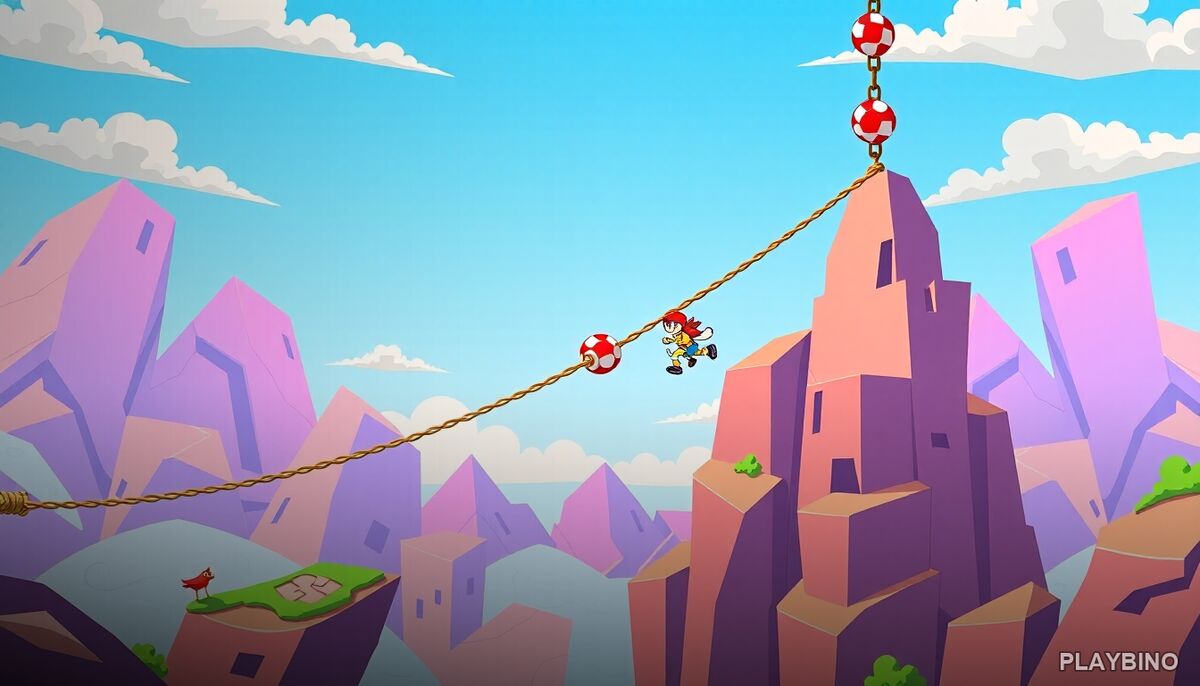
What the Game Is About
Ropeway Master puts a simple premise to work in increasingly demanding ways. People are trapped, hazards are everywhere, and your only tool is a length of rope. The challenge is not about speed or reflexes — it is about reading each scenario carefully and deciding where your rope goes before anyone moves. Each level is a logic puzzle dressed up as a rescue operation.
The concept stays consistent throughout, but the situations shift. Early stages introduce the core mechanics without much pressure. Later ones layer in more obstacles, tighter margins, and scenarios where a single misplaced anchor point sends everything wrong. If you enjoy working through spatial problems one careful step at a time, this browser puzzle is worth your attention.
How Rope Placement Works
The core mechanic revolves around positioning. You are not drawing a freehand line — you are deciding where a ropeway connects, what angle it runs at, and whether the path clears every hazard between the starting point and the exit. The game rewards players who pause and map out the route mentally before committing.
Reading the Environment
Each level shows you the terrain, the trapped individuals, and the obstacles standing between them and safety. Some hazards are static. Others interact with the rope or the people traveling along it. Identifying which elements are dangerous and which are neutral is part of the puzzle logic every time.
Anchor Points and Angles
Where you fix the rope matters as much as the path it takes. A poorly chosen anchor can make the rope sag into a hazard or leave someone stranded mid-route. The game does not spell out the correct answer — it expects you to experiment, observe what goes wrong, and adjust your placement until the route holds.
Escalating Difficulty
The early levels function as a tutorial without being labeled as one. You learn what the rope can do, how people move along it, and what kinds of obstacles require detours. By the time the difficulty ramps up, the mechanics feel natural enough that the harder puzzles become genuinely engaging rather than frustrating.
Later stages introduce combinations of hazards that require more creative thinking. A solution that worked in a simpler level may not transfer directly. The game pushes you to treat each puzzle as its own problem rather than applying a formula.
What Makes the Logic Satisfying
Single-player puzzle games live or die on the moment when a plan clicks into place. Ropeway Master earns that moment consistently. The satisfaction comes not from a dramatic finish but from watching the route you designed work exactly as intended — people moving safely along the line you set, clearing every obstacle without incident.
That feedback loop is tight. Failed attempts are quick to reset, and the game does not punish experimentation. You can try a route, see where it breaks, and immediately adjust. This makes the puzzle logic feel exploratory rather than rigid, which keeps the experience moving forward even when a level takes several attempts.
Strategy Tips
- Scan the full level before placing anything — identify all hazards first.
- Work backwards from the exit point to find viable anchor positions.
- Test the rope path against every obstacle, not just the most obvious one.
- If a route fails near the end, the problem is often in the middle, not the finish.
- Shorter rope segments with multiple anchors can navigate complex terrain better than a single long line.
A Similar Logic Challenge
Ropeway Master sits comfortably in the one-player logic puzzle space, where careful thinking matters more than reaction time. Players who enjoy this kind of deliberate, spatial problem-solving often find themselves drawn to connection-based puzzles as well. Power Link takes a different approach to linking and routing — that puzzle experience is worth exploring if you want something in the same thinking space. Both games reward patience and planning over speed, making them natural companions on PlayBino.