Run Nado: Endless Runner Guide – Controls, Power-Ups & High Score Tips
What Run Nado Actually Is
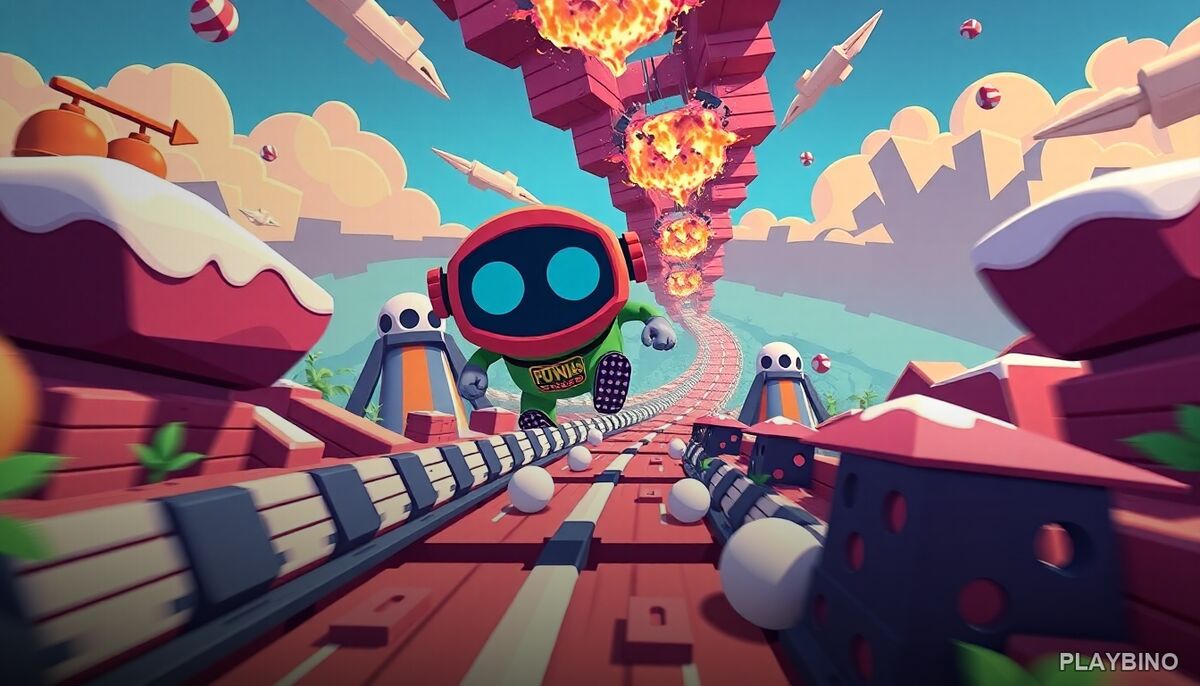
Most endless runners put you behind a character sprinting through a level. Run Nado flips that concept by handing you a tornado. You are not running from anything — you are the destructive force carving through the environment. That shift in perspective changes how the game feels entirely. Instead of survival anxiety, there is a constant pull to keep momentum, absorb everything in your path, and push the run as far as possible. Try the full run directly in your browser and you will notice immediately how different the movement feels compared to a standard action runner.
Movement and Controls
The controls are built around quick directional input. You swipe or tap to steer the tornado left or right, threading through gaps in obstacles or angling toward collectibles. The tornado does not stop — it is always moving forward — so every decision is made on the fly. There is no jump button or brake. Your only tool is direction, which keeps the input simple but demands sharp timing as the environments get more cluttered.
Reading the Path Ahead
Because the tornado moves continuously, the skill gap comes from reading what is coming two or three moves ahead rather than just reacting to what is directly in front. Obstacles appear in clusters, and the spacing between them often forces a choice: dodge left and miss a power-up, or cut through a tighter gap to collect it. That micro-decision loop is what gives the game its action and skill identity.
Environments and Escalating Difficulty
Run Nado moves through three distinct settings — vibrant cities, lush forests, and arid deserts. Each environment introduces its own visual style and obstacle layout. City sections tend to pack obstacles tightly with less room to maneuver. Forest stretches often use irregular patterns that are harder to predict. Desert stages open up the lane width but introduce faster obstacle sequences to compensate. The variety keeps runs from feeling repetitive even after multiple attempts.
Power-Ups and How to Use Them
Scattered across each run are power-ups that expand what your tornado can do. Some increase destructive range, making it easier to clear wide obstacle clusters. Others provide brief invincibility windows or score multipliers. The temptation is to chase every power-up, but that can lead you into worse positions. The smarter approach is to prioritize power-ups that sit along your natural path rather than swerving aggressively to reach them.
- Range boost – widens the tornado's hit area, useful in dense obstacle sections
- Invincibility – short window to push through blocked paths without penalty
- Score multiplier – best collected early in a run to compound points over distance
- Speed modifier – increases momentum, raises risk but also raises scoring potential
Pushing the High Score
Consistency Over Aggression
The scoring system rewards distance combined with collection rate. Long runs with steady power-up collection will outperform short aggressive runs almost every time. Building a feel for each environment's rhythm — when obstacles cluster, when open lanes appear — is more valuable than pure reaction speed. After several runs, patterns start to emerge and you can begin anticipating rather than just dodging.
When to Take Risks
Score multipliers change the calculus. If a multiplier is visible and reachable with a moderate detour, it is usually worth the extra movement. A multiplier active for the next hundred meters of a run adds up quickly. The risk-reward balance around those pickups is one of the more interesting strategic layers the game offers.
A Different Kind of Endless Runner
Run Nado works because the tornado mechanic gives the endless runner format a distinct identity. The action stays constant, the skill ceiling is real without being punishing, and the environment variety gives each session a slightly different texture. Players who enjoy reflex-based arcade games with a scoring loop will find a lot to come back to here. Space Geo Jump offers another quick skill challenge worth trying if the fast-paced arcade format appeals to you. Both games share that same pull of one-more-run momentum that keeps the session going longer than expected.