Save Water Race: Sprint, Dodge, and Bloom
What You're Actually Doing
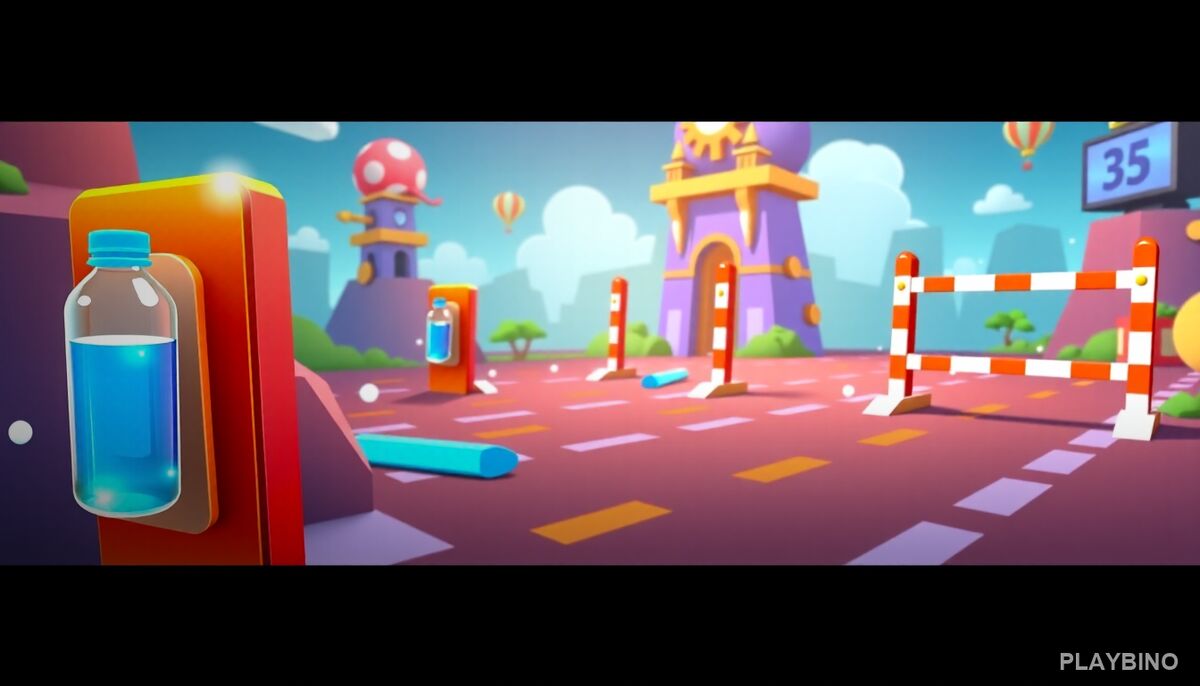
The premise is simple but the execution keeps you engaged. You sprint through obstacle-filled courses, grabbing water bottles scattered along the path while avoiding mud puddles that can spill your collection. The more bottles you carry to the finish, the more flowers bloom at the end — a visual payoff that makes each run feel purposeful rather than arbitrary. Try the full run and see how many bottles you can deliver before the mud catches up with you.
The Core Loop
Every session follows a tight rhythm: move fast, react to hazards, collect as much as possible without overcommitting to risky paths. The mud puddles are the main threat — hit one and your water supply takes a hit. The tension comes from deciding whether to chase a cluster of bottles near a hazard or play it safe and stay on a cleaner route.
Hazards and Timing
Mud puddles appear at varying positions across the course, so pattern recognition builds over repeated runs. Early on, you might lose bottles frequently because the dodge timing feels tight. After a few attempts, you start reading the layout faster and adjusting your line before the obstacle is directly in front of you.
Bottle Collection Strategy
Not every bottle is worth the detour. Some sit close to mud patches in a way that punishes greedy collection. Prioritizing bottles in open lanes and only reaching for riskier ones when your reflexes are sharp tends to produce better results at the finish line.
The Payoff at the Finish
The flower-blooming mechanic at the end of each run is a small but effective design choice. It ties your in-run performance to a visible outcome — more water delivered means more flowers bloom. This creates a feedback loop that encourages improvement without relying on a traditional score counter alone. It also gives the conservation theme a tangible presence rather than just being a label.
Arcade Feel and Session Length
Save Water Race fits squarely into the endless runner and arcade category. Sessions are short, restarts are instant, and the gameplay never demands long commitments. The controls are responsive enough that failures feel like your own timing rather than the game misfiring. Vibrant visuals keep the environment readable even at speed, which matters in a reflex-driven game where a cluttered screen would cause unnecessary frustration.
- Single-player arcade format with quick restart
- Obstacle dodging with direct consequence on your collection
- Performance-linked visual reward at the finish
- Conservation theme woven into the core mechanic
- Short session length suited to quick breaks
Who This Works For
If you enjoy arcade runners where every decision has a small but real consequence, this one delivers that in a compact format. The educational angle around water conservation adds a layer of context that makes it slightly more memorable than a generic obstacle course. Players who like seeing their effort reflected in the game world — rather than just a number going up — will find the flower mechanic satisfying.
For a different kind of sprint-based challenge, Rocketto Dash offers a comparable arcade rush with its own set of mechanics worth exploring on PlayBino.