Shadow Chase: Ninja Puzzle Action Where Every Move Counts
What Shadow Chase Is About
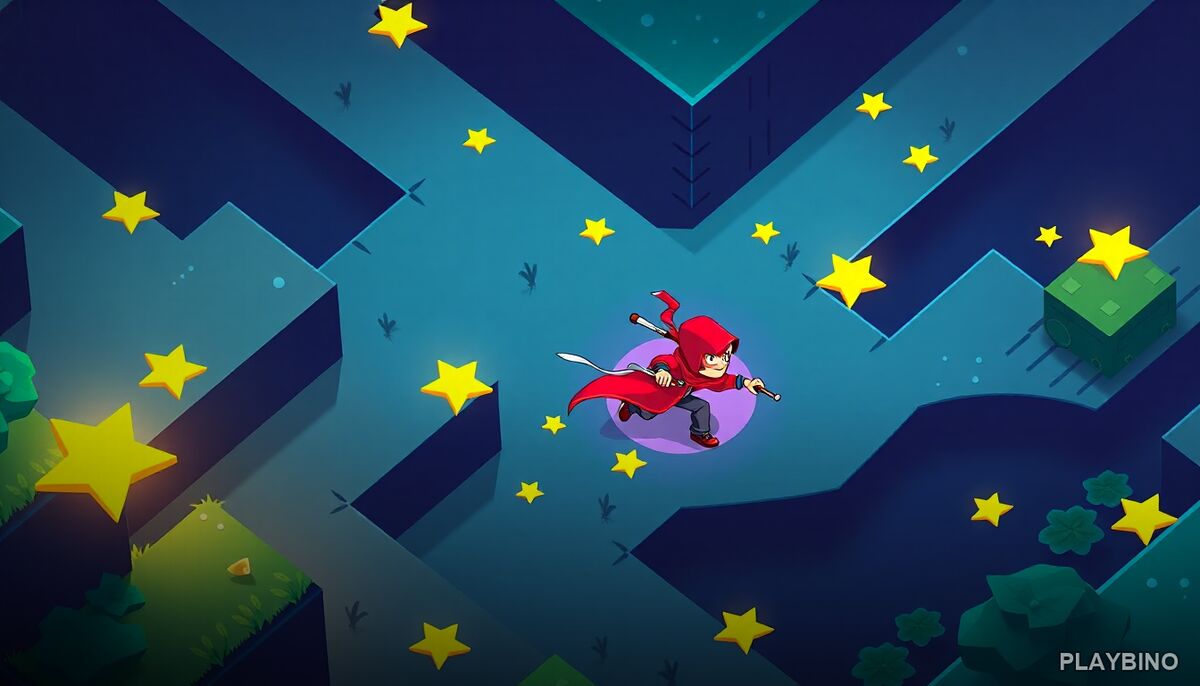
Most action puzzle games ask you to solve a static problem. Shadow Chase flips that by making the danger move with you. Enemies don't patrol fixed routes — they shadow your every step, turning each level into a tense game of positioning and prediction. The goal is simple on paper: collect all the scattered stars and survive. Executing that cleanly is another matter entirely.
You play as a nimble ninja moving through compact, increasingly hostile environments. The full game is playable in your browser on PlayBino, with no downloads or setup needed. Each stage introduces new spatial constraints and enemy patterns that push you to think before committing to a direction.
How the Mirror Mechanic Changes Everything
The defining feature here is enemy behavior. Foes don't chase you in the traditional sense — they replicate your movement. Move left, they move left. Step into a corner, and suddenly your escape routes collapse. This creates a puzzle layer on top of the action, where every step carries consequences beyond just your immediate position.
Planning Your Route
Because enemies mirror your inputs, the real challenge is setting up positions that neutralize threats before you reach the stars. You can't just rush through a level. You need to think two or three moves ahead, identifying which enemy clusters will become dangerous based on your planned path.
Using Ninjutsu at the Right Moment
Your ninjutsu power clears groups of enemies blocking your path. It's a limited resource in terms of timing — using it too early wastes its impact, while holding it too long can trap you. The best players use it to break deadlocks, not as a panic button. Recognizing when a cluster is about to cut off your star collection route is what separates clean runs from failed ones.
Star Placement and Risk Decisions
Stars are rarely placed in safe, open spaces. Many sit in corridors with tight entry angles or near enemy starting positions that make early collection risky. The game constantly tempts you to grab a nearby star before you've neutralized the surrounding threat — and that temptation is usually a trap.
Deciding which stars to collect first, and which to leave until enemies are repositioned, is the core strategic loop. Aggressive collection works in early levels. As the difficulty curve tightens, patience and sequencing matter far more than speed.
Level Progression and Difficulty
Early stages function as a tutorial in disguise, giving you room to experiment with the mirror mechanic without immediate punishment. Mid-game levels introduce tighter spaces and more enemy types, forcing you to adapt your positioning logic. Later stages compress everything — smaller arenas, stars in riskier spots, and less margin for error on every input.
The difficulty curve feels deliberate rather than arbitrary. Each new challenge builds on a mechanic you've already encountered, so the learning feels earned rather than frustrating.
Who This Game Suits
Shadow Chase works well for players who enjoy puzzle games with a physical, action-oriented execution layer. If you like thinking through movement patterns and then testing them under pressure, the ninja theme and mirror mechanic make for a satisfying combination. Pure reflex players may find the planning requirement unexpected at first, but it's that layer that gives the game its replay value.
Players who enjoy stealth-adjacent puzzle challenges might also want to look at another ninja-themed browser experience that explores similar movement and evasion ideas from a different angle.
What Makes Each Run Feel Different
Because enemy behavior is directly tied to your inputs, no two attempts at a level play out identically unless you repeat the exact same sequence of moves. Experimenting with different collection orders or entry angles produces genuinely different outcomes. That variability keeps the puzzle feel fresh across multiple attempts and makes solving a difficult stage feel like a real discovery rather than memorization.
"