Shape Transform Blob Racing: Morph, React, and Survive Every Gate
What This Game Is About
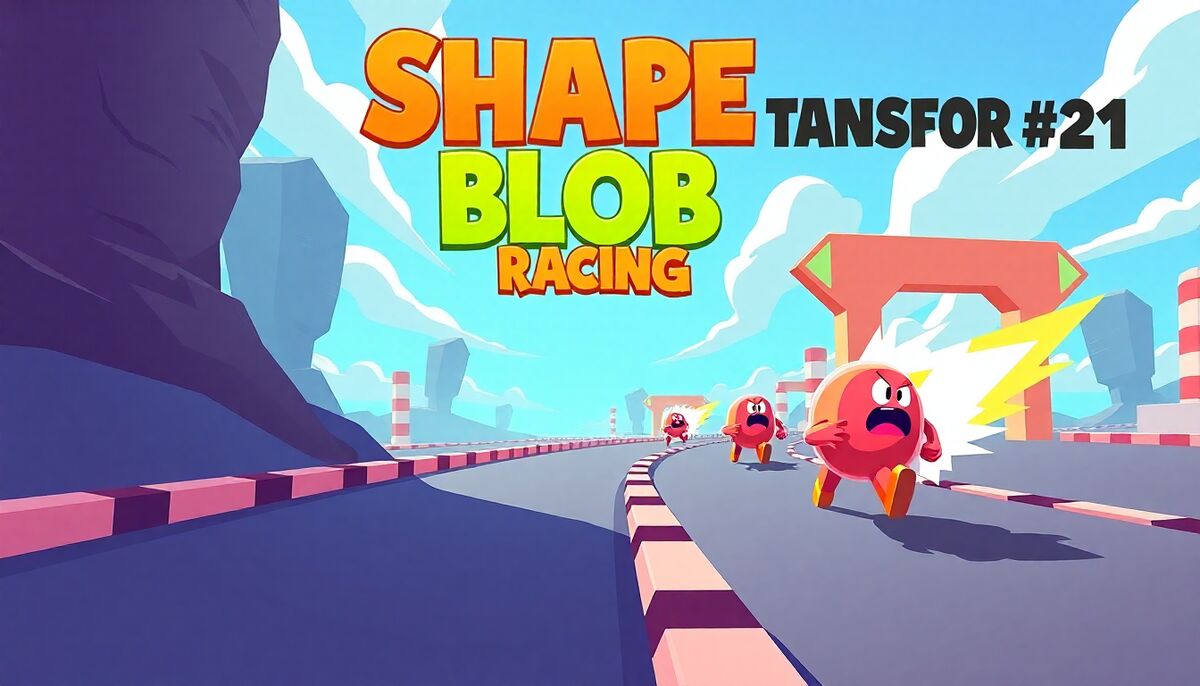
Most endless runners ask you to jump or slide. Shape Transform Blob Racing asks you to become something different every few seconds. You control a morphing blob hurtling down a colorful track, and every gate ahead demands a specific shape. Hit the wrong form and you crash. Nail the transformation in time and the track rewards you with a satisfying animation and a brief moment to breathe before the next obstacle rushes in.
The concept sounds simple, but the execution creates a rhythm that pulls you back for repeated runs. You can try the full run on PlayBino directly in your browser without any download.
How the Morphing Mechanic Works
The core loop revolves entirely around shape recognition and timing. As the blob moves forward automatically, gates and barriers appear ahead. Each one is color-coded or visually shaped to signal what form you need to pass through. A narrow vertical slit wants a thin stretched shape. A low horizontal barrier needs a flat form. A circular opening calls for a round blob.
Reading the Gates
The visual language is clear once you spend a run or two learning it. Gates telegraph what they need early enough for you to react, but as speed increases, that window shrinks fast. Early levels give you time to think. Later stages compress the decision space until morphing feels almost instinctive.
Timing the Switch
Switching too early can leave you in the wrong form when a second gate appears right behind the first. Switching too late clips the edge and ends your run. The sweet spot sits in that narrow moment just before the gate, and finding it consistently is what separates short runs from long ones.
What Makes the Obstacle Courses Feel Fresh
The track design mixes gate sequences with gap jumps and rolling sections that use the blob's physics naturally. Stretching across a gap feels different from squeezing through a tight passage, and the game rotates these obstacle types often enough that no two runs feel identical in structure. Colorful environments change as you progress, giving each section a distinct visual tone without breaking the arcade pace.
- Gate obstacles requiring specific blob shapes
- Narrow passages that punish oversized forms
- Gap sections where stretching the blob is the only path through
- Increasing track speed that compresses reaction time
- Transformation animations that confirm a successful morph
Skill Progression and Difficulty Curve
The early levels function almost like a tutorial, spacing obstacles generously and using simple two-shape sequences. By the mid-game, the track introduces back-to-back gates with different shape requirements, forcing you to chain transformations without resetting your timing. The arcade nature means failure sends you back to the start quickly, which keeps frustration low and encourages another attempt immediately.
Speed is the main difficulty driver. The blob moves faster as runs extend, and the same gate patterns that felt manageable at low speed become genuinely demanding when the track is blurring past. Players who enjoy skill-based arcade games with a clear progression curve will find the escalation satisfying rather than punishing.
Strategy for Longer Runs
Reacting to individual gates is not enough at higher speeds. The stronger approach is to scan two or three gates ahead and plan a transformation sequence rather than responding to one obstacle at a time. This forward-reading habit is the single biggest factor in extending runs.
Staying centered on the track also matters. Drifting toward the edges while morphing reduces the margin for error when a gate requires a precise shape alignment. Treat the center line as your default position and only shift when the obstacle explicitly demands it.
A Similar Challenge Worth Trying
If obstacle-based arcade gameplay appeals to you, another obstacle-focused challenge covers Impossible Air Obstacle Driver, which takes a different angle on the same theme of navigating difficult courses with tight margins. The two games share a focus on skill and spatial awareness even though their mechanics differ considerably.