Ship Mazes: Lighthouse Defense, Tactical Navigation, and Two-Player Strategy
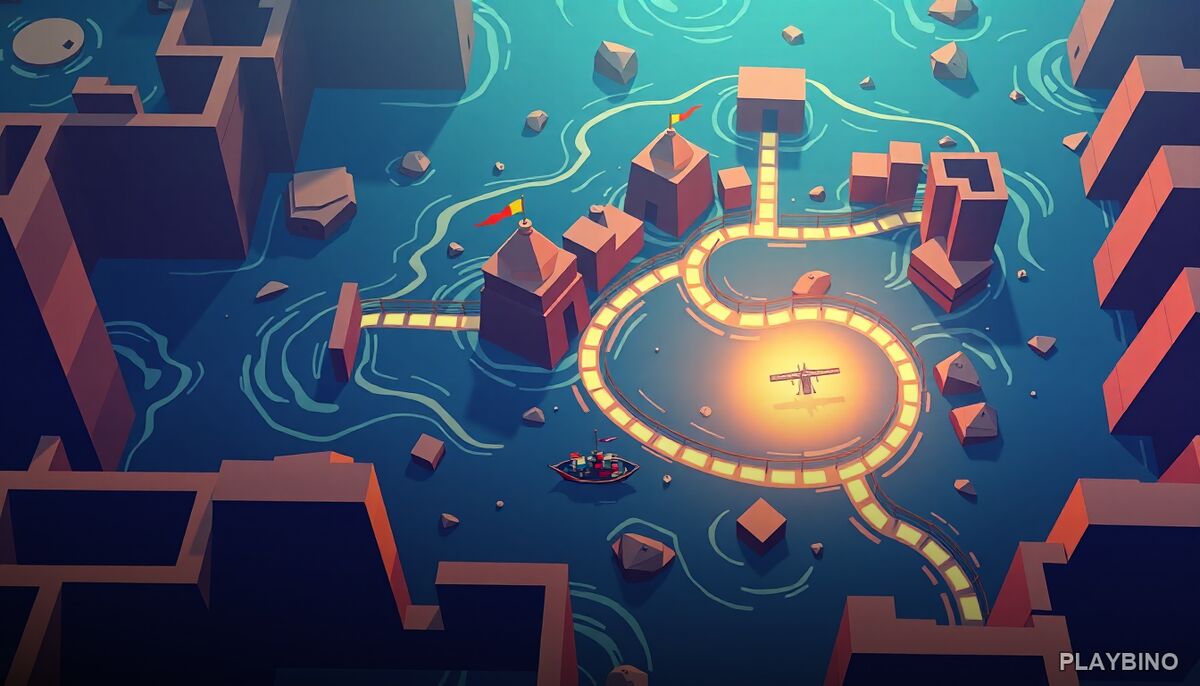
Defending the Lighthouse Through Dangerous Waters
Most naval games reward aggression. Ship Mazes takes a different approach. Your goal is to protect a lighthouse from a steady stream of hostile ships, and the battlefield itself — a maze of tight channels, jagged rocks, and winding passages — is as much your weapon as anything else. The browser version drops you straight into the action with no lengthy setup, making it easy to start a run and immediately feel the pressure of incoming threats.
The core tension comes from the environment. Rocks don't discriminate — they'll wreck enemy ships just as easily as yours. That creates a constant push-and-pull where reckless steering punishes you, but smart positioning can let the maze do the fighting for you.
How the Maze Layout Shapes Every Decision
The channels are deliberately narrow. There's rarely a straight path to anywhere, which means both you and your enemies are always navigating around obstacles. This layout forces tactical thinking at every moment.
Using Passages as a Trap
One of the most effective strategies is funneling enemies into dead ends or tight corners where they can't maneuver. If you position your vessel at the exit of a narrow passage, incoming ships have limited options. They either back off or push forward into a collision. Patience here pays off more than direct combat.
Rock Awareness
Rocks are permanent hazards, but they're also landmarks. Learning where each cluster sits lets you predict enemy movement patterns. Hostile ships tend to follow the path of least resistance, so understanding the maze layout gives you a significant read on where threats will appear next.
Power-Ups and Vessel Upgrades
Sunken ships scattered across the maze drop collectible power-ups. Picking these up upgrades your vessel, improving its effectiveness in both offense and defense. The upgrade system isn't deep, but it adds a meaningful layer of progression within each session. Prioritizing power-up collection early can make later waves noticeably more manageable, especially when the number of hostile ships increases and the channels start feeling crowded.
Solo Play vs. Two-Player Co-op
Ship Mazes supports both single-player and two-player modes, and the difference in feel is significant. Alone, you're constantly making triage decisions — which threat is closest to the lighthouse, which passage needs blocking, where the next power-up is. It's a lot to track, and the difficulty scales accordingly.
With a second player, the dynamic shifts toward zone control. One player can hold a key chokepoint while the other collects upgrades or intercepts ships coming from a different direction. Coordination becomes essential as later waves send ships through multiple routes simultaneously. Communication, even informal, makes a real difference.
The two-player setup also works well for players who want a lighter, shared experience rather than a solo challenge. The cooperative framing — both players defending the same lighthouse — keeps the goal unified even when tactics diverge.
Strategy Over Speed
The action tag in Ship Mazes is accurate, but this isn't a reflex-heavy arcade game. The puzzle and strategy elements dominate. Rushing leads to collisions. Overcommitting to one area leaves the lighthouse exposed from another angle. The game rewards players who think a step ahead rather than those who react fastest.
Lemonade War takes a similarly strategic approach to browser gaming — another game built around resource decisions and competitive thinking — if that style of play appeals to you.
Who the Game Suits
Ship Mazes works well for players who enjoy puzzle-action hybrids where the environment is central to the challenge. The maze structure makes every session feel like a spatial problem to solve rather than a pure combat scenario. The 1-player mode offers a focused solo challenge, while the 2-player option on PlayBino adds a cooperative dimension that changes the strategy entirely. If you like games where positioning and patience matter more than speed, this one delivers a consistently satisfying loop.
"