Shooting Survival Skibidi Toilet: Wave Combat in a Surreal Forest
What Kind of Game Is This?
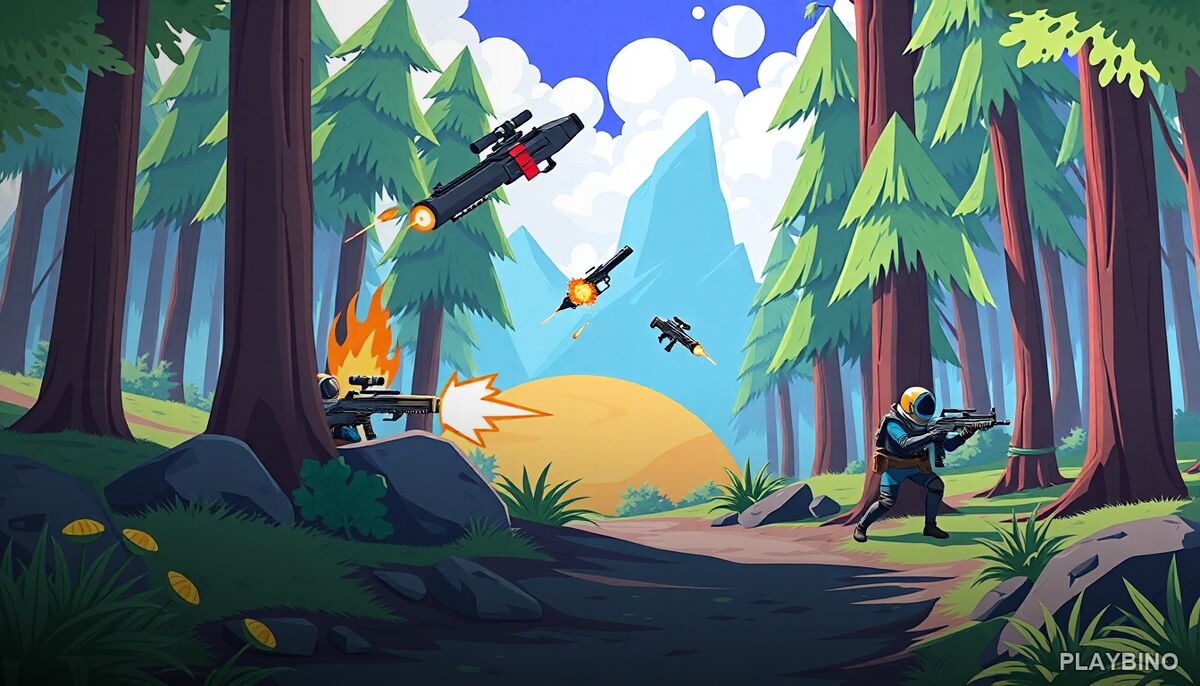
Wave-based shooting with a surreal twist — that's the core of Shooting Survival Skibidi Toilet. Enemies emerge from the ground in unpredictable bursts, you're holding two weapons, and the setting is a dense forest that somehow amplifies the strangeness rather than grounding it. The premise is deliberately absurd, but the combat underneath it has real structure. Play it directly in your browser and the chaos becomes immediately clear within the first wave.
How the Combat Flow Works
Each wave sends a fresh batch of Skibidi Toilet enemies popping up from the ground at varying positions. The unpredictability of their spawn locations is the central tension. You can't simply stand in one spot and click repeatedly — enemies appear at different distances and angles, forcing constant repositioning and target prioritization.
Managing both weapons efficiently matters more than raw speed. Knowing when to switch, when to hold fire, and which enemy cluster to address first separates clean wave clears from frantic last-second survival. The action rewards players who stay composed under pressure rather than those who just click faster.
Spawn Awareness
Skibidi Toilet enemies don't follow a fixed pattern, but they do tend to cluster around certain terrain features. Watching where early-wave enemies appear gives you a rough read on where the next group might surface. This isn't a guaranteed system, but it builds useful instincts over multiple runs.
Dual Weapon Management
Two guns mean two different firing rhythms to track. Some players default to one weapon and ignore the other, which leaves damage on the table. Alternating between them, especially when one has a reload delay, keeps pressure on enemies without creating gaps where you're momentarily defenseless.
The Forest as a Tactical Layer
The environment isn't just visual decoration. Trees and terrain features create natural sightlines — some that help you spot incoming enemies early, others that briefly obscure targets and force a quick adjustment. Positioning yourself near open sightlines gives you reaction time. Getting caught behind dense scenery when a wave spawns can turn a manageable situation into a scramble.
The richly textured forest environment contrasts amusingly with the surreal enemy design, and that visual contrast is part of what makes the game feel distinct. The setting has personality, and it interacts with the shooting mechanics in ways that go beyond aesthetics.
Survival Tips for Later Waves
- Keep moving between enemy spawns rather than holding a fixed position.
- Prioritize enemies that are closest to you before targeting distant ones.
- Use terrain sightlines to your advantage — find open angles early in each wave.
- Don't neglect your second weapon; alternating fire reduces downtime.
- Watch for spawn clustering patterns across consecutive waves to anticipate pressure points.
The Skill Ceiling and Replay Value
Early waves feel manageable, almost casual. The difficulty ramps in a way that makes each run feel earned — later waves are genuinely relentless, and chaining kills cleanly through a tough wave delivers a satisfying payoff. The skill ceiling comes from pattern recognition, weapon discipline, and positional awareness rather than any single mechanic.
This kind of action-shooting loop works well in short sessions. A run can end quickly or stretch depending on how well you read the waves, which keeps the format replayable without demanding long commitments. Players who enjoy skill-based shooting with a chaotic edge will find the loop compelling.
Another Shooting Challenge Worth Trying
If the dual-weapon combat here appeals to you, another gun-focused browser challenge worth exploring is National Become Gun God on PlayBino — a different take on shooting progression that rewards accuracy and upgrade decisions across its own distinct format.