Simply Simple Maths: Sharpen Your Arithmetic Under Pressure
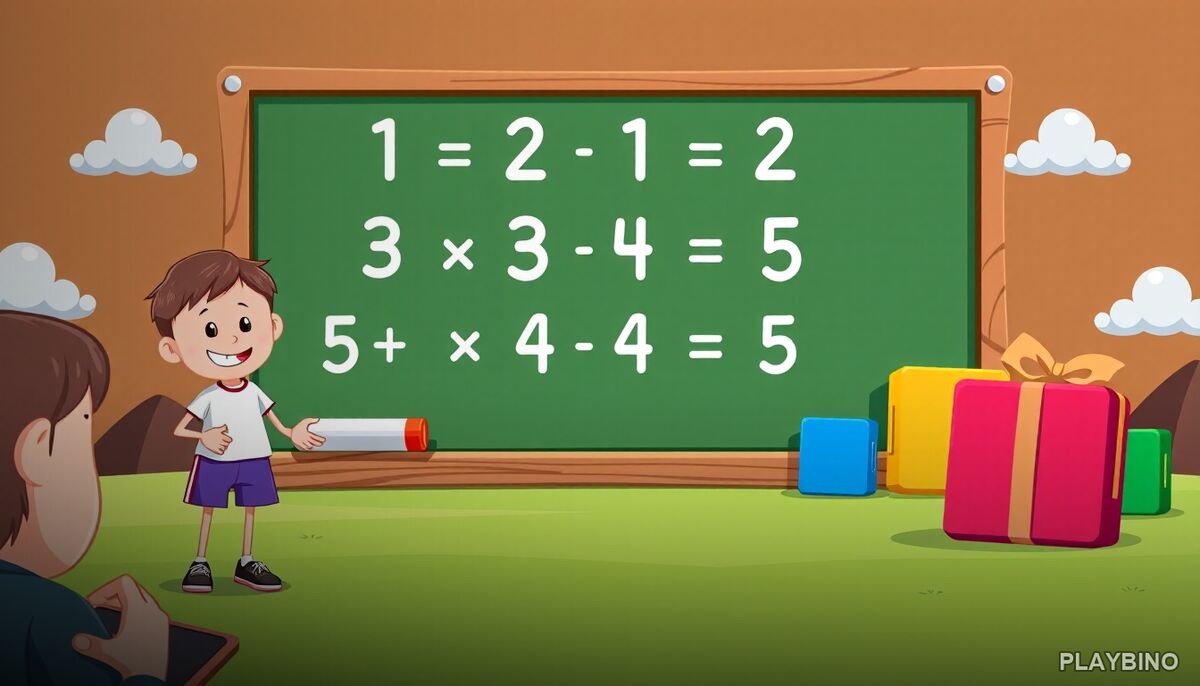
What the Game Actually Asks You to Do
Most arithmetic practice tools feel passive. Simply Simple Maths flips that by putting a countdown clock on every session. You pick an operation — addition, subtraction, multiplication, or division — and equations start appearing one after another. Your job is to answer correctly before time runs out. The pressure is gentle but real, and that distinction matters for building genuine mental calculation speed rather than just pattern recognition.
The interface is deliberately uncluttered. Bright backgrounds, clean typography, and no visual noise mean younger players stay focused on the numbers rather than the surrounding design. You can play this browser-based arithmetic trainer without any setup or downloads — just pick your operation and start solving.
Choosing Your Operation
The four-operation selector at the start is more than a menu choice. Each mode trains a different mental process:
- Addition — fast mental grouping and carrying; good for warming up
- Subtraction — requires holding two values in working memory simultaneously
- Multiplication — rewards players who have internalized times tables
- Division — the slowest of the four for most players, making it the strongest confidence builder when it clicks
Rotating between all four across separate sessions builds a more complete numerical fluency than drilling a single operation repeatedly.
How Difficulty Scales
Adaptive Challenge
The game tracks your performance and adjusts problem complexity as your accuracy improves. Early problems stay within comfortable ranges — single-digit sums, small multipliers — then gradually introduce larger numbers as the system detects consistent correct answers. This prevents the frustration of problems that feel impossibly hard too soon, while also avoiding the boredom of problems that never push back.
Immediate Feedback Loop
Every answer triggers instant feedback. A correct response moves you forward without interruption. An incorrect one flags the error clearly, which helps identify recurring weak spots. Over multiple sessions, patterns emerge: maybe subtraction with borrowing is slower than expected, or division by 7 consistently trips you up. That kind of self-awareness is what separates productive practice from mindless repetition.
Who Benefits Most From This Format
The timed single-player structure suits a specific kind of learner. Students who already understand arithmetic concepts but want to build speed will find the countdown format motivating. The logic-and-brain combination in the game's design means it rewards focused thinking rather than guessing. Players who rush through answers without checking tend to accumulate errors quickly, so the game naturally teaches a balance between speed and accuracy.
Adults returning to mental math after years away from formal practice also find the format useful. The adaptive difficulty means the starting point never feels humiliating, and the clean interface removes any sense of being talked down to.
Strategy for Faster Scores
A few habits make a measurable difference in timed sessions. For multiplication, mentally grouping numbers into known table pairs is faster than calculating from scratch. For division, thinking in terms of multiplication inverses — asking "what times the divisor equals the dividend" — speeds up response time significantly. In subtraction, rounding up to the nearest ten and adjusting is often quicker than column-by-column mental arithmetic.
If arithmetic-based brain games appeal to you, this look at Math Fun covers another number-focused challenge worth comparing against your session scores here.
Replay Value and Progression
Because difficulty adjusts dynamically, no two sessions feel identical once you've moved past the early stages. The combination of four separate operation modes and a timer that creates natural variation in which problems appear means returning players always have something to measure against. Tracking your own improvement — noticing that division problems that once took four seconds now take two — provides its own motivation without needing leaderboards or external rewards.
PlayBino hosts the game as a straightforward browser experience, which makes it easy to fit a five-minute session into any gap in the day rather than committing to a longer structured practice routine.