Skibronx Runner: Urban Obstacle Sprint Guide
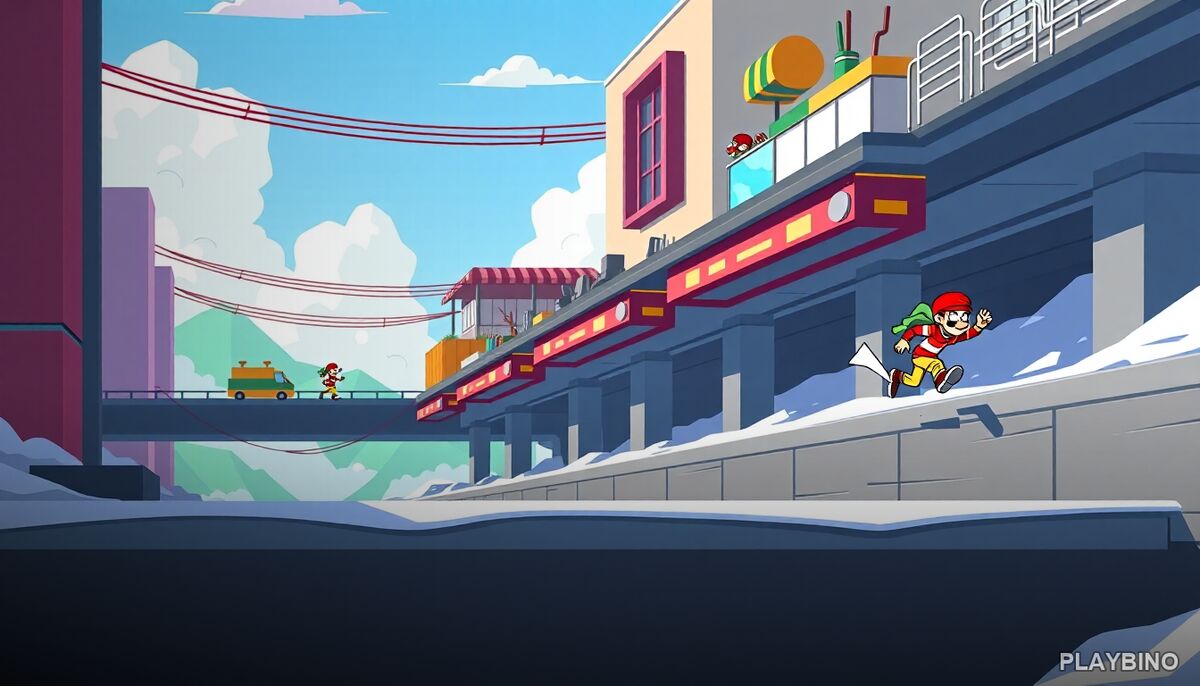
What Kind of Game Is This?
Skibronx Runner drops you into a street-level sprint where the city itself becomes the obstacle course. Buildings, barriers, and hazards line every route, and the game gives you almost no margin for hesitation. This is a single-player action title built around reflexes, rhythm, and reading the environment a split second before you reach it. If you want to try it directly, the full run is available here with no download required.
Two Modes, Two Mindsets
The game splits its experience cleanly between two formats, and each one demands a different mental approach.
Level Mode
In level mode, you have a destination. The goal is to reach a specific point without crashing, which means momentum management matters as much as pure reaction speed. Every obstacle along the route is placed deliberately, and clearing them in sequence requires both timing and anticipation. You need to read what is coming and commit to a move before it arrives.
Endless Mode
Endless mode removes the finish line entirely. The only metric is distance, and the pace gradually climbs the longer you survive. Power-ups scattered through the environment offer short bursts of advantage, but they do not save you from poor positioning. The speed increase is consistent and unforgiving, which means players who rely on reaction alone will hit a ceiling quickly. Building a mental rhythm for the obstacle patterns is what separates short runs from long ones.
Core Mechanics and Controls
The control scheme follows the classic endless runner structure: jump over barriers, slide under low hazards, and shift lanes to avoid incoming obstacles. What makes Skibronx Runner feel distinct is the urban setting, which adds visual noise that can mask incoming threats. Walls, street furniture, and environmental clutter all compete for attention alongside the actual hazards you need to dodge.
- Jump timing must be precise — early or late inputs both result in a hit
- Sliding under hazards requires a clean downward input without interrupting your lane position
- Power-ups are worth collecting but should not pull you into unsafe positions
- In endless mode, the pace shift between early and mid-run is the most dangerous transition
Reading the Environment
One of the main challenges in this game is visual clarity. Urban environments are busy by design, and the game uses that density to make hazard detection harder. Players who scan ahead rather than reacting to what is directly in front of them last significantly longer. In level mode this is manageable because the route is fixed. In endless mode the randomness of obstacle placement means you need to build a general awareness of hazard types rather than memorizing sequences.
Hazard Patterns
Most obstacles fall into one of two categories: things you jump over and things you slide under. A smaller number require lane changes. Recognizing the silhouette of each hazard type quickly is more valuable than raw reaction speed, especially as the pace increases in later endless runs.
Who Plays This and Why
Skibronx Runner fits players who enjoy short, high-intensity sessions. A single run lasts anywhere from a few seconds to a few minutes depending on skill level, making it easy to pick up and replay without commitment. The dual-mode structure also helps: level mode gives casual players a clear objective, while endless mode provides a score-chasing loop for those who want a longer challenge. PlayBino hosts the game as a browser title, so there is no installation barrier between the impulse to play and actually playing.
If the chase-based structure of this runner appeals to you, another action title worth checking out follows a similar fast-reaction format with its own twist on pursuit mechanics.
Survival Strategy for Longer Runs
Getting past the early phase of endless mode is mostly about consistency. Avoid greedy power-up grabs that pull you toward the edge of the lane. Stay centered when possible so you have more room to react in either direction. As speed increases, reduce the mental gap between seeing a hazard and committing to a response — second-guessing at high speed almost always ends the run.
"