Stack Sorting: A Logic Puzzle That Rewards Careful Planning
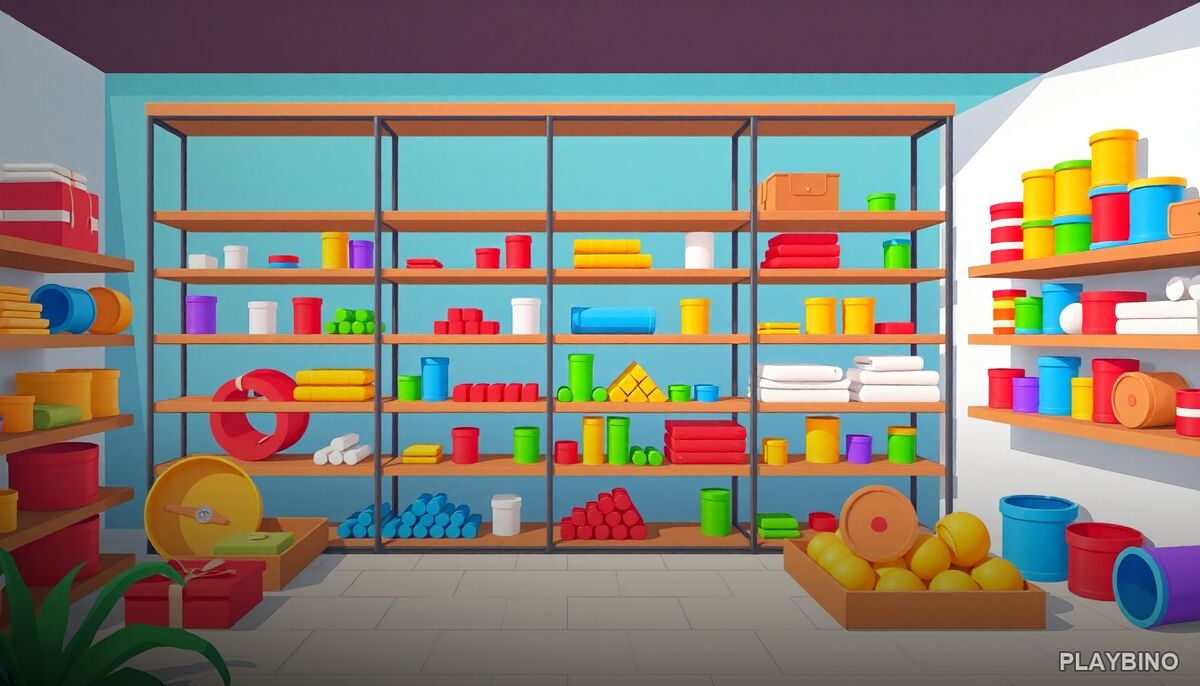
What You're Actually Doing
The premise is simple on the surface: move colored cylinders between stacks until each stack holds only one color. But the rules create real constraints. A cylinder can only land on an empty stack or on top of a matching color. That single rule turns what looks like a sorting task into a multi-step logic problem where one careless move can lock you into a dead end.
Stack Sorting is the kind of brain puzzle that feels satisfying precisely because it punishes guessing. You can play it directly in your browser without any setup, and the challenge scales well depending on which mode you choose.
The Two Difficulty Modes
The game splits into Easy and Hard modes, and the difference between them is meaningful rather than cosmetic.
Easy Mode
Easy mode gives you more stacks to work with and a more relaxed timer. The extra space means you can use empty stacks as temporary holding spots while you untangle color groups. It's a good place to build intuition for how the puzzle logic flows before the pressure increases.
Hard Mode
Hard mode cuts your available stacks and tightens the clock considerably. You can't afford to use empty stacks as buffers as freely, and the time limit forces faster decisions. The sorting patterns that worked comfortably in Easy mode need to be executed more efficiently here. Mistakes compound quickly when you have fewer recovery options.
Why Moves Matter More Than Speed
The timer creates urgency, but rushing is usually what causes failure. The core skill in this puzzle is reading the stack state a few moves ahead. Before touching anything, it helps to identify which colors are buried under mismatched pieces and work backward from the goal state.
- Avoid moving a cylinder onto a stack where it will block a color you need to access soon.
- Prioritize freeing up empty stacks early rather than making partial progress on multiple columns.
- If two stacks share the same top color, consolidating them early reduces complexity.
- In Hard mode, plan at least three moves ahead before committing to the first one.
The Feel of the Puzzle
Stack Sorting sits in a specific category of logic games where the board state is always visible and the challenge is purely cognitive. There's no hidden information, no randomness mid-round, and no reflex element beyond the timer. That makes it a clean brain puzzle — the kind where you can replay a failed level and immediately see what went wrong.
The colored cylinder visuals make the stack states easy to read at a glance, which matters when you're scanning for matching tops under time pressure. The interface doesn't get in the way of the thinking, which is the right call for this genre.
Similar Puzzle Logic in Another Game
If the idea of rearranging objects under strict placement rules appeals to you, Swap Pins! works on a comparable concept. That puzzle takes a different approach to the same kind of spatial logic, and it's worth exploring if you enjoy this style of constraint-based brain game.
Who This Game Suits
Stack Sorting works well for players who enjoy single-player logic puzzles with clear rules and a satisfying resolution when the stacks finally align. The 1-player format means the only opponent is the puzzle itself, which keeps the focus entirely on problem-solving. Easy mode makes it accessible without being trivial, and Hard mode provides a genuine challenge for players who want to push their planning further. PlayBino hosts it alongside a range of other browser-based puzzle and brain games, so it fits naturally into a longer session of logic-focused play.
"