Stairway Sprint: Endless Runner Arcade Challenge Guide
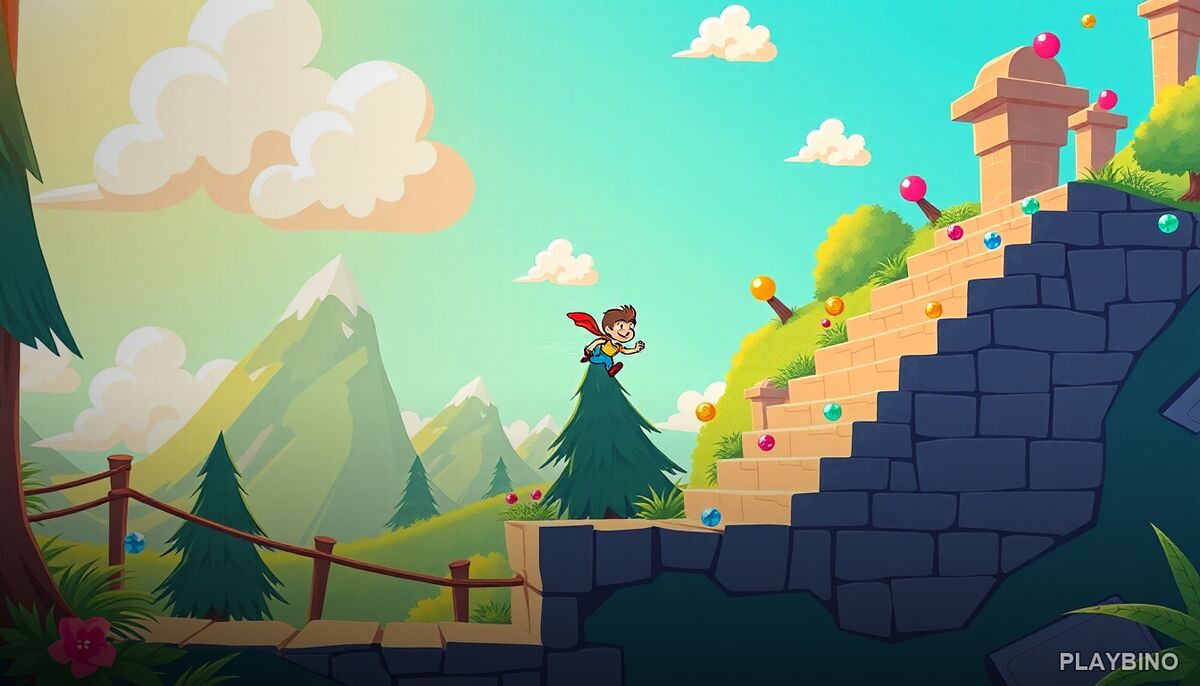
What Kind of Game Is This?
Stairway Sprint is a single-player arcade endless runner built around one deceptively simple idea: keep a bouncing ball moving upward through an infinite staircase. The further you climb, the faster the pace becomes, and the more unpredictable the obstacle patterns get. If you want to try the full run, the game runs directly in your browser with no downloads required.
It sits firmly in the arcade tradition — short sessions, instant restarts, and a difficulty curve that rewards repetition. The challenge is not about complex systems. It is about reading patterns quickly and trusting your reflexes when the screen starts moving fast.
The Core Loop
Each run starts at a manageable pace. The ball bounces automatically, and your job is to time jumps and steer around barriers that appear across the staircase platforms. Early sections feel approachable. Within a minute, the rhythm tightens and the margin for error shrinks noticeably.
Timing and Rhythm
The jump timing is the heart of the game. Platforms shift position and barriers emerge from angles that change between attempts. Landing a jump too early or too late means losing momentum and often falling back down. After a few runs, you start to internalize the beat of each section, and the game begins to feel less reactive and more rhythmic.
Collectibles and Risk
Scattered throughout the staircases are collectible items that reward players willing to take riskier routes. Grabbing them often means navigating tighter gaps or committing to a path with less margin for error. The reward is worth it for players chasing high scores, but conservative routes are a valid strategy when the pace is pushing your limits.
Visual Style and Pace
The game uses a vibrant color palette that keeps the environment readable even when the speed picks up. Platforms are clearly distinct from hazards, which matters when you have a fraction of a second to decide your next move. The visual feedback is clean — there is no confusion about what just went wrong when a run ends.
As you ascend, the color shifts and new staircase patterns appear, giving the sense of genuine progression even within an endless format. It never feels like the same corridor repeating indefinitely.
What Makes the Difficulty Work
Stairway Sprint does not introduce difficulty through complicated mechanics. The challenge comes from pace and pattern variation. New hazard placements appear at higher levels, and the window for correcting a mistimed jump gets smaller. The game respects the player by teaching through repetition rather than tutorial screens.
- Obstacles shift angle and position between runs
- Speed increases gradually rather than in sudden jumps
- Collectible placement encourages route decisions under pressure
- Muscle memory builds naturally over multiple attempts
- Each failed run ends quickly, making restarts feel immediate
Strategy for Climbing Higher
Early Sections
Use the opening staircase sections to settle into the rhythm rather than chasing collectibles immediately. Consistency in the early phase means you reach the faster sections with better timing instincts already engaged.
Mid-Run Adjustments
When the pace accelerates, focus on the next two platforms rather than reacting only to the one directly ahead. Looking slightly further forward gives you an extra beat to adjust your trajectory. Players who fixate on the immediate platform tend to make more last-second corrections, which compounds into errors.
Garten of Banban Obby takes a different structural approach to obstacle-based progression — that platforming challenge is worth a look if you enjoy games built around spatial awareness and quick movement decisions.
Who Will Enjoy This Game
Stairway Sprint suits players who enjoy arcade runs where skill accumulates over short, repeated sessions. The one-player format keeps the focus entirely on personal improvement. There is no randomness that feels unfair — every obstacle has a readable pattern once you have seen it enough times. PlayBino hosts the game alongside a wide range of similar arcade titles, making it easy to jump between sessions without leaving the browser.