Starlight Quest: Navigate the Cosmos and Collect Every Star
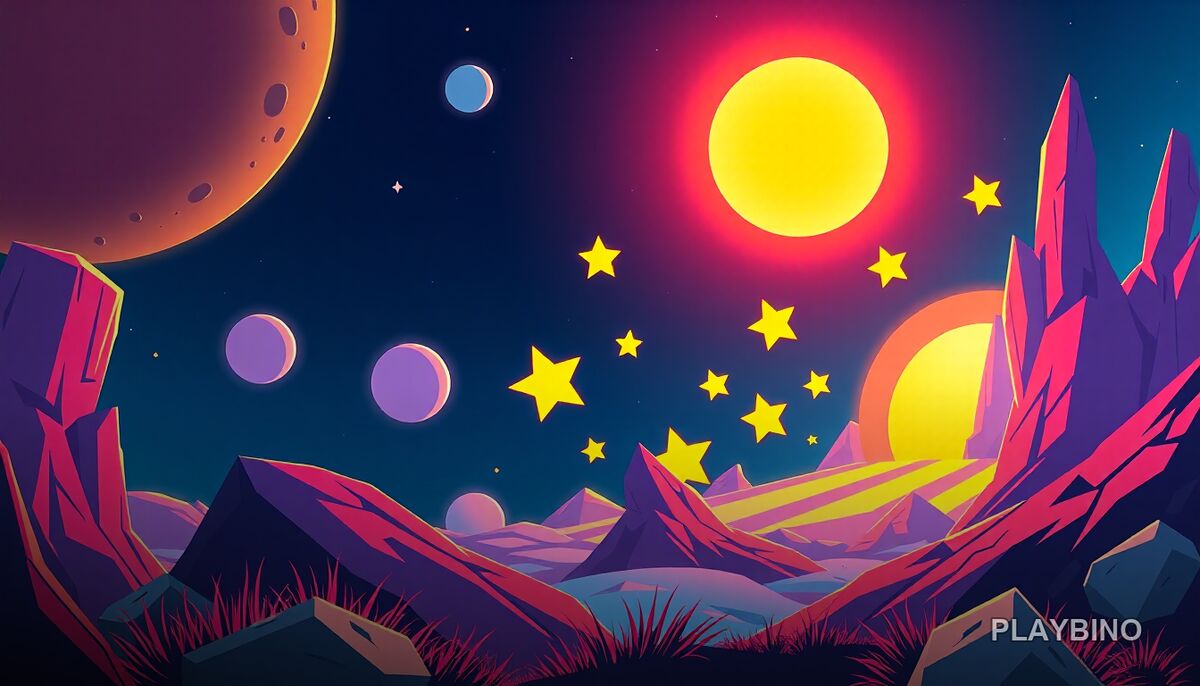
What You Are Actually Doing in Starlight Quest
You control a luminous star moving through open cosmic space. The objective is straightforward: collect golden stars scattered across the night sky while steering clear of dark void stars and tumbling asteroids. Each object you miss or collide with has consequences, and the game wastes no time making that tension felt. This browser arcade challenge builds its difficulty gradually, so early levels feel like a warm-up before the sky starts filling with hazards.
The single-player format keeps the focus entirely on your own spatial awareness and reaction speed. There are no teammates to rely on and no second chances handed to you freely. Every run is a personal test of how well you read the space around your star.
How the Controls and Movement Feel
Movement is simple enough to pick up in seconds, but the challenge comes from precision rather than complexity. You guide your star through increasingly crowded paths, and the margin for error shrinks as levels progress.
Spatial Awareness Over Speed
The game does not demand that you move fast at all times. It rewards players who read the layout ahead and choose routes that minimize exposure to hazards. Rushing through a cluster of golden stars often puts you directly in the path of an asteroid. Patience and positioning matter more than raw reflexes in the early stages.
Pattern Recognition
Void stars and asteroids follow movement patterns that become readable with experience. Once you start anticipating where an obstacle will be in two seconds rather than reacting to where it is right now, your survival rate improves noticeably. This shift from reaction to prediction is where the arcade depth quietly reveals itself.
Level Progression and Escalating Difficulty
Each new level introduces more obstacles and tighter spacing between collectibles and hazards. The sky grows crowded in a way that feels deliberate rather than random. You are not just facing more enemies — you are facing a more complex spatial puzzle where the safe paths between objects narrow over time.
- Early levels introduce basic asteroid patterns and sparse void stars
- Mid-game levels increase object density and introduce overlapping movement paths
- Later levels demand continuous repositioning with minimal safe zones
- Collecting golden stars in sequence becomes a routing challenge as much as a reflex challenge
The escalation keeps each session from feeling repetitive. A level that felt manageable on the first attempt becomes a different experience once the screen is busier.
The Visual Atmosphere
The backdrop of twinkling constellations and soft moonlight gives the game a calm aesthetic that contrasts with its growing mechanical pressure. This contrast works well. The serene visuals do not distract from gameplay, but they make the experience feel less punishing than a harsher visual style might. It is the kind of atmosphere that makes you want to try one more level even after a frustrating run.
Who This Game Suits
Starlight Quest fits players who enjoy arcade action with a measured pace. It is not a frantic shooter or a reflex-heavy twitch game. The core loop — collect, avoid, survive, advance — appeals to anyone who likes single-player challenges where improvement comes from learning the system rather than grinding for power-ups. If you also enjoy lighter arcade experiences with a different kind of challenge, the I Want Ice Cream game on PlayBino offers a fun contrast worth exploring.
Strategy Tips for Longer Runs
Prioritize Safe Positioning
Do not chase every golden star immediately. Sometimes letting one pass while you hold a safer position sets you up to collect three in a row without risk. Greedy routing is the most common cause of early deaths.
Watch the Edges
Asteroids that enter from screen edges often follow diagonal paths toward the center. Staying near the middle of the play area gives you more reaction time compared to hugging the corners.
Learning when not to move is as important as learning where to move. The game rewards composed decision-making, and that quality only develops after a few failed attempts teach you what the patterns actually look like.