Stick Ninja Survival: Waves, Upgrades, and Rogue-Like Chaos
What Kind of Game Is This?
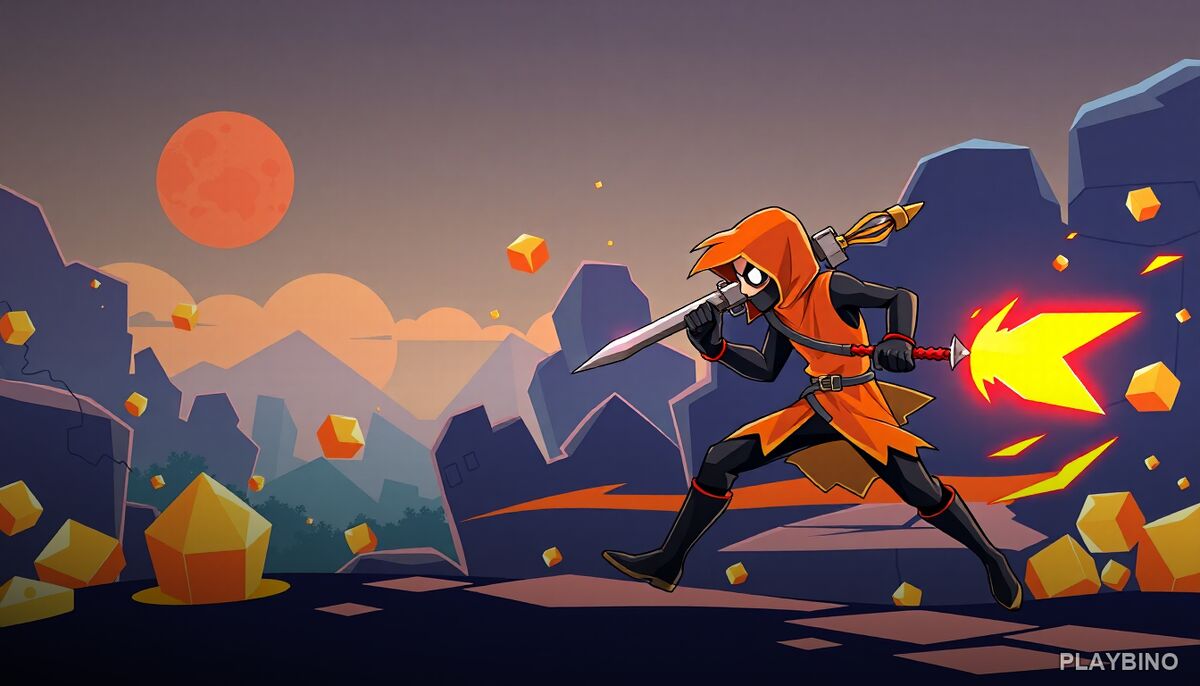
Under a crimson moon, monsters pour in from every direction and your stickman warrior cuts through them automatically. Your job is not to attack — it's to survive. This arcade run strips the ninja fantasy down to its most tense element: staying alive while chaos builds around you. The action genre blends here with rogue-like structure, meaning no two runs feel identical and every death teaches you something new.
Movement and Positioning
Since your ninja handles combat on his own, the entire skill expression shifts to movement. Enemies arrive in waves and many of them fire projectiles, so standing still for even a moment invites punishment. The screen fills with bullet patterns that demand constant weaving and spatial awareness.
Positioning matters beyond just dodging. Your warrior only strikes targets within a certain range, so drifting too far from a cluster means fewer kills and fewer gems. Stay close enough to harvest drops, but not so close that you eat a volley of projectiles. That tension between aggression and safety is where most of the decision-making lives.
Reading Enemy Patterns
Different monster types move and shoot in distinct ways. Some charge directly at you, others arc projectiles, and a few hang back and fire in bursts. Learning to read which enemies are on screen at any moment helps you prioritize your movement path and avoid getting cornered during the heavier later waves.
Upgrades and Progression
Gems dropped by defeated monsters accumulate between runs and unlock permanent upgrades. This is the rogue-like layer that keeps each attempt feeling meaningful even after a quick death. You carry forward stronger abilities, and the gap between an early run and a twentieth run is significant.
Choosing Upgrades Wisely
Not every upgrade suits every playstyle. Some improve your warrior's attack radius, which reduces how close you need to hover near enemies. Others boost survivability or increase gem drop rates. Spending early gems on range or speed tends to open up safer movement options, while damage upgrades reward players who are comfortable staying near the action.
Rogue-Like Structure and Replayability
The randomized encounter and power choice system means the arcade loop stays fresh across many sessions. A run that starts with one set of power options will demand different positioning habits than a run that opens with something else entirely. Death resets your progress for that run, but the permanent upgrade layer softens the blow and gives you a reason to jump back in immediately.
Players who enjoy the monster-wave survival format — and who want something with more strategic depth than a straightforward arcade shooter — will find the layered system here genuinely engaging. Ninja Defender offers a comparable take on the ninja action genre, and that game's mechanics are worth exploring if you want to see a different approach to the same theme.
Who This Game Suits
- Players who enjoy auto-battler or survivor-style arcade games
- Anyone drawn to rogue-like progression with permanent upgrades
- Fans of bullet-dodging mechanics and pattern reading
- Casual sessions that can stretch into longer runs as you improve
The controls are minimal, which makes the game accessible immediately. The depth comes from repetition, not from a complex input scheme. You move, you dodge, you upgrade, and you push further each time. PlayBino hosts this alongside a wide range of arcade and action titles, so it fits naturally into a session where you want something fast and replayable without a long setup.
Survival Strategy for Later Waves
The early waves are forgiving enough to experiment with positioning. Use them to identify which monster types are in the current run and start forming a movement rhythm before the screen gets crowded. By the mid-game, the density of projectiles increases sharply, and reactive dodging alone stops being enough. Anticipate where enemies will move rather than reacting to where they are.
Circular movement paths tend to work well in open areas, keeping you in range of most enemies while avoiding stationary projectile clusters. When the wave composition shifts — usually signaled by a new monster type appearing — adjust your orbit radius rather than your speed. Staying adaptable through those transitions is often the difference between a long run and an early reset on PlayBino.