Stick Run Parkour: Endless Runner Strategy and Survival Tips
What You're Actually Doing
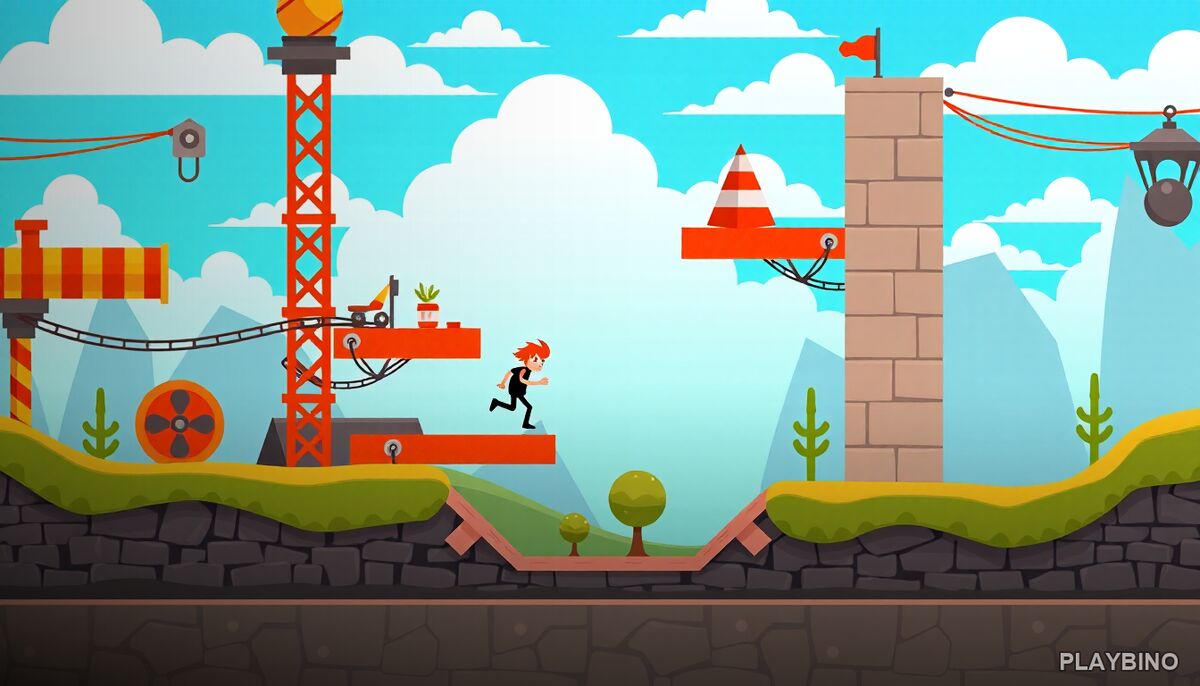
The premise is simple: keep your stickman moving through an endless obstacle course without getting knocked down. Barriers appear without warning, gaps open up mid-stride, and the pace tightens the longer you survive. Try the full run and you'll notice immediately how much the game depends on reading terrain a split second before you reach it.
This is an action-skill endless runner at its core. The parkour framing means your character isn't just sprinting — they're jumping, sliding, and threading through obstacles with a fluidity that rewards players who stay calm under pressure rather than button-mashing their way through.
How the Controls Shape Everything
The control scheme is deliberately minimal. Jump and slide cover the vast majority of what you need. That simplicity isn't a limitation — it's a design choice that shifts all the challenge onto timing and decision-making rather than input complexity.
Jumping
Leaping too early clips the top of a barrier. Jumping too late sends your stickman into it head-first. The sweet spot is narrow, and it gets narrower as speed increases. Learning the visual cues for each obstacle type is what separates short runs from long ones.
Sliding
Low obstacles and tight gaps require a slide. The tricky part is chaining a slide directly after a jump, or recognizing when a slide is the wrong call and a jump would have cleared the hazard faster. Mixing both actions fluidly is where the parkour feel really comes through.
Momentum and Pace
Stick Run Parkour doesn't stay at one speed. The course gradually intensifies, compressing your reaction window over time. Early runs feel forgiving. After a certain point, the obstacles arrive in rapid sequences that demand near-instant responses.
Maintaining momentum matters beyond just speed. Hesitating or mistiming a movement breaks your flow and often leads to a chain of errors. The game rewards players who commit to decisions rather than second-guess themselves mid-obstacle.
Costumes and Visual Variety
Between runs, unlockable costumes let you change how your stickman looks. This isn't a gameplay mechanic — it's a small layer of personalization that makes repeated attempts feel less repetitive. The colorful environments and smooth animations also help. The visual design stays clean enough that hazards are always readable, which matters a lot in a game where a single missed frame can end a run.
Scoring and Replay Value
Each run produces a score based on distance and survival time. Chasing a personal best is the main loop. There's no branching path or level select — just you, the course, and however far you can push before the obstacles win.
- Score increases with distance survived
- Speed escalates gradually through each run
- Obstacle patterns shift to prevent pure memorization
- Costumes unlock as you play, adding a collection element
Scale Kid Run And Jump Up takes a similar approach to movement-based arcade challenges — another quick skill challenge worth running through if this style of game clicks for you.
Who This Game Suits
Stick Run Parkour fits players who enjoy short, high-intensity sessions where skill improvement is visible run by run. The action is immediate, the feedback is instant, and there's no waiting around. PlayBino hosts it directly in the browser, so there's no setup — just load and run. If you find yourself replaying to beat your last score, the game has already done its job.