Stop the Ball: Reflexes, Timing, and the Endless Drop
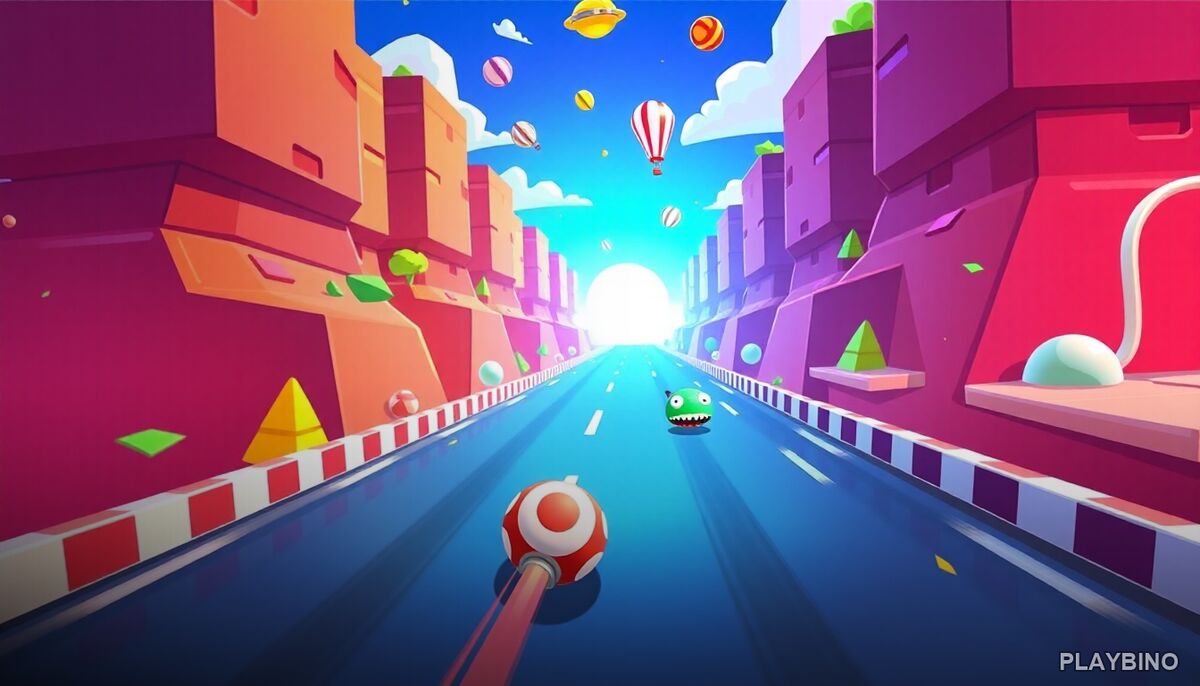
What You're Actually Doing
A sphere drops. Gaps appear. Obstacles shift. Your job is to keep the ball alive as it descends through a vertical course that never stops throwing new challenges at you. This browser arcade run strips everything back to one core loop: react fast, move precisely, and don't let the ball hit something it shouldn't.
There's no story, no inventory, no waiting. The game starts immediately and the pressure builds from the first few seconds. That directness is part of what makes it work.
How the Descent Feels
The vertical layout creates a specific kind of tension. Unlike side-scrolling runners where you can sometimes anticipate what's coming, a downward course compresses your reaction window. Gaps in the pathway appear quickly, and the ball's momentum means you can't always stop and reconsider. You commit to a direction and live with the result.
Timing Over Speed
Speed isn't really the variable here — timing is. The ball moves at a consistent pace, so surviving longer comes down to reading the layout ahead and positioning early rather than reacting at the last possible frame. Players who try to rush or over-correct tend to clip obstacles more often than those who stay calm and move in controlled bursts.
Obstacle Patterns
Shifting barriers are the main hazard. Some move horizontally across the path, some appear suddenly, and others create narrow corridors that demand precise alignment. The patterns aren't random in a chaotic way — there's a logic to them — but the speed at which they appear increases steadily, which is where the real difficulty comes from.
The Minimalist Design Choice
Stop the Ball uses a clean, stripped-down visual style. No background clutter, no animated characters, no score multipliers flashing across the screen. This isn't a limitation — it's a deliberate focus. When the presentation is minimal, every obstacle feels more significant. A single wrong move stands out clearly, and so does a clean sequence of good decisions.
The audio follows the same logic: simple feedback cues rather than a layered soundtrack. It keeps your attention exactly where it needs to be.
What Makes Runs End Early
- Misjudging gap width and clipping the edge of a barrier
- Over-correcting after a near miss and drifting into the next obstacle
- Reacting to a moving obstacle too late because of tunnel focus on the gap ahead
- Losing track of the ball's current position during a fast sequence
Most failed runs come down to one of these. The good news is that each failure is short, and the restart is instant. That rhythm — run, fail, restart — is exactly what makes arcade games like this genuinely replayable.
Who Plays This and Why
The 1-player, endless-runner format suits short sessions well. A run lasts anywhere from a few seconds to a couple of minutes depending on how far you get. There's no save point to worry about and no long tutorial to sit through. You pick it up, play a few rounds, and either walk away satisfied or keep going because you know you can do better.
Players who enjoy reflex-based arcade games — the kind where improvement comes from repetition rather than unlocking new tools — tend to get the most out of it. Balloon Ascending on PlayBino offers a different kind of vertical challenge if you want to compare how two games handle upward versus downward movement as a core mechanic.
Getting Further on Each Run
The most consistent way to improve is to stop watching the ball and start watching the space ahead of it. Anticipating where the next gap or obstacle will be gives you an extra half-second of preparation, which compounds over a long run. Small positional adjustments early are always better than sharp corrections late. Stay near the center of the path when possible — it keeps both directions open and reduces the chance of getting boxed in by a fast-moving barrier.