Taxi Driver Las Vegas: City Navigation and Fare Strategy Guide
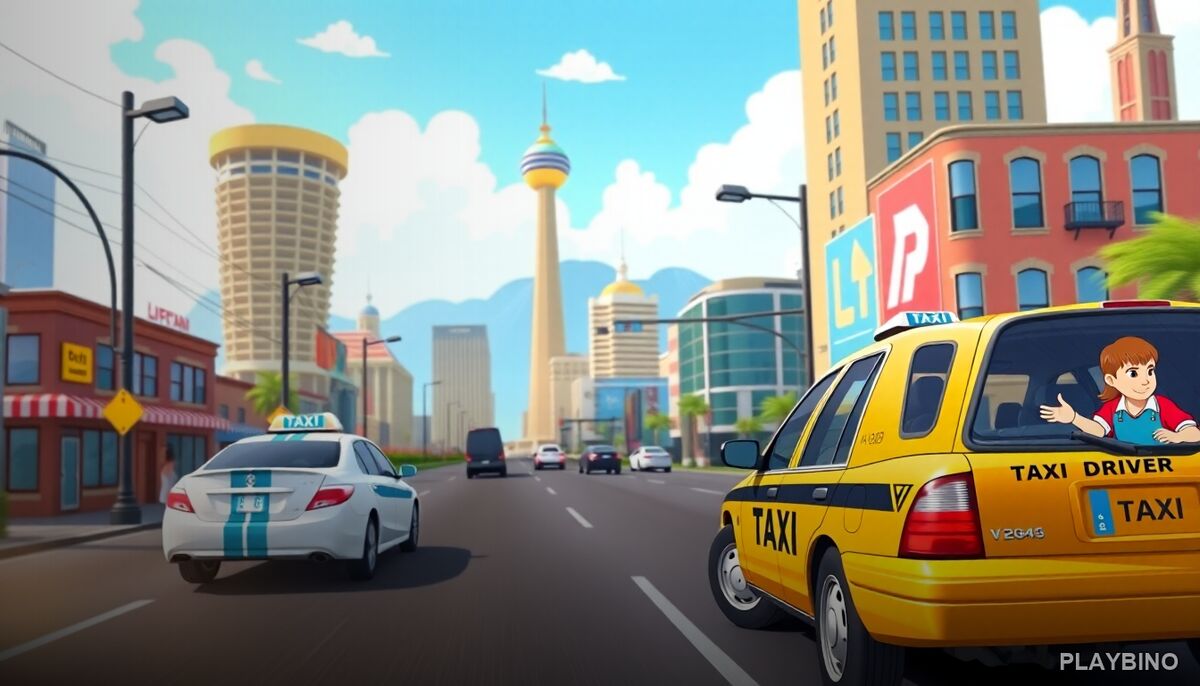
Behind the Wheel in Las Vegas
Not every driving game is about speed records or crash physics. Taxi Driver Las Vegas takes a different angle, placing you in the role of a cab driver navigating a sprawling urban environment modeled after one of America's most recognizable cities. The focus is on route awareness, time management, and building a steady reputation across multiple fare assignments. You can play it directly in your browser without any downloads or installs.
Two Ways to Play
The game offers two distinct modes that change how sessions feel. Structured taxi missions assign you specific passengers with destination markers and time constraints. Free exploration lets you move through the city at your own pace, learning the street layout and discovering different districts without pressure.
Both modes use the same driving mechanics, but the mission structure adds a layer of decision-making that free roam doesn't. Knowing when to take a shortcut versus sticking to a main road matters more when a fare timer is running.
Route Planning and the City Layout
Reading the Map
The open-world map includes multiple neighborhoods and traffic zones. Early missions stay close to familiar central areas, but assignments gradually push you into less familiar parts of the city. Spending time in free exploration mode before committing to harder missions pays off because you start recognizing which roads connect efficiently and which ones trap you in congestion.
Traffic Patterns
Traffic isn't just visual noise. Certain districts run heavier at specific points, and squeezing through a busy intersection can cost more time than looping around a quieter back street. The simulation leans into realistic urban flow rather than arcade-style open roads, so patience and observation matter more than raw acceleration.
Driving Mechanics and Handling
The controls prioritize smooth, deliberate movement over aggressive driving. Sharp turns at high speed cause handling problems, and clipping other vehicles affects your efficiency rating on paid fares. The physics feel grounded enough to reward careful driving without becoming frustrating for casual players.
Progression introduces more demanding assignments that combine tight time windows with longer cross-city routes. At that point, the difference between a driver who has memorized a few key shortcuts and one who hasn't becomes obvious.
What Makes the Simulation Feel Genuine
- Open-world city with varied districts and traffic density
- Structured missions with time limits and destination tracking
- Free exploration mode for learning routes without pressure
- Handling model that rewards smooth driving over speed
- Progressive difficulty that scales with route complexity
The combination of simulation and light racing elements gives the game a practical rhythm. You're not chasing lap times, but you are constantly making small decisions about speed, lane choice, and route efficiency that accumulate into a meaningful run.
Who This Game Suits
Players who enjoy car simulation titles and open-world navigation will find a lot to work with here. The 1-player format keeps the focus on personal improvement rather than competition, and the Las Vegas setting adds visual variety that pure racing games sometimes lack. If you want something with more aggressive driving mechanics, the Extreme Car Driving Simulator covers a very different side of browser-based car games and is worth a look as a contrast to the measured pace here.
Taxi Driver Las Vegas works best as a session-based game where you set a goal, complete a run of fares, and improve your knowledge of the city over time. The progression feels earned rather than handed to you, which gives each completed assignment a small but satisfying payoff.
"