Taxi Time: Arcade Cab Racing with Star-Chasing Strategy
What Taxi Time Is About
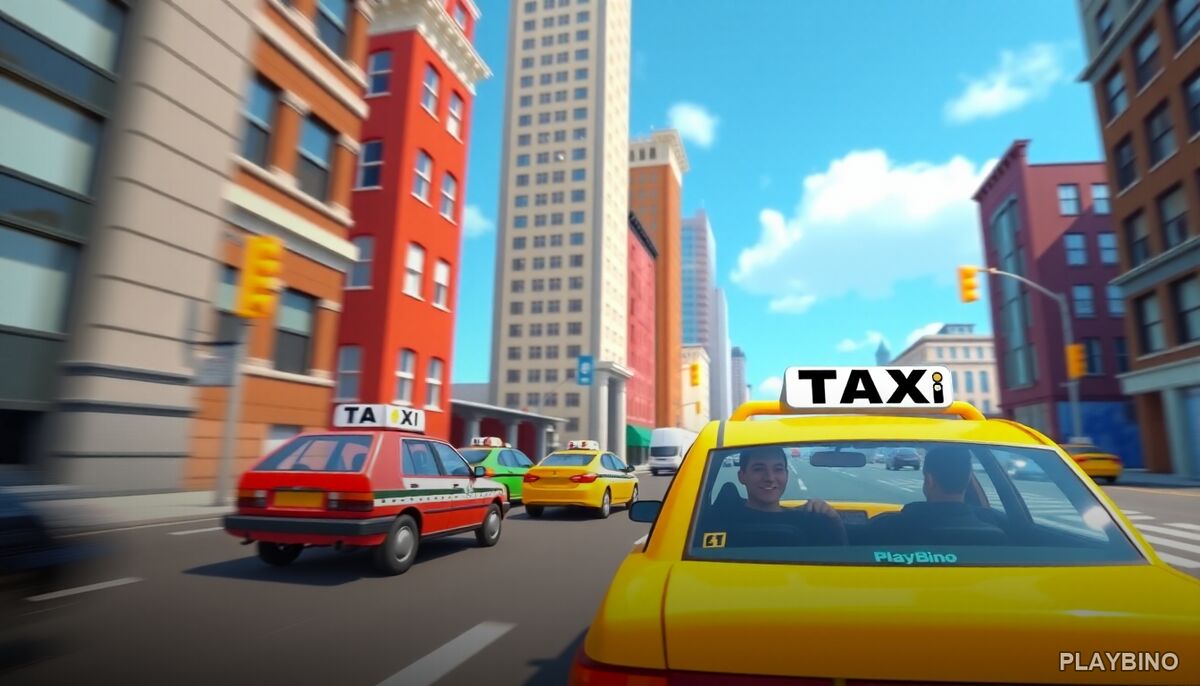
Not every racing game is about crossing a finish line first. Taxi Time puts you behind the wheel of a cab navigating congested roads, and the goal is simpler but surprisingly tense: collect as many stars as possible without losing control. The roads curve and branch, traffic moves unpredictably, and every glowing collectible pulls you toward a slightly more dangerous line. Play the full arcade run and you'll quickly see how a game this straightforward can demand so much focus.
The Core Driving Loop
Each run drops you into traffic with one clear objective — score points by grabbing stars scattered across the road. The tension comes from the gap between what's safe and what's rewarding. Stars placed near the edges of the road or just past a tight cluster of vehicles are worth chasing, but only if your timing is right.
The driving itself is direct and responsive. You steer left and right, threading your cab through gaps while reading what's ahead. There's no boost mechanic or complex upgrade tree. The entire challenge lives in your decision-making and your ability to hold a clean line through messy traffic.
Route Choices
At certain points the road opens up into multiple lanes or branches, and picking the right path matters. A route loaded with stars might also be the one with the densest traffic. Learning which paths give you the best risk-to-reward ratio is something that develops over multiple runs, not just one.
Timing and Gaps
The obstacles here aren't stationary. Other vehicles move at varying speeds, which means the gap that looked clear a second ago might be closing fast. Reading the flow of traffic and committing to a gap at the right moment is the central skill the game builds over time.
What Makes the Scoring Work
Stars aren't equally spaced or equally safe to reach. Some sit right in your natural path. Others are placed just far enough off-line that grabbing them costs you momentum or puts you in a tighter spot. That placement is deliberate — it creates a constant micro-decision about whether the extra points are worth the added exposure.
As your confidence grows across runs, you'll start threading narrower gaps and committing to sharper angles. The game rewards that progression naturally. There's no level-up screen, but your score climbs as your spatial awareness improves.
Who This Game Suits
Taxi Time works well for anyone who enjoys short arcade sessions with a clear feedback loop. Each run is quick enough that losing doesn't feel punishing — it feels like setup for the next attempt. The arcade structure keeps it light, but the car handling and traffic density give it enough friction to stay interesting past the first few tries.
If you like driving games that lean on precision rather than speed, this fits that niche well. It's not a simulation, but it's not mindless either. The gap between a careless run and a focused one shows up clearly in the score.
A Similar Challenge Worth Trying
Stunt Maps takes a different angle on browser-based driving — that driving-focused experience covers a game built around obstacle courses and physical stunts rather than traffic navigation, which makes it a solid contrast if you want to see how far the car arcade genre stretches on PlayBino.
Practical Tips Before Your Next Run
- Prioritize stars in your natural lane before chasing off-path ones.
- Watch two or three vehicles ahead, not just the one directly in front.
- Commit to gaps early — hesitating mid-maneuver causes most crashes.
- Use early runs to map which road sections carry the most stars consistently.
- Tighter angles become viable once you trust the car's response time.
Taxi Time is the kind of arcade game that gets better the more you understand its rhythm. The road is always the same challenge, but your ability to read it keeps improving.