Tetra Challenge: Block Puzzle Strategy That Punishes Mistakes
What Kind of Puzzle Is This?
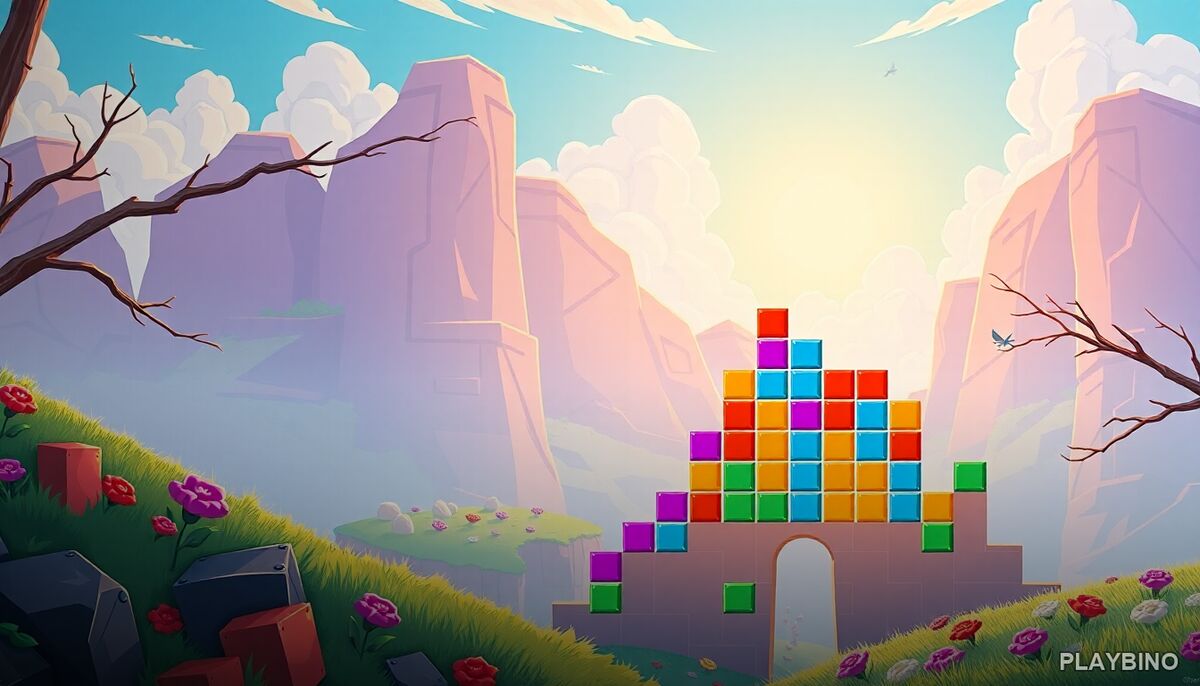
Tetra Challenge is not a standard block-clearing game. While the visual language borrows from familiar puzzle territory, the mechanics underneath work differently. Every placement you make carries a consequence, and the board responds to your mistakes in real time. Spaces that go unfilled don't just sit there waiting — the game begins filling them automatically, shrinking your available room with each error. You can play this browser puzzle on PlayBino and feel the difference within the first few rounds.
How the Consequence System Works
Most block puzzles reward you for clearing lines and punish you passively by letting the stack grow. Tetra Challenge flips that dynamic. Precise, well-considered placements earn rewards, but imprecise moves trigger an automatic fill response. The board doesn't wait for you to make another mistake — it acts immediately, closing off future options before you've had a chance to recover.
This creates a feedback loop that feels genuinely tense. Early rounds are forgiving enough to let you find your footing, but as the fill mechanism accelerates with each successive error, the pressure compounds quickly. A few careless moves in a row can leave you in a nearly unwinnable position.
Spatial Awareness Over Speed
Unlike arcade puzzle games that reward fast reflexes, Tetra Challenge rewards deliberate thinking. The core skill here is spatial awareness — understanding not just where a block fits right now, but how that placement shapes the options available two or three moves later. Players who approach it like a speed game will struggle. Those who treat each turn as a small strategic decision will last considerably longer.
Thinking Several Moves Ahead
The strategic layer is what separates this from simpler one-player puzzle games. You're constantly running a mental simulation: if I place this block here, what shapes does that create? What gaps remain? Can I fill those gaps with the pieces likely to come next, or am I boxing myself in?
Defensive thinking matters just as much as offensive line-clearing. Sometimes the right move is not the one that scores points immediately but the one that preserves flexibility for the next three turns. That balance between short-term gain and long-term board health is the central brain challenge the game keeps testing.
Managing the Fill Pressure
When the automatic fill begins accelerating, composure becomes a skill in itself. The board shrinking creates a psychological pressure that can push players into rushed decisions, which in turn trigger more fill events. Recognizing this spiral early and slowing down your decision-making — even when the board looks threatening — is often the difference between a recovery and a collapse.
Who This Game Suits
Tetra Challenge works best for players who enjoy logic and strategy puzzles where the challenge comes from planning rather than reaction time. If you find satisfaction in maintaining a clean board under mounting constraints, or if you like puzzle games that require genuine anticipation rather than pattern repetition, this one delivers that consistently. The single-player format means the only opponent is the game's escalating system, which keeps the focus entirely on your own decision quality.
A Strategy Title Worth Comparing
If you enjoy games that layer strategy onto a simple-looking format, the Tribe Boss challenge explores a different kind of strategic thinking and is worth a look after you've spent time with block placement mechanics. The two games approach brain-based gameplay from different angles, but the underlying demand for forward planning connects them.
What Makes Each Run Feel Different
- The fill mechanism responds to your specific mistakes, so no two sessions degrade the same way.
- Reward timing from precise placements varies based on your positioning choices.
- Board pressure escalates at a pace tied to your error frequency, not a fixed timer.
- Strategic priorities shift between offense and defense as available space shrinks.
- Composure under tightening constraints becomes a measurable part of the skill ceiling.
The result is a puzzle game with genuine replayability. Each attempt teaches you something about placement efficiency or error recovery, and that incremental learning keeps sessions feeling productive rather than repetitive.
"