The Ball Bounces: Urban Arcade Challenge Guide
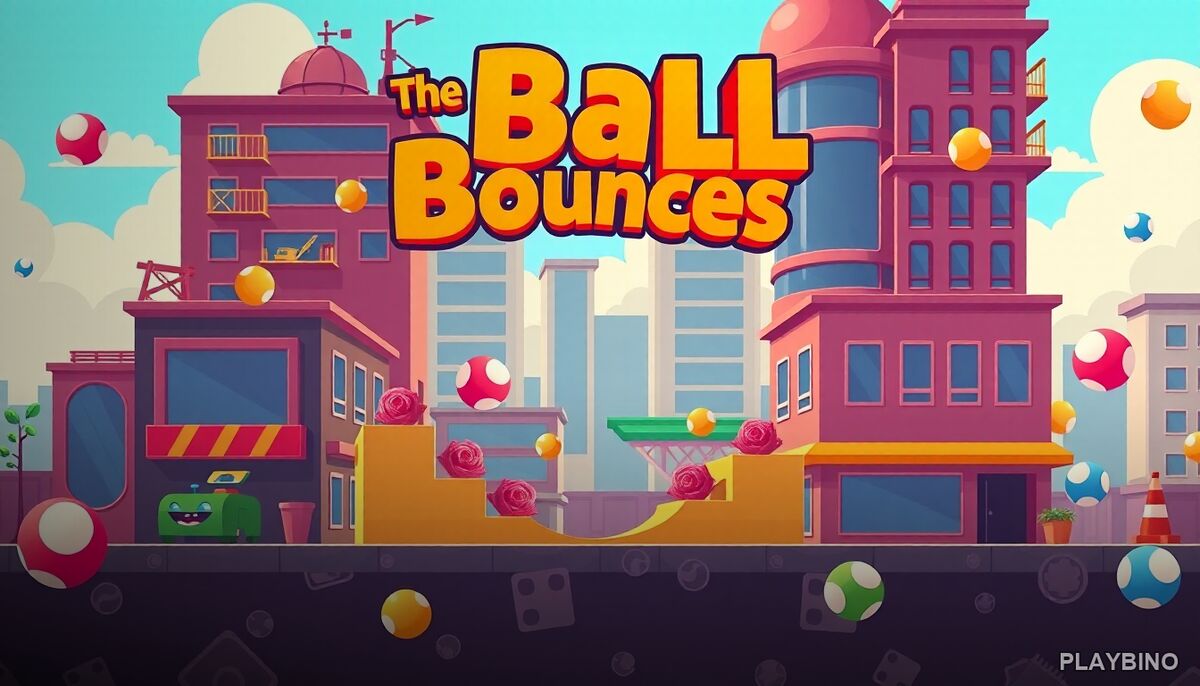
What Kind of Game Is This?
The Ball Bounces is a single-player arcade game built around physics-based movement and split-second timing. You control a ball that never stops moving, bouncing continuously through urban environments packed with obstacles, moving barriers, and aggressive characters that try to knock you off course. The challenge is not just reacting fast — it is reading each stage before the hazards arrive and positioning yourself to survive the next bounce. You can try the full run in your browser without any download or setup.
Momentum and Physics
The core mechanic that separates this game from simpler arcade titles is momentum. The ball does not stop between bounces, which means every jump carries the weight of the previous one. Lean too far in one direction and recovery becomes difficult. The physics feel deliberate rather than floaty, rewarding players who think one or two bounces ahead instead of purely reacting to what is directly in front of them.
Reading the Bounce Arc
Each surface and platform changes the angle and speed of the next bounce. Flat ground produces a predictable arc, but ramps, angled obstacles, and moving platforms shift the trajectory in ways that take time to internalize. Learning how the ball responds to each surface type is one of the most satisfying parts of early progression.
Hazard Timing
Moving barriers follow set patterns, but those patterns overlap with the ball's own rhythm, creating moments where the safe window is very narrow. Aggressive characters add a second layer of unpredictability. The game rewards players who slow down mentally and identify the pattern before committing to a path.
Urban Level Design
The levels are set in urban environments, which gives the obstacle layouts a grounded, recognizable feel. Streets, barriers, and structural elements form the geography of each stage. This visual framing also makes hazards easier to read at a glance — a moving vehicle or a character stepping into your path reads differently than an abstract geometric block, which helps with quick decision-making during fast sections.
Pattern Recognition Over Reflexes
Raw reaction speed matters, but it is not the whole picture. The game is designed so that repeated attempts teach you something concrete each time. A failed run is not wasted — it reveals the timing of a barrier, the spacing of a gap, or the behavior of a character that you can account for on the next attempt. This loop of failure and adjustment keeps the arcade challenge engaging rather than frustrating.
- Each level has a unique layout that requires a fresh approach
- Obstacles include both static hazards and moving, dynamic threats
- Momentum carries between bounces, making positioning decisions cumulative
- Pattern recognition shortens the learning curve on harder stages
- Single-player format keeps the focus on personal improvement
Who This Game Suits
If you enjoy arcade games that reward precision and rhythm over button-mashing, this one fits well. The single-player structure means there is no waiting and no external pressure — just you, the physics, and the level. Players who like platformers, ball-control games, or timing-based challenges will find familiar satisfaction here. The difficulty ramps steadily, so early levels serve as a genuine tutorial without feeling padded.
PlayBino hosts a range of browser arcade titles in this space. A comparable experience worth exploring is the parkour-focused Digital Circus: Parkour Game, which shares the same emphasis on movement rhythm and obstacle navigation in a very different visual setting.
Strategy for Later Levels
As stages grow more complex, a few habits help consistently. Watch the full screen before the ball reaches a new section. Identify which hazards move and which are static. Prioritize avoiding the aggressive characters over collecting anything optional. Accept that the first run through a new section is mostly reconnaissance — the second and third runs are where real progress happens.
"