The Matrix Merge: Grid Puzzle Strategy and Merge Mechanics Explained
What Kind of Puzzle Is This?
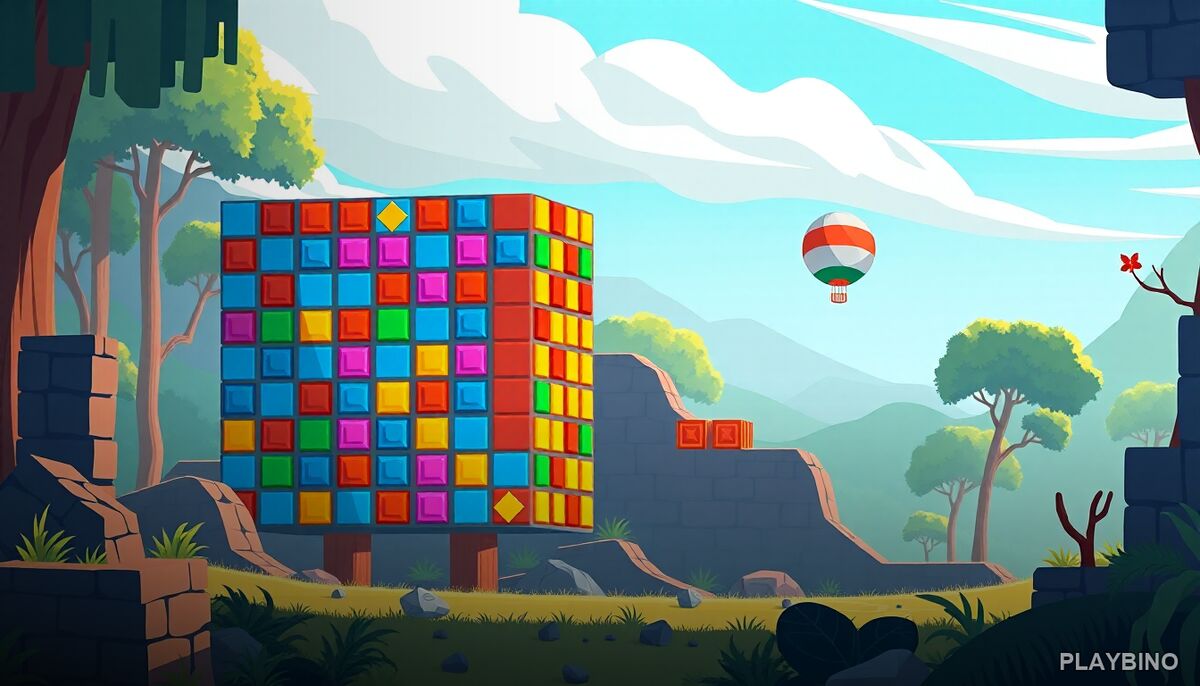
The Matrix Merge sits at the intersection of match-3 logic and spatial strategy. Instead of swapping tiles on a fixed board, you drop faces into a grid and watch identical ones fuse into higher-value characters. The chain of merges climbs progressively, so every placement decision carries weight. If you want to try it directly, the full browser version is available on PlayBino without any download or setup.
The concept is simple to grasp in the first minute, but the depth reveals itself quickly. As the grid fills, the margin for error shrinks. A careless drop can block a merge you needed three moves later, and recovering from a cluttered board takes real planning.
Grid Placement and Merge Logic
Each round, you receive a face to place somewhere in the matrix. Two identical faces in adjacent cells merge into the next character up the chain. That new character can then trigger another merge if a matching one is already nearby, creating satisfying chain reactions when the setup is right.
Spacing and Chain Potential
The key habit to build early is leaving room for chain reactions rather than filling cells randomly. Clustering low-value faces in one corner while building mid-tier merges elsewhere gives you breathing room. When a high-value merge is close, you want open cells nearby so the resulting character has somewhere to land without immediately boxing you in.
When the Board Gets Tight
A nearly full grid is where the strategy puzzle really begins. At that point, every drop is a trade-off: do you complete a lower merge to clear space, or hold out for the higher-value combination you've been building toward? There is no universally correct answer, which is what keeps repeated sessions feeling different.
Power-Ups and When to Use Them
The game includes a small set of power-ups that change the flow when used at the right moment. Bombs clear clusters of cells, which is most useful when one section of the grid has become a dead zone of mismatched faces. Point multipliers are better saved for moments when a high-value merge is about to land, squeezing maximum score from a single chain.
Burning a bomb too early wastes its potential. Holding it too long risks a full board before you can act. Learning that timing is one of the more satisfying skills the game develops over multiple sessions.
Scoring and Progression
Points scale with the value of each merged character, so chaining multiple merges in a single move produces significantly more than a series of isolated low-tier fusions. The evolutionary chain of characters gives a clear visual indicator of progress, and reaching the upper tiers of the chain in a single session becomes a personal benchmark worth chasing.
- Higher-tier merges award exponentially more points than lower ones
- Chain reactions from a single placement multiply the value of each step
- Keeping the grid open directly supports higher-scoring opportunities
- Power-ups used during high-value merges compound the score benefit
Who Plays This Well
Players who enjoy logic puzzles and spatial reasoning will find the most to work with here. The match-3 format is familiar, but the drop-and-merge mechanic adds a layer of forward planning that pure swap-based puzzles do not require. There is no time pressure in the core loop, so the challenge is entirely about decision quality rather than speed.
If you enjoy this style of grid-based merging, a comparable match puzzle with a different visual theme is Sea Match, which takes a similar casual-strategy approach in a marine setting worth exploring.
Replay Value and Session Length
Sessions can end quickly if the grid fills before you establish a merge rhythm, or stretch into longer runs when placement clicks and chain reactions keep space opening up. That variability makes it easy to play in short bursts or longer focused sessions depending on how much attention you want to commit. The steady climb through character tiers gives each run a natural arc, and improving your personal high score provides enough motivation to keep returning.
"