Traffic Escape Puzzle: Clear the Grid One Move at a Time
What You're Actually Doing
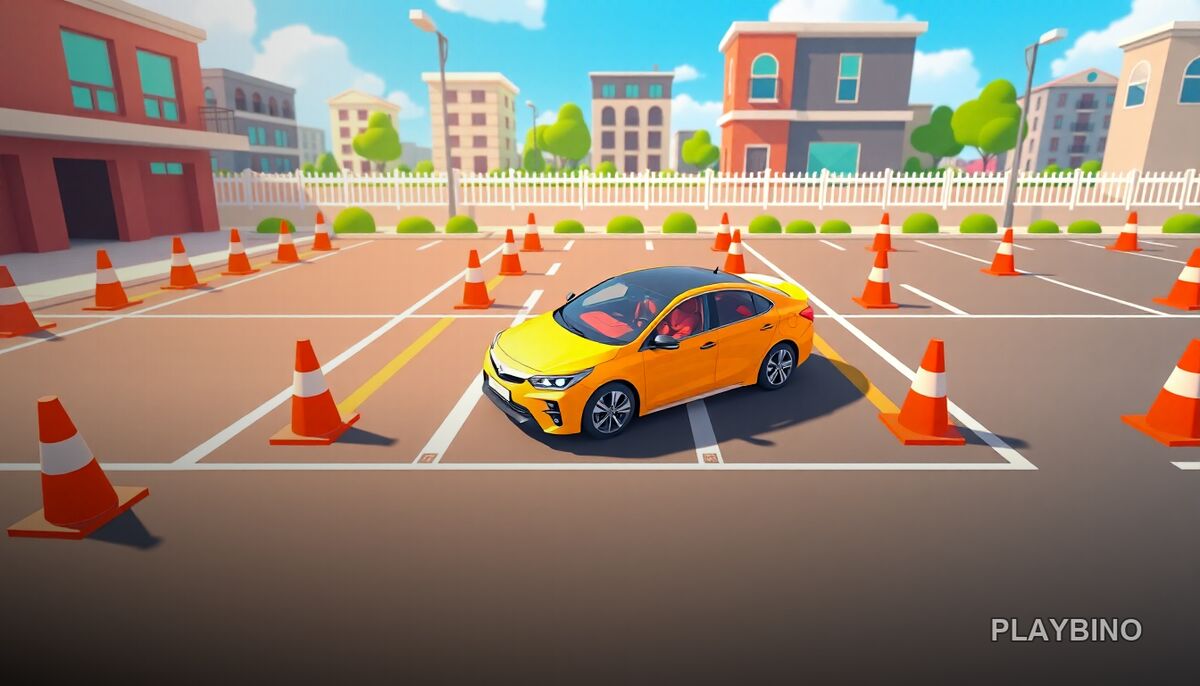
The premise is straightforward: a parking lot is jammed with vehicles, and your car needs to reach the exit. Every other car, truck, or van is blocking the way. Your job is to slide them out of the path — one move at a time — until a clear route opens up. This browser-based logic puzzle strips away everything except the core challenge, and that restraint is exactly what makes it work.
There are no timers counting down. No lives to lose. Just a grid, a set of vehicles, and a problem to solve at your own pace.
How the Sliding Mechanics Work
Each vehicle on the grid can only move along one axis — either horizontally or vertically — and only as far as open space allows. You tap or click a car and drag it in the direction it can travel. The constraint is the puzzle. Because every vehicle is locked to its lane, moving one often creates a chain reaction: shift a truck left, and a van above it can now slide down, which opens a column your car needs.
Reading the Grid
Before making any move, it helps to trace your car's exit path backward. Identify what's directly blocking the exit, then figure out what's blocking that blocker. Most solutions involve two or three layers of dependency, and recognizing those layers early prevents wasted moves.
When the Layout Gets Dense
Later levels pack the grid with longer vehicles and tighter configurations. A single truck spanning three cells can lock down an entire row. These situations require repositioning several pieces before any single move feels productive. The logic puzzle element becomes genuinely demanding — less about reflexes and more about spatial reasoning and planning several steps ahead.
Level Progression and Difficulty Curve
Early stages introduce the mechanics gently. Two or three vehicles, obvious solutions, short chains. As levels advance, the grid fills up and the dependency chains grow longer. Some configurations look solvable at a glance but have a hidden bottleneck that forces a complete rethink.
The brain-puzzle design means difficulty comes from complexity, not from speed or precision. Every move is deliberate. If you're stuck, the answer is always there — you just haven't found the right sequence yet.
Why the Minimalist Design Helps
There's no background noise competing for attention. The visual style is clean, the grid is easy to read, and vehicles are distinct enough that you never confuse their orientation. For a logic game, that clarity matters. When you're mentally mapping four or five moves ahead, visual clutter would actively work against you.
The absence of a timer is a deliberate design choice, not a missing feature. It shifts the experience from reaction-based play to pure problem-solving — which is the whole point of a 1-player puzzle game built around logic and spatial thinking.
Strategy Tips Worth Knowing
- Start by identifying your car's exit direction and work backward from there.
- Long vehicles (trucks) are often the key pieces — move them first to unlock the most space.
- If you're stuck, look for any vehicle that has free space on both sides; those are your flexible pieces.
- Don't fixate on one section of the grid. A move on the far side can ripple through the entire layout.
- Reset without hesitation. Starting over with fresh eyes often reveals the solution faster than grinding through a bad sequence.
A Similar Puzzle to Try Next
If the grid-clearing format appeals to you, the logical thinking involved here carries over well to other puzzle formats. Another browser puzzle built around escape mechanics — Logical Ball Escape — takes a different physical approach but demands the same kind of sequential reasoning. It's worth a look once you've worked through a few Traffic Escape levels on PlayBino.