TrollHead to Face: Sky Parkour, Coin Runs, and Tight Timing
What You're Actually Doing
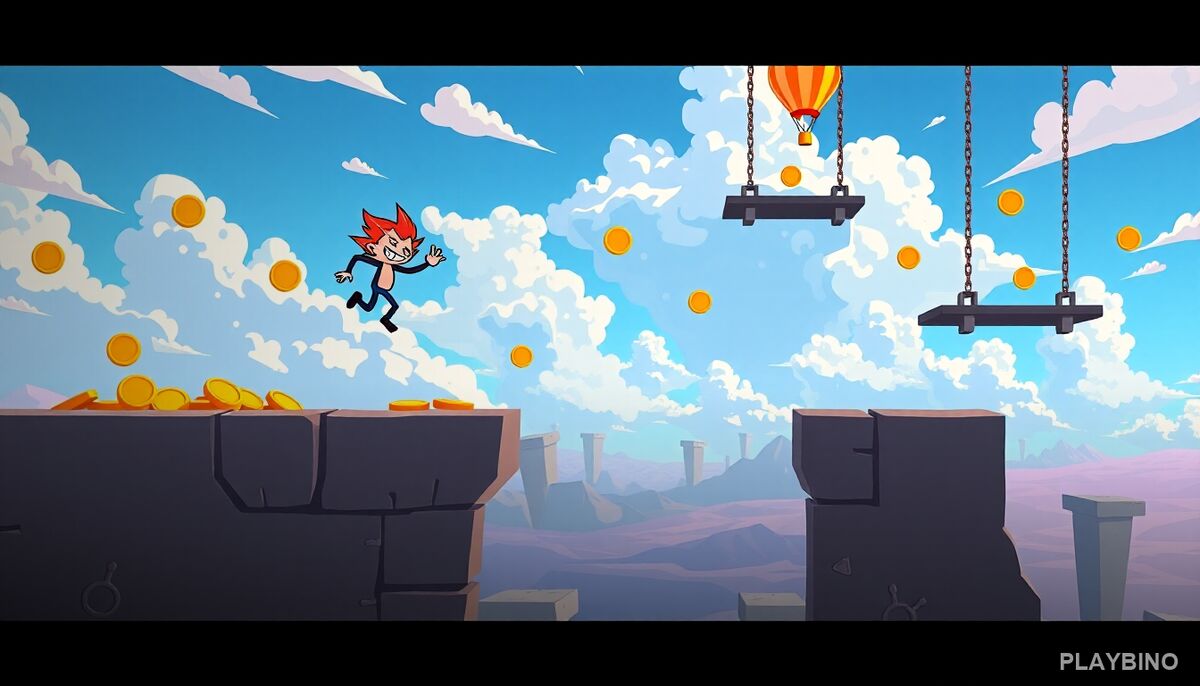
TrollHead to Face drops you into a meme-flavored platformer where a stick figure must navigate floating platforms suspended high in the sky. The objective is straightforward: collect every gold coin scattered across each level and reach the black portal before the timer hits zero. What makes it tricky is that a single missed jump sends you back to the start of the level. No checkpoints. No second chances mid-run.
The arcade-style pressure is immediate. You feel it from the first jump. This browser platformer keeps each attempt short enough that restarting never feels punishing — but the sting of a late misjudged leap absolutely does.
How the Platforming Actually Feels
The controls are responsive, which matters in a game built entirely around precision. Each jump has to be read carefully — the gap width, the platform size, and your current momentum all factor into whether you land cleanly or fall off the edge. The sky setting removes any ground safety net, so every platform you stand on is the only thing between you and a reset.
Timing Over Speed
The clock is always running, but rushing is what gets most players killed. The game punishes impatience more than hesitation. A slightly early jump on a narrow platform is a restart. Taking an extra half-second to line up properly is almost always the right call — until the timer gets dangerously low, at which point you have to commit and move.
Coin Collection Routes
Coins are not always placed in the most convenient order. Some are positioned near the edges of platforms or require a detour that costs time. Learning the layout of each level means recognizing which coins can be grabbed on the way to the portal and which require a dedicated side trip. Efficient routing separates clean runs from sloppy ones.
How Difficulty Scales
Early levels introduce the basic mechanics without overwhelming you. Platforms are spaced reasonably, coins are placed accessibly, and the timer gives you enough room to think. As the stages progress, gaps widen, platform sequences become less forgiving, and the coin placements start requiring more deliberate movement choices.
- Wider gaps demand more precise jump timing
- Smaller landing zones punish momentum miscalculation
- Coin clusters near edges force risk-reward decisions
- Later levels compress the time window significantly
The difficulty curve feels intentional rather than arbitrary. Each new challenge builds on what came before instead of introducing random spikes.
The Skill Loop That Keeps You Playing
The addictive quality of TrollHead to Face comes from a specific kind of frustration — the kind where you can see exactly what went wrong. You jumped too early. You went for the far coin when you should have saved it for last. You hesitated on a platform and burned three seconds you needed at the end. That clarity makes the next attempt feel winnable, which is why one more run turns into ten.
This is a game that rewards pattern recognition. The more times you run a level, the more automatic the route becomes, and the more mental bandwidth you can dedicate to the trickier sections. Skill-based arcade games live or die by this loop, and this one earns it.
Who This Game Suits
If you enjoy short, high-pressure runs where every jump counts, TrollHead to Face fits that itch well. It works best in short sessions — a few attempts, a cleared level, a sense of progress. Players who like action-arcade games with a skill ceiling will find something to work toward here. The meme aesthetic keeps the tone light even when the platforming gets genuinely demanding.
Players who prefer slower-paced or puzzle-oriented games might find the reflex demands less appealing. For a different kind of browser challenge, this alternative on PlayBino takes a more relaxed creative direction if you want a contrast to the high-speed platforming.
What Makes Each Run Count
There are no power-ups, no unlockable characters, and no passive upgrades. What you bring into each attempt is your read of the layout and your control over the jump timing. That simplicity is a strength. The game does not hide its challenge behind systems — it puts the obstacle directly in front of you and asks whether you can clear it cleanly this time.
That directness is what makes TrollHead to Face land as an arcade skill game. It asks one thing clearly, raises the bar steadily, and gives you just enough control to feel like improvement is always within reach.
"