TukTuk Rickshaw City Driving Sim: Navigate the Urban Chaos
What Kind of Game Is This?
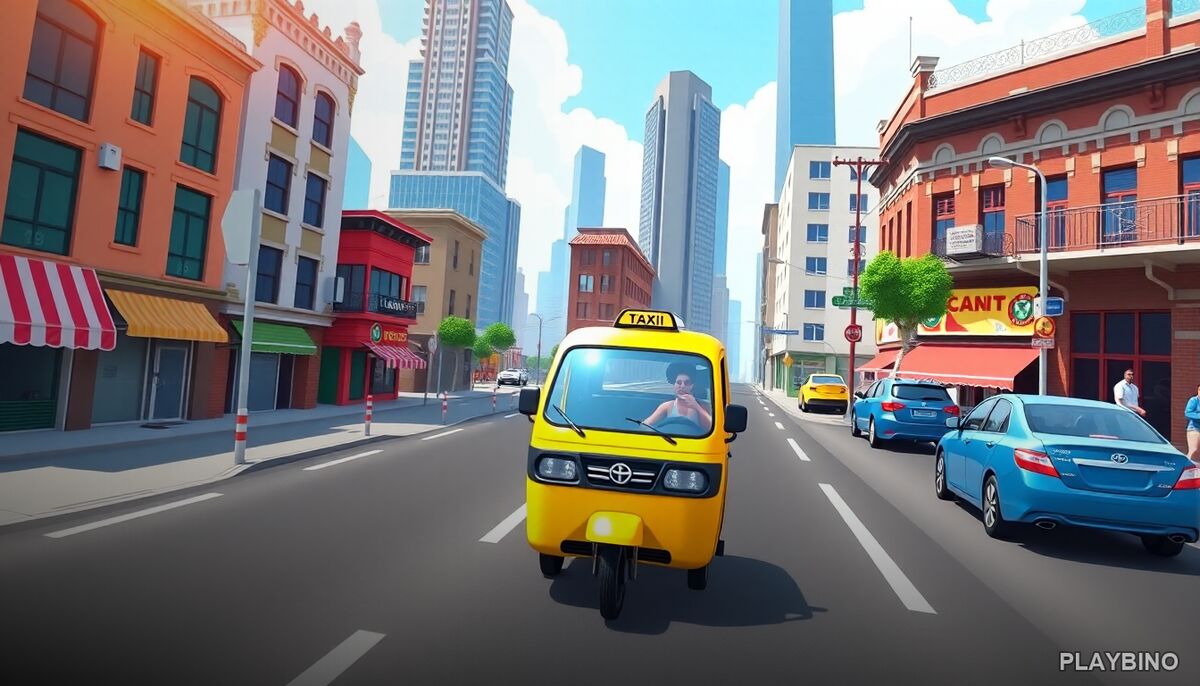
Most driving simulations hand you a sports car or a heavy truck. This one puts you behind a compact three-wheeled rickshaw, squeezing through traffic-clogged streets while passengers wait on the curb. TukTuk Rickshaw City Driving Sim is a single-player simulation built around urban navigation, time pressure, and the surprisingly tricky handling of a small vehicle in a busy city. It is not a lap-racing game. The challenge is spatial: reading traffic, finding gaps, and parking cleanly at drop-off points without bumping into anything.
The Core Loop
Each round starts with a passenger pickup. You drive to their location, collect them, then navigate to the destination before the timer runs short. Completing the trip earns currency that unlocks new city areas and harder routes. Fail to deliver on time or damage the rickshaw too often and the run ends without full rewards.
The loop is short but repeatable. Early routes feel manageable, with light traffic and wide streets. As the game progresses, intersections get busier, pedestrians appear more frequently, and the drop-off zones become harder to approach cleanly. Each level introduces a new layer of complexity without changing the fundamental controls.
Handling and Controls
The Rickshaw Feel
The tuk-tuk handles differently from a standard car. It is narrow enough to slip through gaps that would stop a larger vehicle, but it also tips into turns faster and requires more precise steering at speed. New players often overcorrect, which causes side-swipes against parked cars or curbs. Getting comfortable with the turn radius is the first real skill to develop.
Parking Precision
Drop-off zones require smooth entry. Arriving too fast or at a bad angle means repositioning, which costs time. The game rewards players who approach destinations early, slow down deliberately, and park in one clean move. Rushing the final few meters is one of the most common ways to lose earnings on an otherwise good run.
Traffic and Route Strategy
The city environment runs with moving vehicles and pedestrians at all times. Traffic does not pause for you. Busy intersections require reading the flow before committing to a crossing, and some routes that look shorter on the map are actually slower because of congestion. Finding alternate paths through side streets often saves more time than pushing through a crowded main road.
- Watch intersection timing before accelerating through
- Side streets reduce collision risk even if they add slight distance
- Pick up passengers quickly after arriving to preserve timer
- Slow down near pedestrian zones to avoid penalties
- Aim for clean parking angles on the first approach
Progression and Unlocks
Rewards from completed trips open new districts, each with its own traffic density and road layout. The city expands gradually, which means early routes stay available for practice while harder zones become accessible over time. Players who focus on clean, collision-free runs tend to accumulate rewards faster than those who rush and take damage frequently.
If urban driving simulations appeal to you, the urgency-focused gameplay in another city driving challenge offers a different kind of pressure, with emergency routes and tighter time constraints replacing the passenger fare structure.
Who This Game Suits
The game works well for players who enjoy simulation and racing mechanics but prefer a slower, more deliberate pace than circuit racing. The one-player format keeps the focus on personal improvement: cleaner routes, faster pickups, and better parking. Spatial awareness matters more than reflexes here. If you like reading traffic, planning short routes, and improving run efficiency across repeated attempts, this driving sim on PlayBino offers a satisfying challenge without requiring high-speed precision.