Vehicle Transport Police Simulator: Missions, Driving, and Strategy
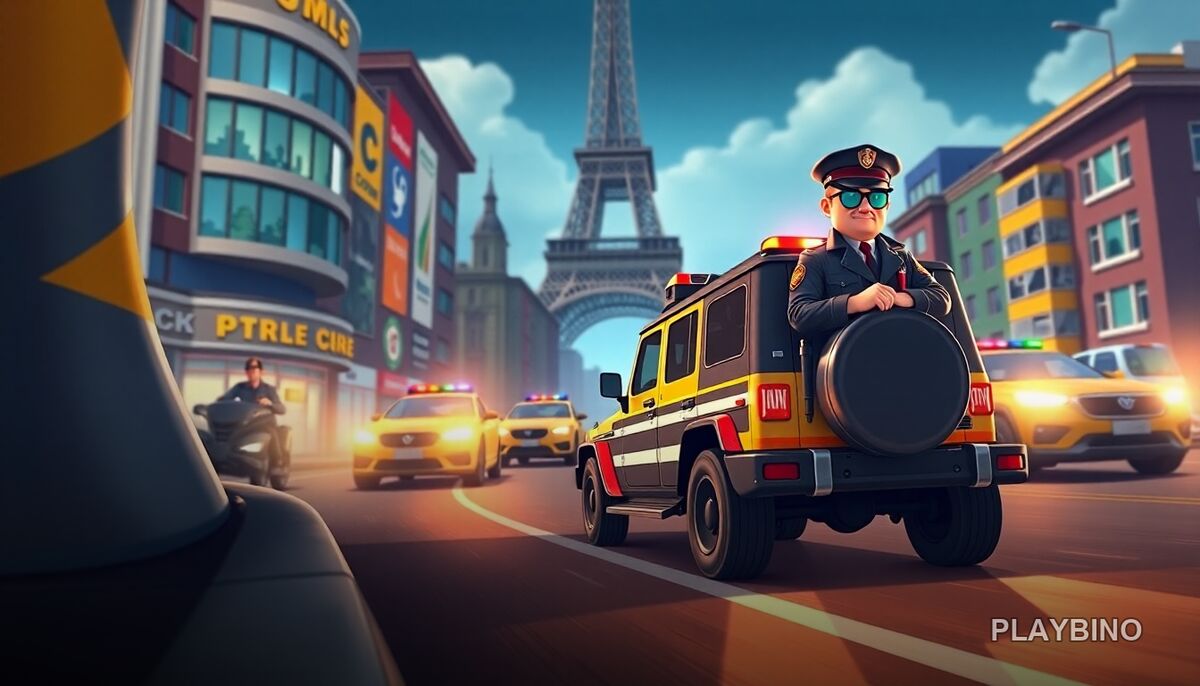
What You're Actually Doing
Most driving games put you behind the wheel of a sports car chasing a finish line. This one hands you the keys to heavy military transport vehicles and asks you to keep your passengers alive across some genuinely demanding terrain. This police transport simulation builds its challenge around responsibility rather than raw speed — you're moving military personnel, and their safety depends entirely on how well you read the road ahead.
The game spans city environments and rough off-road routes, and the difference between the two is immediately noticeable. Urban missions demand patience at intersections and tight maneuvering around traffic. Off-road sections punish overcorrection and reward smooth, deliberate steering. Neither feels like the same game twice.
Vehicle Handling and Terrain
Heavy Trucks vs. Rugged Jeeps
Not every mission uses the same vehicle, and that variety is one of the more interesting design choices here. Heavy transport trucks carry more weight, respond slower to steering input, and require more braking distance. Jeeps are more agile but less forgiving on uneven ground where momentum can flip them unexpectedly.
Switching between vehicle types mid-campaign forces you to recalibrate your instincts. A technique that works perfectly in a jeep can get you into trouble inside a loaded truck. Learning the weight and responsiveness of each vehicle type is as important as knowing the route.
Road Conditions
Terrain changes constantly. Paved city roads give way to gravel, mud, and uneven paths without much warning. The game doesn't hand you a minimap showing every hazard — you react in real time. Sudden obstacles, sharp turns, and surface changes keep your attention locked in throughout each mission.
Mission Structure and Progression
Missions escalate steadily. Early runs introduce basic transport routes with manageable traffic and straightforward paths. As the game progresses, the routes become more complex, obstacles appear with less warning, and the margin for error shrinks. Completing missions successfully unlocks harder assignments with more demanding conditions.
The progression feels earned rather than arbitrary. Each new challenge builds on skills the previous mission tested. Route planning starts to matter more as you advance — rushing through a city block might save seconds but costs stability, and an unstable truck with passengers aboard is a failed mission.
Driving Strategy That Actually Matters
- Brake early on downhill sections — heavy vehicles build momentum fast and stopping distance increases significantly on slopes.
- Use wide turns for large trucks — tight corners are where most transport missions go wrong.
- Scan ahead, not just immediately in front — obstacles appear suddenly, and reaction time is shorter at higher speeds.
- Slow down before surface changes — transitioning from paved road to off-road at speed causes handling problems.
- Don't chase speed on passenger missions — timing matters, but passenger safety is the primary scoring factor.
Who This Game Suits
If you enjoy simulation-style racing where precision and route awareness matter more than top speed, this game fits well. It rewards patience, spatial awareness, and the ability to adapt driving style to vehicle type. The 1-player format means the entire challenge rests on your decisions — no AI teammates to compensate for mistakes.
Players who prefer arcade-style racing with instant gratification may find the weight and deliberate pacing less appealing. But for anyone drawn to realistic vehicle simulation and progressive mission design, the game offers a satisfying loop that builds in difficulty without feeling unfair.
A Similar Driving Experience on PlayBino
If the transport and passenger-safety angle appeals to you, the Taxi Driver Simulator covers comparable ground from a civilian perspective — urban navigation, passenger handling, and time pressure all feature heavily. You can find a closer look at that driving challenge if you want to see how the two approaches compare before switching over.