Voxel Destroyer: Demolish Structures with Precision and Speed
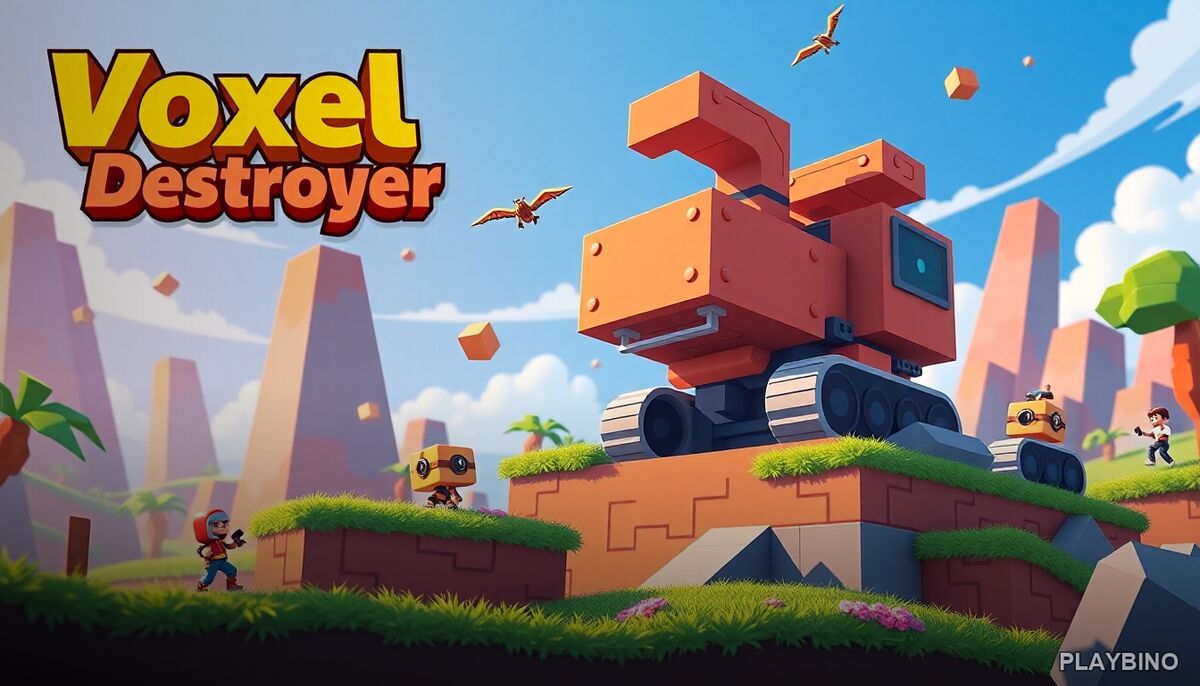
What Voxel Destroyer Is About
Most destruction games hand you a sledgehammer and tell you to go wild. Voxel Destroyer takes a sharper approach. You control a mechanical demolition unit fitted with a circular saw, and your job is to carve through colorful voxel structures before the timer hits zero. The structures range from basic pillars to elaborate architectural arrangements, and each one demands a slightly different plan of attack. Try the full challenge and see how quickly your approach evolves from level to level.
The Physics Behind the Destruction
The most satisfying part of the game is how the physics respond to each cut. Slicing through a load-bearing section can trigger a chain reaction, sending entire portions of a structure crumbling down in scattered blocks. That cause-and-effect relationship makes every move feel meaningful rather than random.
The circular saw does not just cut in one direction. Positioning matters. Approaching a tall formation from the base versus the middle produces completely different results. Learning which cuts cause the most structural damage is what separates fast runs from slow, incomplete ones.
Chain Reactions and Timing
Some formations are designed to reward patience. Waiting a half-second after one section falls can open up a cleaner path through the remaining blocks. Rushing every cut without reading the collapse pattern often leaves awkward chunks standing, which wastes time and forces extra passes.
Level Progression and Difficulty
Early levels introduce the core mechanics through simple shapes. A few pillars, a basic arch, nothing that requires much planning. The game uses these early stages to let you build intuition for how the saw interacts with different block configurations.
Later levels shift the challenge significantly. Taller structures require spatial awareness because the saw has to reach upper sections without destabilizing the wrong parts first. Complex architectural arrangements may have interlocking sections where one wrong cut locks off an easier route through the rest of the formation.
When the Timer Becomes the Real Opponent
The time limit is not just decoration. It creates constant pressure that changes how you think about each cut. In early levels, the timer feels generous. By the mid-game, you are actively planning two or three moves ahead just to stay on pace. The minimalist visual style helps here — there is no visual clutter to distract from the structure itself, so reading the formation quickly becomes a learnable skill.
Skill and Puzzle Elements Working Together
Voxel Destroyer sits at the intersection of action and puzzle thinking. The action side comes from the real-time pressure and physical saw control. The puzzle side comes from reading each structure and identifying the most efficient demolition sequence. Neither element dominates the other, which keeps the gameplay loop engaging across multiple sessions.
- Identify structural weak points before making the first cut
- Use chain reactions to clear multiple sections with a single pass
- Approach taller formations from the sides to control collapse direction
- Prioritize speed on simpler levels to build a time buffer habit
- Replay earlier levels to practice cleaner routing before tackling harder ones
Who This Game Suits
Players who enjoy action-puzzle hybrids with a clear feedback loop will find a lot to like here. The game does not require memorization or long setup — each level starts immediately, and the goal is always obvious. What keeps it interesting is the depth hiding underneath that simplicity. Beating your previous time on a level you already cleared feels genuinely rewarding because it proves your routing improved, not just your luck.
Angry Impostor offers a very different visual style but shares that same quick-session energy — another browser game built around fast, satisfying action worth adding to your rotation on PlayBino.
Replay Value and Personal Bests
Voxel Destroyer encourages replaying completed levels. Watching a structure collapse faster than your last attempt — because you found a better entry point or triggered a bigger chain reaction — gives the game a self-competitive quality. There is no multiplayer pressure, just you versus your own previous run. That loop works well for short sessions and longer grinding alike, depending on how deep you want to go into optimizing each demolition sequence.
"