We Bare Bears Difference: Spot Every Hidden Change
What You're Actually Doing
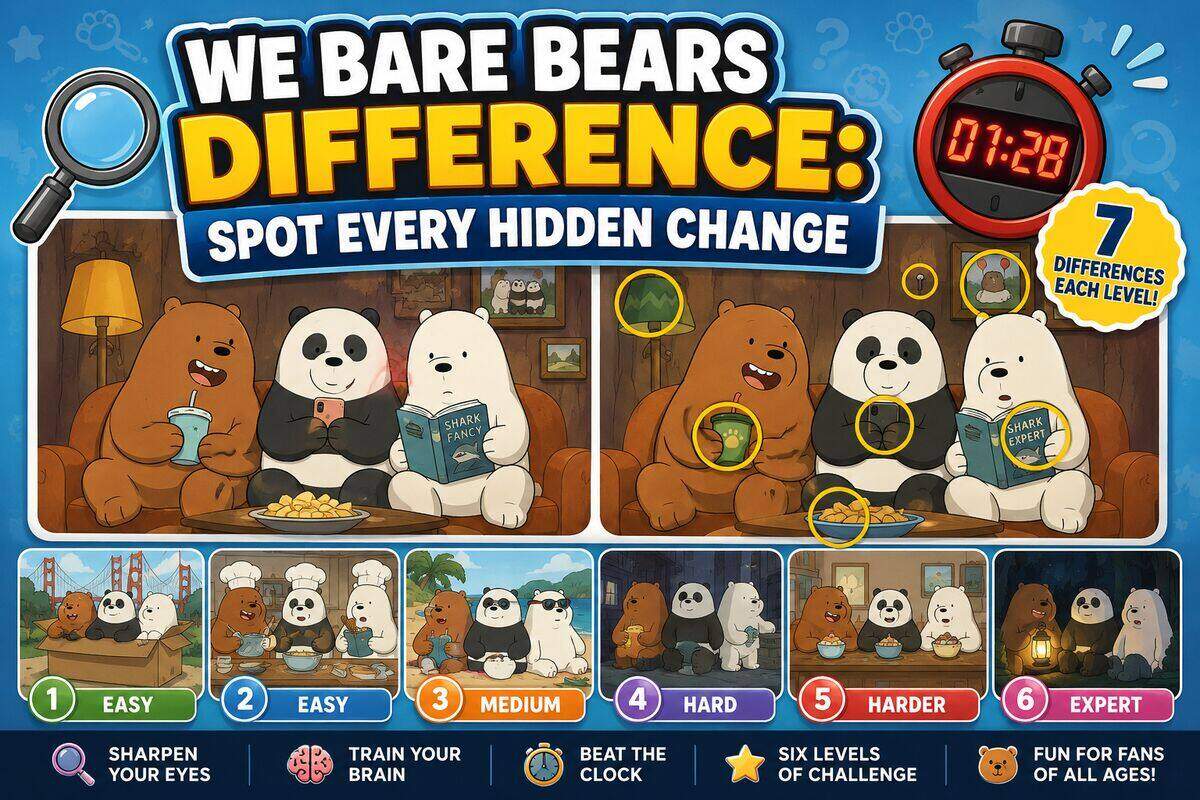
Two images sit side by side. They look identical at first glance, but seven small discrepancies are hidden somewhere in the artwork. Your job is to find all of them before the timer runs out. This spot-the-difference puzzle features Grizzly, Panda, and Ice Bear across six distinct scenes, each pulled from situations fans of the series will recognize immediately.
The core loop is simple: scan, spot, tap. But as the levels progress, the differences shrink in size and blend more convincingly into the background. What starts as a noticeable color swap can become a single missing stripe or a barely shifted shadow by the later rounds.
How the Levels Scale
Six levels separate casual players from sharp-eyed ones. Early scenes give you breathing room — differences tend to involve obvious elements like missing objects or clear color changes. By the middle rounds, the game starts hiding changes in textures, background details, and overlapping character features.
Time Pressure
Each round runs against a countdown. The timer doesn't reset between levels, which means any time you waste early affects how much margin you have later. Rushing through a scene often causes misclicks, which can cost you seconds or penalize your score depending on the round. Steady, methodical scanning almost always outperforms frantic clicking.
Difficulty Curve
The jump between level three and four is noticeable. Differences stop appearing in the obvious foreground and start hiding in corners, character outlines, and background props. Players who rely purely on instinct tend to stall here. Developing a consistent left-to-right or grid-based scan pattern helps maintain accuracy when the artwork becomes more complex.
Scanning Strategy
Most players make the mistake of scanning randomly. A structured approach works better. Divide each image into horizontal thirds and move through each zone systematically. Pay particular attention to:
- Character accessories and clothing details
- Background objects and their positions
- Color saturation differences between matching elements
- Edges and outlines where small shape changes hide easily
- Repeated patterns where one instance has been subtly altered
Memory plays a real role here. The brain naturally fills in gaps based on expectation, which is exactly what the puzzle exploits. Training yourself to look at what's actually there rather than what you assume is there is the key mental shift.
Who This Works For
The visual style and subject matter make it accessible to younger players, but the later levels provide enough challenge to engage adults who enjoy brain and memory puzzles. It's a short-session game — each level takes one to three minutes — so it fits naturally into brief breaks without demanding a long commitment.
Series fans get an added layer of enjoyment from recognizing the scenes and character moments used in the artwork. Even without that context, the puzzle mechanics stand on their own as a clean visual skill exercise.
A Similar Challenge Worth Trying
If the format appeals to you, another difference-spotting experience on PlayBino takes the same core mechanic into different visual territory. It's worth exploring if you want more practice sharpening that same kind of focused visual attention across varied scene types.
Why the Format Holds Up
Spot-the-difference games have stayed popular precisely because the challenge is immediately understandable and the satisfaction of finding a hidden change is immediate. This version earns its place in the genre by using appealing artwork, a clean interface, and a difficulty curve that respects the player's time without feeling too easy. Seven differences per scene is a well-balanced target — enough to require genuine effort without becoming frustrating.