Weight Puzzle 3D: Balance, Logic, and Spatial Thinking
What This Game Is About
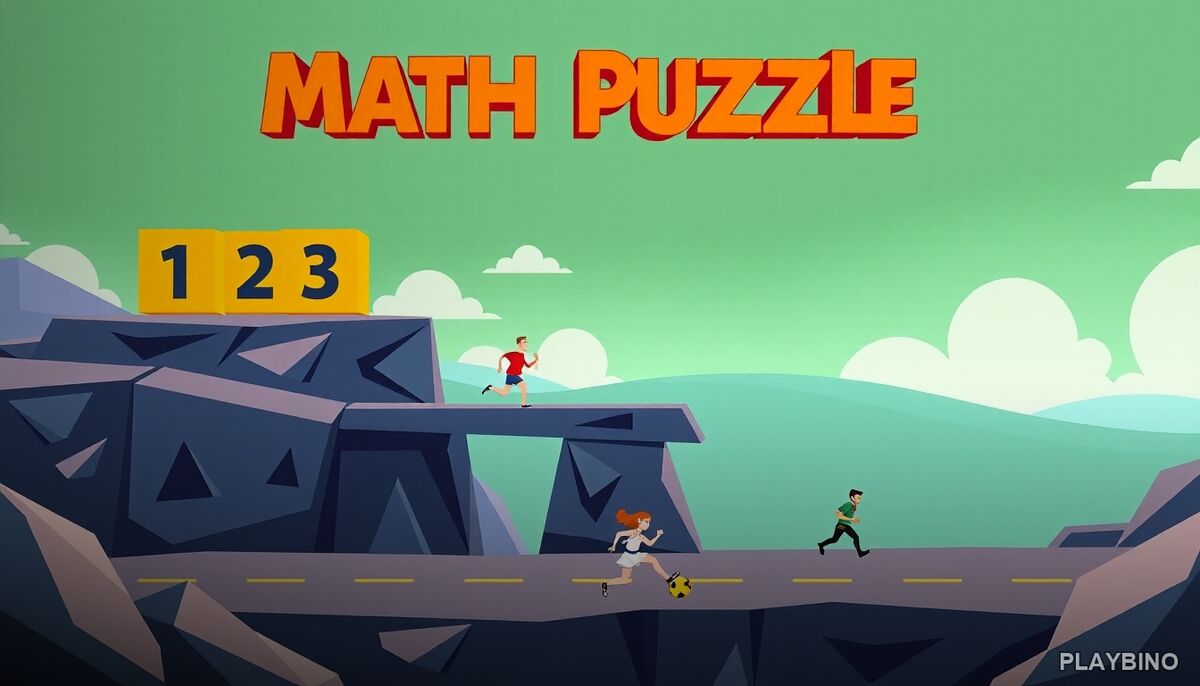
Not every puzzle game asks you to think in three dimensions while doing mental math at the same time. this browser-based logic challenge puts you in charge of a dynamic road that shifts depending on where you place weighted objects. Runners need to cross from start to finish, and it is your job to make sure the path stays stable enough for them to do it.
The core idea is straightforward: drag and drop weights onto a course, watch how the road reacts, and adjust until the balance is right. But the execution gets complicated fast. Heavier objects create stronger tilts. Lighter ones can counterbalance without overcorrecting. Every placement changes the equation.
How the Weight System Works
The puzzle logic here revolves around distribution rather than raw placement. You are not just filling gaps — you are calculating how mass spreads across a structure. Place a heavy weight on the left side of a segment and the road tilts left. Add a lighter counterweight on the right and it levels out, but only if the ratio is close enough.
Mass and Momentum
Each object in the game carries a different mass value. The visual difference between weights is clear, but the actual effect on the road requires a moment of spatial reasoning before you commit. Rushing placements leads to overcorrection, which is one of the more satisfying failure states in a puzzle game — you can see exactly what went wrong.
The 3D Perspective
The three-dimensional view adds a layer of depth that flat puzzle games cannot replicate. You are reading the road from an angle, which means judging tilt requires accounting for the camera perspective. Early levels ease you into this, but later stages use the 3D layout to hide balance points that are not immediately obvious.
Level Progression and Difficulty Curve
The game starts with simple two-segment roads and single weight placements. Within a handful of levels, the course layouts grow longer, the number of available weights increases, and the margin for error shrinks. Some levels introduce weight combinations that seem impossible until you realize the solution depends on sequencing — placing one weight before another changes the structural outcome entirely.
This kind of progression rewards players who pay attention to cause and effect rather than trial and error. The brain-focused design means that understanding why a solution works matters as much as finding it.
Strategy Tips for Trickier Levels
- Start from the middle of the road and work outward rather than placing weights from one end.
- Use lighter weights first to test how the road responds before committing heavier pieces.
- Watch the tilt animation carefully — it shows you which side needs correction before the path fully destabilizes.
- On longer courses, treat each segment as its own balance problem before connecting them into the full path.
- If a level feels stuck, remove all weights and start fresh with a different anchor point.
Who This Game Suits
Weight Puzzle 3D fits players who enjoy logic and spatial reasoning puzzles without time pressure. There is no countdown, no lives system, and no penalty for failed attempts. The satisfaction comes from the moment a perfectly balanced road locks into place and the runners move through without interruption.
It sits comfortably alongside other 3D puzzle games that reward observation over reflex. If you enjoy this kind of spatial challenge, another 3D puzzle worth exploring is Magic Finger Puzzle 3D, which approaches spatial interaction from a completely different angle.
Why the Balance Mechanic Holds Up
What keeps Weight Puzzle 3D engaging across multiple sessions is that the balance mechanic never becomes purely mechanical. Even when you understand the rules, each new level layout forces you to apply that understanding differently. The road shapes change, the weight options shift, and the runner paths vary enough that no two levels feel like repetitions of each other.
PlayBino hosts the game directly in the browser, so there is no download or setup involved. The puzzle design is clean, the 3D visuals communicate the physics clearly, and the difficulty ramp is steady enough to keep the challenge meaningful without becoming frustrating.
"