Wheel Racer: Skateboard Racing with Stunts, Loops, and Upgrades
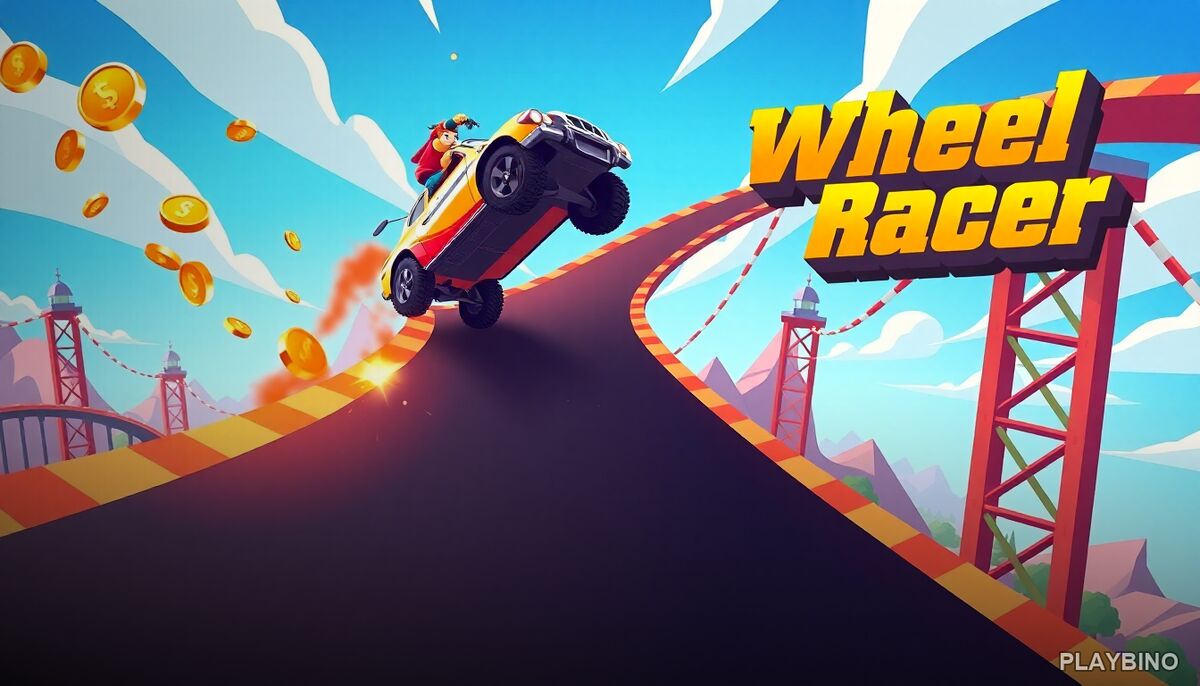
What Wheel Racer Is About
Skateboard racing meets arcade action in this browser game that throws you across gravity-defying tracks from the first second. Loops, ramps, inverted sections, and sharp corners all demand quick reflexes and consistent timing. You can play it directly in your browser without any downloads, and the challenge escalates steadily as each new course adds more complexity to the layout.
The core loop is straightforward: reach the finish line while collecting coins and keys scattered across the track. Coins feed into upgrades and gear, while keys unlock new skateboards and special items. That combination of racing and collecting keeps each run purposeful rather than just a sprint to the end.
Track Design and What to Expect
Courses in Wheel Racer are built around momentum. Flat stretches are rare. Instead, the tracks chain together ramps, loop-the-loops, and upside-down segments that force you to commit to speed and trust the physics. Slowing down at the wrong moment can break your flow through a loop, which often means falling short of the exit.
Hazards and Geometry
The inverted sections are the sharpest test of control. Gravity flips, and maintaining speed becomes the only thing keeping you on the track. Sharp turns following a ramp require you to read the course ahead rather than react to what is already in front of you. After a few runs on each track, the layout starts to feel predictable, and that is when real improvement happens.
Stunt Mechanics and Scoring
Airborne moments are not just transitions between ramps — they are scoring opportunities. Executing flips and tricks while in the air earns bonus coins, which adds a secondary layer of decision-making to every jump. You can take a conservative line and land cleanly, or commit to a trick and risk the timing.
Timing Your Tricks
The window for pulling off a flip is short. Launching too late off a ramp leaves you without enough air, while triggering a trick too early can throw off your landing angle. The best runs balance clean landings with consistent trick attempts on the bigger jumps, where the extra hang time gives you room to recover.
Upgrades and Unlockables
Coins collected during runs go toward performance upgrades that improve how your rider handles the more demanding tracks. Speed, control, and stability upgrades each affect how the skateboard behaves through tight sections and aerial recovery. Keys, the rarer collectible, unlock entirely new boards with different base stats and visual styles.
- Coins: fund performance upgrades and gear purchases
- Keys: unlock new skateboards and special items
- New boards: come with varied stats that suit different track styles
- Upgrades: incrementally improve speed, handling, and aerial control
Prioritizing upgrades early makes the mid-game tracks significantly more manageable. A faster board with poor control can make loop sections punishing, so balancing the two stats tends to produce more consistent results than maxing speed alone.
Who This Game Suits
Wheel Racer fits players who enjoy arcade racers with a physical, momentum-driven feel rather than traditional car-based racing. The skateboard setting adds a stunt dimension that pure racing games skip, and the coin-and-key collection system gives each run a secondary objective beyond finishing first. If you have already spent time with another stunt-focused two-wheeler challenge, the transition to skateboard physics here will feel familiar but distinct enough to stay engaging.
The game works well in short sessions. Individual tracks are not long, but the upgrade progression and increasing course difficulty give it staying power across multiple runs. PlayBino hosts the game with no friction, so picking up a run mid-day and putting it down again is easy.
Getting the Most from Each Run
The players who score highest are the ones who treat coin collection as a route-planning problem. Some coins sit in risky positions near the edge of a ramp or at the peak of a loop. Deciding which ones are worth the detour versus which ones break your momentum is a consistent micro-decision throughout each course. Combine that with trick timing on major jumps, and a single run involves far more active thinking than the arcade presentation might suggest.
"