Wooden Block Blast Master: Grid Puzzle Strategy and Tips
What Kind of Puzzle Is This?
Wooden Block Blast Master sits in a satisfying corner of the logic puzzle genre — no timers, no rushing, just a grid waiting to be filled and cleared. The goal is straightforward: place shaped wooden pieces onto the board so that complete rows or columns form and disappear. What makes it genuinely engaging is how quickly a clean board can turn into a cluttered mess if you stop thinking two or three moves ahead.
Each turn presents three new pieces with different shapes. You place them in any order, but all three must be placed before the next set arrives. Play it directly in your browser and the warm wooden aesthetic immediately sets a relaxed tone — until the board starts filling up and every placement suddenly carries weight.
How the Placement System Works
The core mechanic is spatial: you are matching irregular shapes to available space on a grid. Some pieces are compact L-shapes or small squares. Others are long bars or awkward T-shapes that demand open stretches of the board. The challenge is that you cannot rotate pieces, which means the shape you receive is the shape you must place.
Clearing Lines
A row or column clears the moment it is completely filled. Clearing multiple rows or columns simultaneously triggers a chain bonus that pushes scores up significantly. Learning to set up these multi-clears — rather than just placing pieces wherever they fit — is the main skill gap between casual play and high scoring.
Managing Gaps
Awkward gaps are the real enemy. A single misplaced piece can leave a hole that no future shape can fill, slowly locking down sections of the board. Experienced players scan all three incoming pieces before placing any of them, looking for combinations that leave the grid as open and regular as possible.
Scoring and Progression
There are no levels in the traditional sense. The game is a single continuous session that ends when no remaining piece from the current set can fit anywhere on the board. Scores climb based on how many lines are cleared per move, with multi-clears rewarding significantly more than single-line clears. Chaining several clears in a row builds the score quickly and gives a strong sense of momentum.
- Single line clear: base points
- Two lines cleared at once: multiplied reward
- Three or more lines in one placement: high chain bonus
- Combo clears across consecutive moves: streak multiplier
Strategy That Actually Helps
The most useful habit is keeping the center of the grid open. Edges fill naturally because pieces tend to get pushed toward corners, but a blocked center makes multi-clears nearly impossible. Prioritize placements that create full rows or columns rather than those that simply use up a piece efficiently.
When the board gets tight, focus on the piece that is hardest to place first. Fitting the awkward shape into the remaining space before placing the easier pieces gives more flexibility. Saving the compact or straight pieces for last means you have more options when space is limited.
Who This Game Suits
The no-timer format makes Wooden Block Blast Master a strong choice for players who prefer thinking over reacting. The puzzle logic is accessible — anyone familiar with block-placement games will understand the rules immediately — but the spatial challenge deepens considerably as sessions go on. It works well in short bursts or longer focused sessions, since each game is self-contained.
Players who enjoy this style of spatial logic puzzle may also find value in another block-placement challenge worth exploring, Ultimate Block Puzzle, which takes a comparable grid format in a slightly different direction.
The Aesthetic and Feel
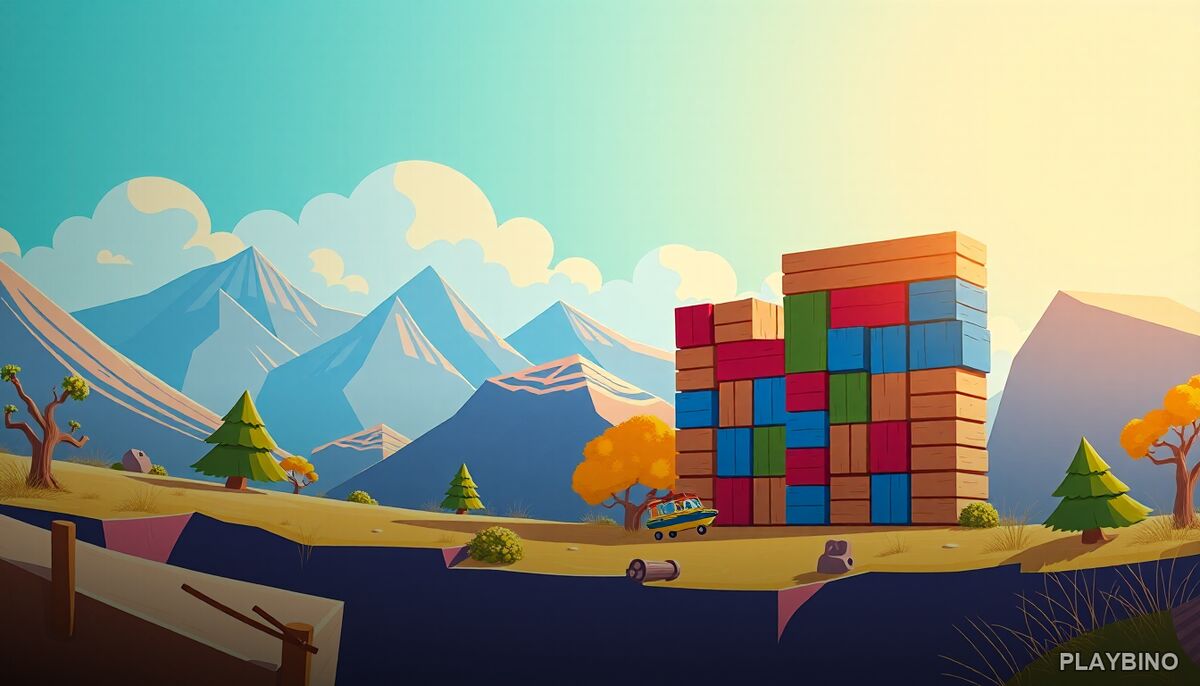
The wooden visual theme is more than decoration. It gives the game a tactile, grounded feel that many similar puzzle games lack. Pieces look like physical objects being slid into place, and the earthy color palette keeps the experience calm even when the board is nearly full. PlayBino hosts the game in a clean browser format that keeps the focus entirely on the puzzle itself, with no distractions pulling attention away from the grid.