World of Alice Numbers Shapes: Learning Geometry and Counting Through Play
What This Game Is About
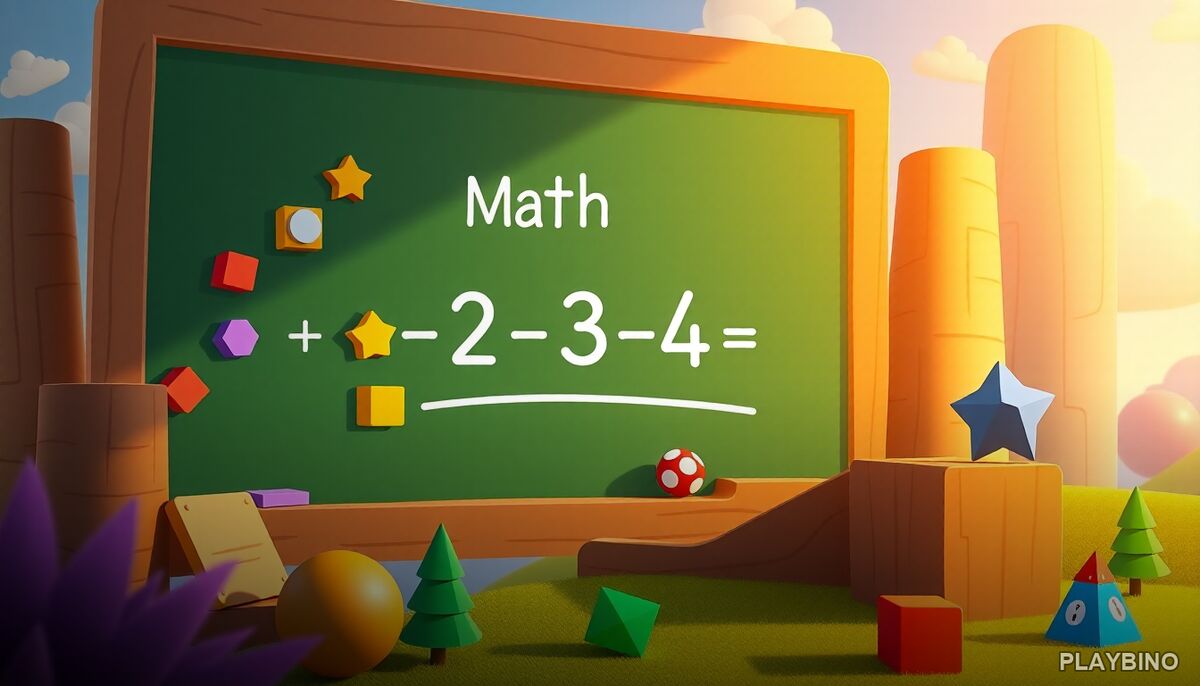
Geometry and early number sense can be tricky concepts for young children, but World of Alice Numbers Shapes wraps both into a cheerful, low-pressure experience. Set inside Alice's vibrant illustrated world, the game presents a series of visual exercises where children match shapes, count objects, and trace geometric forms across colorful scenes. Play it directly in your browser and you'll notice immediately how the design prioritizes calm exploration over speed or competition.
Core Activities and Puzzle Structure
The game is built around recognition and pattern matching rather than timed challenges. Each activity introduces a concept — a shape, a number, or a visual grouping — and asks the child to respond through simple interaction. Tracing outlines reinforces shape memory, while counting illustrated animals or objects builds number familiarity in a concrete, visual way.
Shape Recognition
Children encounter common geometric forms like circles, squares, triangles, and rectangles presented in different sizes and colors. The variety prevents rote memorization and encourages actual visual understanding. Matching exercises ask players to identify a shape by name or by appearance, reinforcing both vocabulary and spatial logic.
Counting and Number Matching
Number activities use illustrated scenes filled with objects. A child might count five birds on a branch or match a numeral to a group of illustrated flowers. The connection between abstract symbols and real quantities is one of the most important early math concepts, and the game handles it through repetition without feeling repetitive.
Pacing and Learning Approach
One of the most deliberate design choices here is the absence of time pressure. There is no countdown, no score penalty for wrong answers, and no rushing. Children can examine each activity at their own pace, which aligns well with how early learners actually absorb new information. Positive reinforcement — cheerful animations and encouraging feedback — follows each correct response, keeping engagement steady without creating anxiety around mistakes.
The progression moves gradually from simpler to more complex combinations. Early levels focus on single shapes or small numbers, while later activities introduce combinations and slightly more abstract matching tasks. This gentle difficulty curve keeps the experience accessible without stalling.
Controls and Device Compatibility
Navigation relies on intuitive touch controls, making the game comfortable on tablets and smartphones as well as desktop browsers. Young children can tap or click to select answers, trace shapes with a finger or mouse, and move through menus without needing to read instructions. The interface is icon-driven and visually clear, which matters a great deal for the target age group.
Who Plays This and Why It Works
This is a brain and logic puzzle game designed specifically for early learners, roughly ages three to six, though older children revisiting foundational concepts will find it approachable too. Parents and educators looking for a supplementary activity that reinforces classroom math concepts without screen fatigue will find the format useful. Sessions are short, activities are self-contained, and there is no pressure to complete everything in one sitting.
The visual style — bright colors, friendly characters, illustrated worlds — keeps young players genuinely curious about what comes next. It does not feel like a worksheet dressed up with animations. The game earns its engagement through variety and warmth rather than reward loops or unlockables.
A Similar Shape-Focused Challenge
Children who enjoy this kind of visual geometry practice might also respond well to another shape-focused browser experience — Shapes Game on PlayBino takes a comparable approach to geometric recognition with its own set of interactive challenges. The two complement each other well if you're building a short rotation of educational activities.