World\'s Hardest Game Hate Cube: Brutal Precision Puzzle Guide
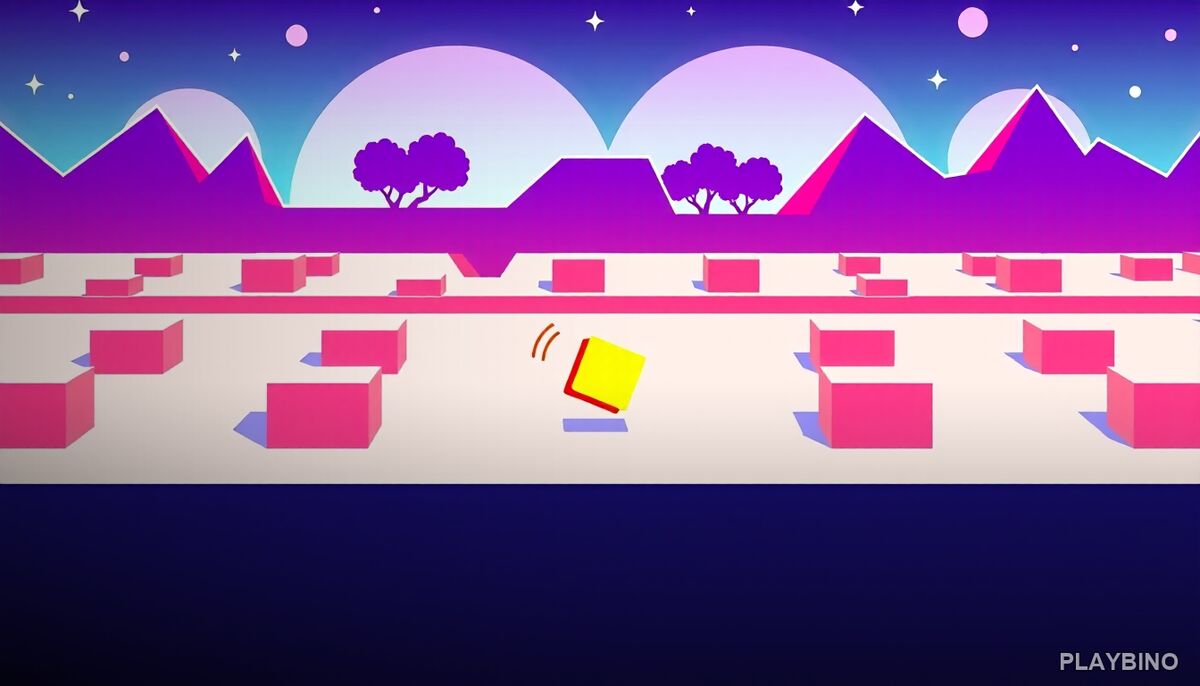
What Kind of Game Is This?
Some browser games ease you in gently. This is not one of them. World's Hardest Game Hate Cube drops you into a minimalist maze and immediately makes clear that one wrong move resets everything. The concept is simple: move a square through a course filled with circling, bouncing, and sweeping hazards without touching a single one. The execution, however, demands a level of focus that most casual players will find genuinely humbling.
If you want to experience the frustration firsthand, this precision obstacle challenge is playable directly in your browser with no downloads required.
The Core Mechanic
Movement is the entire game. You control a small cube using arrow keys or WASD, guiding it from a starting zone to a goal area while avoiding moving obstacles. There are no weapons, no power-ups, and no health bars. Contact with any hazard sends you straight back to the beginning of that level.
Hazard Patterns
The obstacles follow fixed paths. Circles sweep in arcs, lines of dots pulse back and forth, and clusters of hazards rotate around central points. None of this is random. Every hazard moves on a predictable cycle, which means the game is fundamentally about memorization and timing rather than reflexes alone. Once you recognize a pattern, you can plan your route through it.
The Reset Loop
Dying repeatedly is part of the design. Each failed attempt gives you slightly more information about where the gaps in a pattern are and how long each window stays open. Players who treat deaths as data rather than failures will progress faster than those who rush and repeat the same mistakes.
What Makes the Levels Difficult
Early levels introduce single hazard types in open spaces, giving you room to observe before committing. Later levels stack multiple overlapping patterns in tighter corridors, forcing you to thread through two or three simultaneous cycles at once. The difficulty curve is steep and intentional.
- Narrow corridors that leave almost no margin for error
- Overlapping obstacle cycles that require precise entry timing
- Longer routes that demand sustained concentration across multiple hazard zones
- No checkpoints within a level, so a late mistake restarts the whole run
The minimalist visual design strips away any distraction. There are no backgrounds to look at, no animations to enjoy, and no story to follow. The entire experience is focused on the obstacle course in front of you.
Pattern Recognition Strategy
The most effective approach to any level is to watch before moving. Spend a few seconds observing the full cycle of each hazard group. Identify the moment when a gap opens and measure how long it stays open. Then move only when you are confident the timing works.
Counting beats is a useful technique. Many obstacle patterns repeat on a consistent rhythm. If you count the frames or seconds between gap openings, you can time your movement without guessing. This transforms the game from a reaction challenge into a logic puzzle, which is where the brain tag becomes genuinely relevant.
Who This Game Suits
Players who enjoy single-player brain challenges and are comfortable with high failure rates will find real satisfaction here. The accomplishment of clearing a level that took dozens of attempts feels disproportionately rewarding precisely because the game never softens the difficulty. There are no consolation prizes and no partial credit.
If your interest leans more toward visual logic puzzles with a different kind of challenge, another puzzle-based game on PlayBino worth exploring is Connect Image, which trades obstacle timing for image-matching logic.
Surviving the Frustration
The game's name is honest about its intent. Hate Cube is designed to provoke frustration, and it succeeds. The key to staying engaged is accepting that the difficulty is the point. Short sessions work better than long ones. When a level starts to feel impossible, stepping away for a few minutes often makes the pattern clearer on return.
Every level in this single-player puzzle experience is solvable. The hazard paths never change, the timing never shifts, and the route through each course always exists. Finding it is entirely a matter of patience and observation.
"