Baby Panda Memory: Card Matching Puzzle Guide
What You're Actually Doing
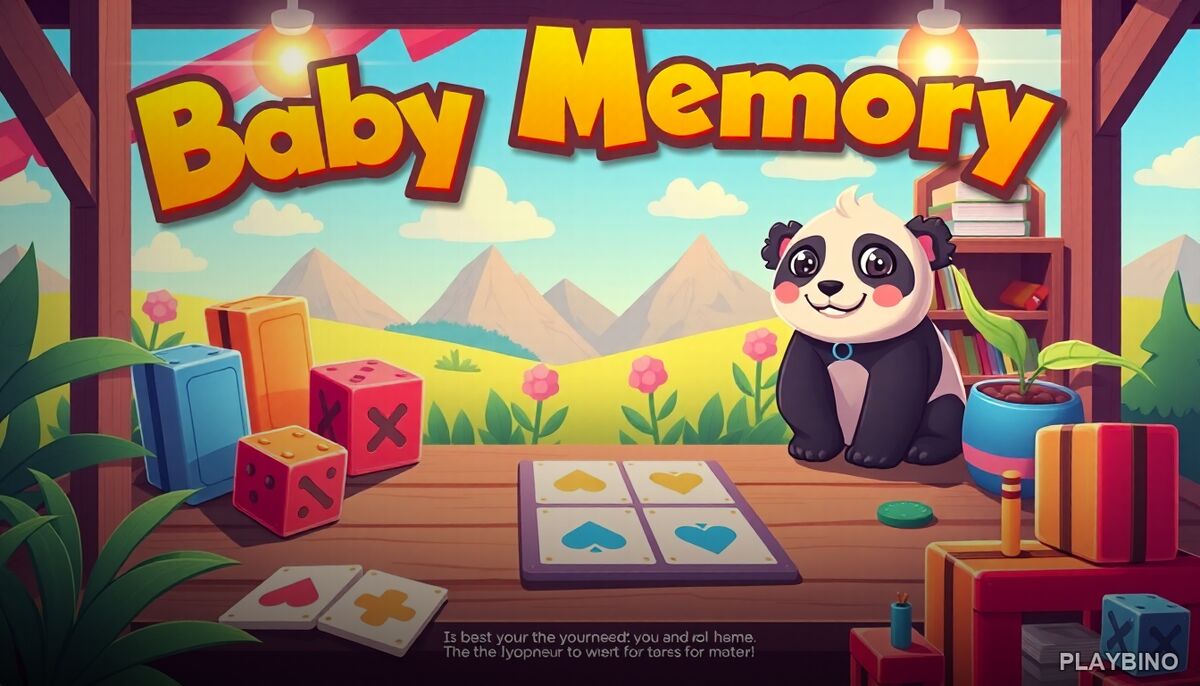
The premise is simple: a grid of face-down cards, each hiding a panda illustration, and your job is to flip two at a time until every pair is matched and removed. This browser puzzle strips memory gameplay down to its core — no timers forcing panic, no complicated scoring systems, just the satisfying rhythm of remembering where things are and acting on that knowledge.
Each turn gives you two flips. If the cards match, they disappear from the board. If they don't, they flip back face-down and you carry that position in your head for the next attempt. The challenge builds quietly and consistently.
Grid Size and Progression
The game starts with smaller grids, which lets you get comfortable with the flip mechanic before the board expands. Early rounds might feel almost too easy — and that's intentional. The smaller layouts build spatial familiarity with how the cards are arranged, which matters a lot once the grid grows.
When the Grids Get Larger
As the arrangement scales up, the number of unique panda illustrations increases alongside it. You're no longer tracking four or six positions — you might be managing a dozen or more, each with its own visual identity. The memory demand shifts from short-term recall to something that requires more deliberate attention across multiple turns.
Mismatching a pair you've already seen before is where most players lose ground. The game doesn't punish mistakes harshly, but each unnecessary flip adds to the mental load you're carrying into the next round.
Reading the Panda Illustrations
One of the subtle mechanics here is how the card artwork functions as your memory anchor. Each panda design is distinct enough to be recognizable at a glance, which means your brain can form a quick visual tag for each position. Players who treat the illustrations as landmarks — rather than just abstract images to memorize — tend to clear boards more efficiently.
Bright colors and playful animation reinforce this. The visual feedback when a match lands is satisfying without being distracting, and the cheerful style keeps the atmosphere relaxed even when the grids get demanding.
Strategy That Actually Helps
Scan Before You Commit
Before flipping anything, take a moment to look at what's already visible from previous turns. If you remember a card from two moves ago, start there. Leading with a card you're confident about gives you useful information regardless of whether the second flip matches.
Work From the Edges
Many players find it easier to mentally map cards along the grid's edges first, using position relative to corners as a reference point. This reduces the cognitive effort of tracking positions in the middle of a dense board.
The Seafaring Memory Challenge takes a similar card-flipping approach but wraps it in a nautical theme — that one is worth a look if you want to compare how different visual themes change the feel of the same core mechanic.
Who Finds This Rewarding
Baby Panda Memory works well as a short mental exercise. Sessions can be as brief or extended as you want, and the low-pressure design makes it easy to step away and return without losing momentum. The puzzle structure rewards patience and observation over speed, which makes it a different kind of challenge from reflex-based arcade games.
PlayBino hosts a range of memory and puzzle titles, and this one sits comfortably in that category — accessible enough for casual play, but genuinely engaging once the grids push your recall to its limit.