Seafaring Memory Challenge: Ocean Tile Matching Puzzle Guide
What the Game Is About
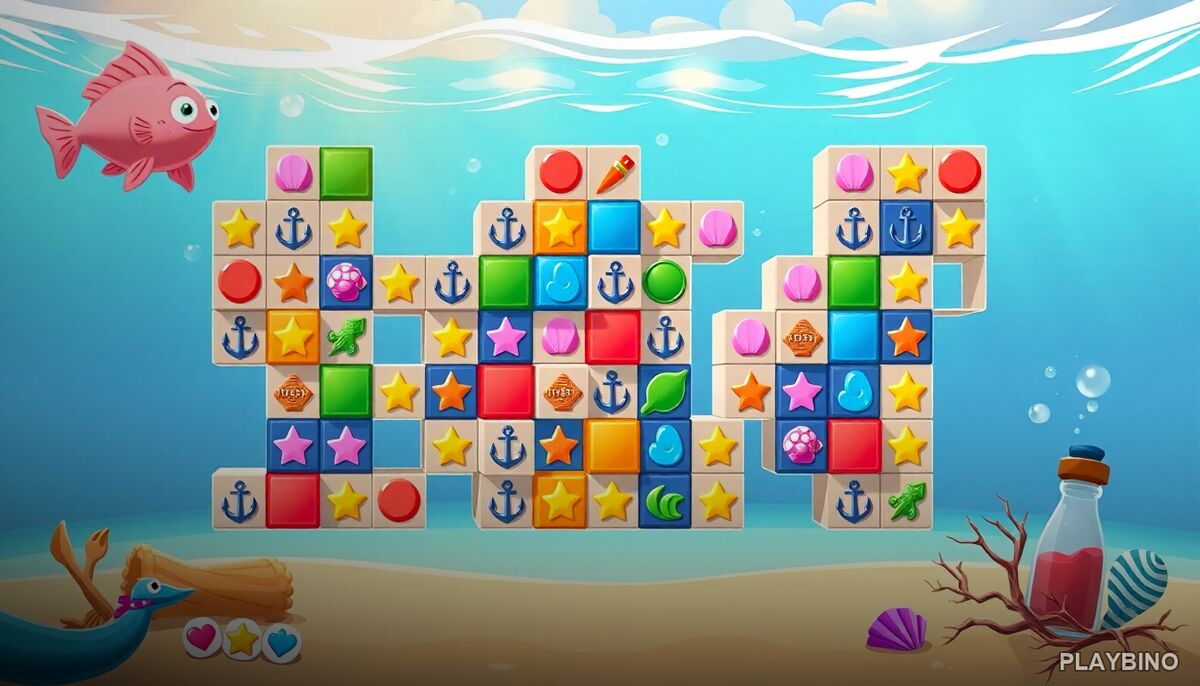
Seafaring Memory Challenge takes the familiar tile-matching format and wraps it in a calm underwater setting. The grid is filled with face-down tiles hiding ocean-themed symbols — colorful fish, seashells, anchors, treasure bottles, and more. Your job is to flip two tiles at a time, spot matching pairs, and clear the board. Every correct match removes those tiles permanently. Every wrong guess flips them back over, and now you have to remember where they were.
The puzzle logic is straightforward, but the mental load grows quickly. You can play it directly in your browser without any setup, making it easy to jump into a session whenever you have a few minutes.
How the Grid Scales
Early levels keep the grid small and manageable. The number of unique symbols is low, so even a few wrong flips are easy to recover from. As you progress, the grid expands and the symbol count increases, which means more tiles to track and a longer gap between seeing a symbol and needing to recall its position.
Tracking Pairs
The core skill here is spatial memory — remembering not just what a symbol looks like, but where it sits on the board. When a tile flips back after a failed match, its location becomes a piece of information you need to hold onto. Players who mentally map the grid in sections tend to perform better than those who flip tiles at random.
Pacing Your Flips
There's no countdown timer forcing rushed decisions, which lets you think before committing to a flip. Taking a moment to scan the board before each turn helps. If you've already seen a symbol earlier and remember roughly where it was, prioritize confirming that pair before exploring new tiles.
The Ocean Theme and Atmosphere
The aquatic backdrop keeps the experience visually calm. Marine icons are drawn with enough color contrast to distinguish them quickly, which matters when the grid gets large. The relaxed atmosphere suits the puzzle format well — this isn't a frantic arcade game, it's a focused memory exercise dressed in ocean imagery.
Unlimited Levels and Replay Value
One of the more practical features is the unlimited level structure. There's no fixed endpoint, so the difficulty keeps climbing as long as you keep playing. This makes it useful both for short casual sessions and for longer practice runs where you're genuinely trying to push your recall further.
- Grids expand progressively with each stage
- More unique symbols appear as levels advance
- Incorrect pairs flip back, testing recall over time
- No timer pressure — play at your own pace
- Ocean-themed symbols with clear visual contrast
Who This Game Suits
The mechanics are simple enough that anyone can pick it up immediately, but the escalating grid size means the challenge doesn't plateau quickly. It works well for players who enjoy quiet, logic-focused puzzles rather than reflex-heavy games. It's also a reasonable choice if you're looking to actively exercise short-term memory in a low-stress environment.
Memory-based matching games share a lot of design DNA across different themes. Baby Panda Memory is another tile-matching experience worth exploring if you want to see how the same puzzle format plays out with a different visual style and audience focus.
Strategy That Actually Helps
A few habits make a noticeable difference as the grids get larger. First, work through the board in a consistent pattern rather than flipping tiles at random — left to right, row by row, for example. This gives you a mental map of what you've seen and where. Second, when you flip a tile and don't find its match immediately, note its position before moving on. Third, prioritize completing pairs you already have partial information about before exploring unknown tiles. These small adjustments compound across a long session on PlayBino and can significantly reduce the number of failed flips per board.
"