Big Wheels: Endless Runner Where Size Is Everything
What You're Actually Doing
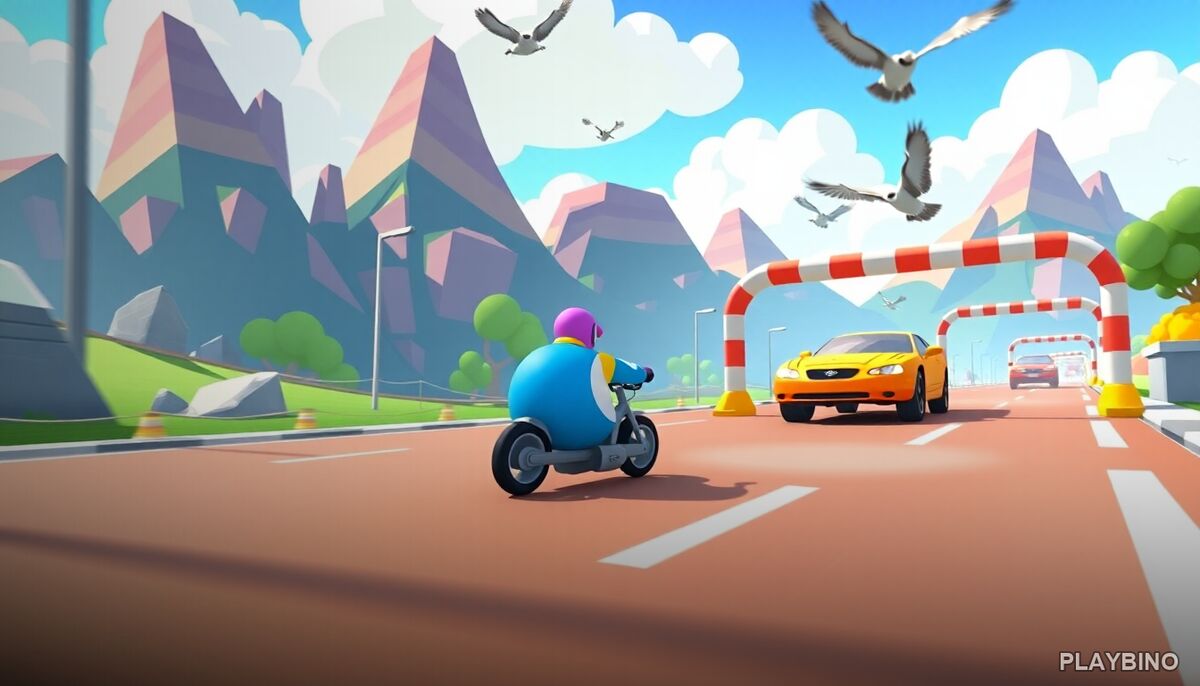
Most endless runners ask you to dodge. Big Wheels asks you to grow. Each run starts with a basic bike rolling forward through a course packed with gaps, ramps, and barriers. Scattered across the terrain are loose wheels, and grabbing them is the core loop. More wheels mean a bigger, heavier vehicle with the momentum to crush obstacles that would stop a smaller ride cold.
The shift from fragile bike to rolling juggernaut happens fast when you play it right. Try the full run on PlayBino and you'll notice within the first thirty seconds how dramatically the vehicle changes shape as your wheel count climbs.
How the Terrain Works Against You
The course isn't a flat track. Slopes angle sharply upward without warning, gaps open between platforms, and barriers sit low enough to clip your wheels if your stack isn't tall enough. The terrain design is the main source of difficulty, not enemy units or timers.
Momentum and Inclines
Steep climbs punish low wheel counts directly. A small bike loses speed on inclines and may stall before reaching the top. A larger vehicle carries enough mass to push through the same slope without slowing. This means wheel collection isn't just about power — it's about maintaining the forward motion that keeps the run alive.
Gaps and Timing
Jumps require you to hit ramps at the right speed. Too slow and you fall short. The interesting tension is that a heavier wheel stack lands harder, which can destabilize the vehicle on uneven landings. Learning how your current size affects jump distance and landing stability is one of the more satisfying skill elements in the game.
Losing Wheels and Managing Risk
Obstacles don't just stop your run — they strip wheels from your vehicle. Hit the wrong barrier at the wrong angle and your carefully built stack shrinks. Lose enough wheels and you're back to a fragile bike that can't clear the next section. This creates a constant risk calculation: push forward aggressively to grab more wheels, or navigate cautiously to protect the ones you already have.
The further into a run you get, the more creative the course layouts become. Sections start combining multiple hazard types — a gap followed immediately by a low barrier, or a steep climb leading into a narrow platform. These combinations punish reckless speed while rewarding players who read the terrain ahead.
What Makes the Skill Ceiling Interesting
- Wheel collection routes aren't always obvious — some clusters require slight detours that cost time but pay off in size
- Landing angle after jumps affects whether you keep or lose wheels on impact
- Certain barriers can be crushed only above a specific wheel count, making size a gating mechanic
- Speed and mass interact differently depending on the slope gradient
The action and skill tags on this game are accurate. It's not a passive runner where you tap to jump. Reading the course, managing your stack, and deciding when to chase wheels versus when to play it safe are all active decisions that matter every few seconds.
Similar Games Worth Exploring
If the growth mechanic appeals to you — building something bigger as you progress through a run — Big Team follows a comparable concept with its own take on scaling up through collection. It's worth a look if you enjoy this style of arcade progression.
Who This Game Suits
Big Wheels works well for players who want an endless runner with more decision-making than a standard obstacle dodge game. The bike and skill elements combine into something that feels reactive rather than purely reflexive. Runs are short enough to replay quickly, but the course complexity increases enough to keep later attempts genuinely harder than early ones.