BlockPuzzle: Strategy, Logic, and the Art of Fitting Every Piece
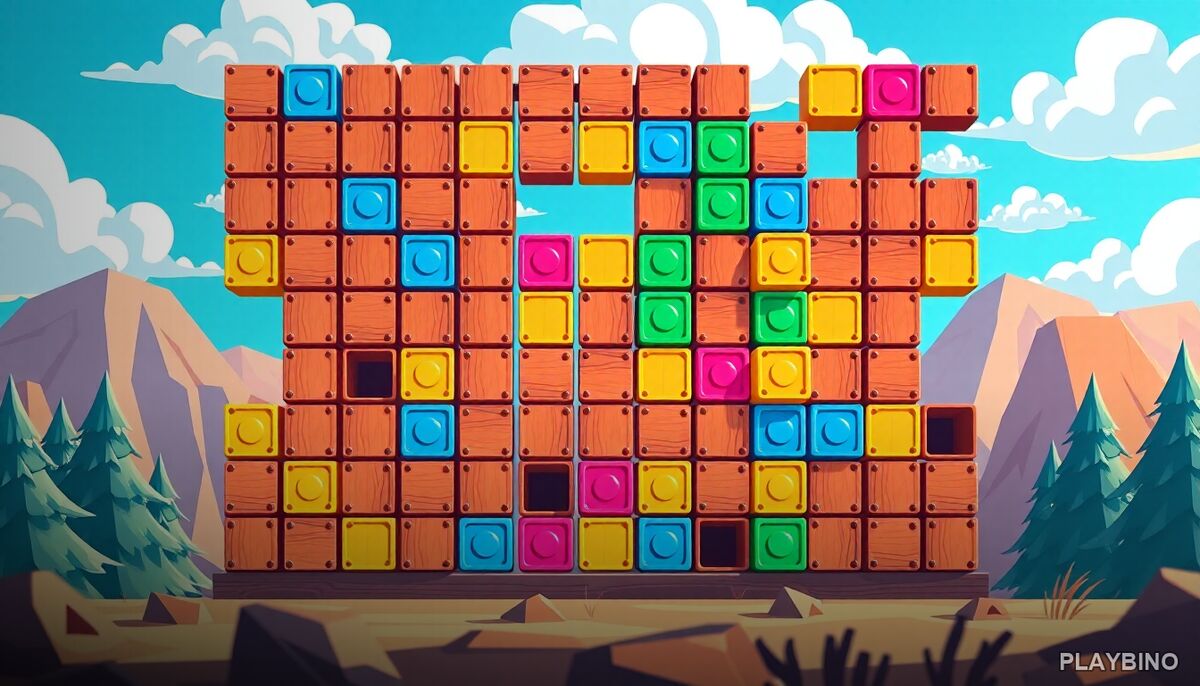
What BlockPuzzle Actually Is
At first glance, BlockPuzzle looks deceptively simple: a clean grid, a handful of wooden block shapes, and no timer counting down. But within a few turns, the board starts to feel crowded, and every placement suddenly carries weight. This grid-based logic challenge strips away everything except the core decision loop — where does this piece go, and what does that choice cost you three moves from now?
The game presents three randomly shaped pieces each round. You must place all three somewhere on the board before the next set arrives. When you complete a full row or column, it clears and opens up space. When you can't fit a piece anywhere, the run ends. That's the entire structure, and it's enough to make a session last far longer than expected.
The Core Mechanics
Piece Shapes and Grid Pressure
The blocks arrive in irregular shapes — L-forms, straight bars, compact squares, and awkward corners. None of them can be rotated, which removes a common escape route found in similar puzzle games. You work with what you're given, and that constraint is where the real strategy lives.
As the board fills up, open spaces become fragmented. A long horizontal bar might be useless if the only open rows are broken into small gaps. Recognizing which shapes are dangerous to leave unplaced — and which open zones are worth protecting — is the central skill the game builds over time.
Clearing Lines
Rows and columns clear independently, so a single well-placed block can trigger multiple clears at once. Chaining clears not only boosts your score but dramatically relieves board pressure. Learning to set up those chain moments, rather than clearing lines one at a time, separates casual play from deliberate strategy.
Planning Ahead Without Overthinking
One of the more interesting tensions in BlockPuzzle is the balance between thinking ahead and not freezing up. Because there's no timer, it's tempting to analyze every possible placement before committing. But the board state changes with each piece, so over-planning early can leave you unprepared for the shapes that arrive later.
A practical approach: prioritize keeping at least two or three open columns and rows at all times. Avoid filling corners completely unless a clear is imminent. Treat the center of the board as flexible territory and the edges as high-risk zones once the grid starts tightening.
Why the Minimalist Design Works
The wooden block aesthetic and quiet interface aren't just cosmetic choices. They keep cognitive load low, which lets the puzzle logic stay in focus. There are no flashing effects, no background noise competing for attention, and no upgrade menus to navigate. The result is a brain puzzle that feels meditative even when the board is one bad placement away from collapse.
This design philosophy makes BlockPuzzle accessible to players who want a logic challenge without the sensory overload common in mobile puzzle games. It also makes it easy to pick up mid-session — the state of the board tells you everything you need to know instantly.
Who This Game Suits
- Players who enjoy spatial reasoning and logic puzzles
- Anyone looking for a calm but mentally engaging browser game
- Strategy fans who prefer no-timer pressure over reflex-based challenges
- Puzzle enthusiasts who like incremental difficulty that builds naturally
If tile-placement logic is something you enjoy, Forest Tiles offers a comparable puzzle experience with its own approach to grid-based thinking worth exploring alongside this one.
Scoring and Longevity
Points accumulate with each cleared line, and multi-line clears reward more than single ones. There's no level progression or unlockable content — the game is a continuous session that ends when the board locks up. That structure makes every run feel self-contained, and the randomness of piece distribution means no two sessions play out identically.
The absence of a save state or checkpoint system keeps stakes honest. A single careless placement can unravel a strong run, which makes the moments of clean board management genuinely satisfying. PlayBino hosts the game directly in the browser, so there's no installation barrier between you and a fresh attempt.