BlocksEliminate: Strategy, Scoring, and Satisfying Chain Reactions
What Kind of Game Is This?
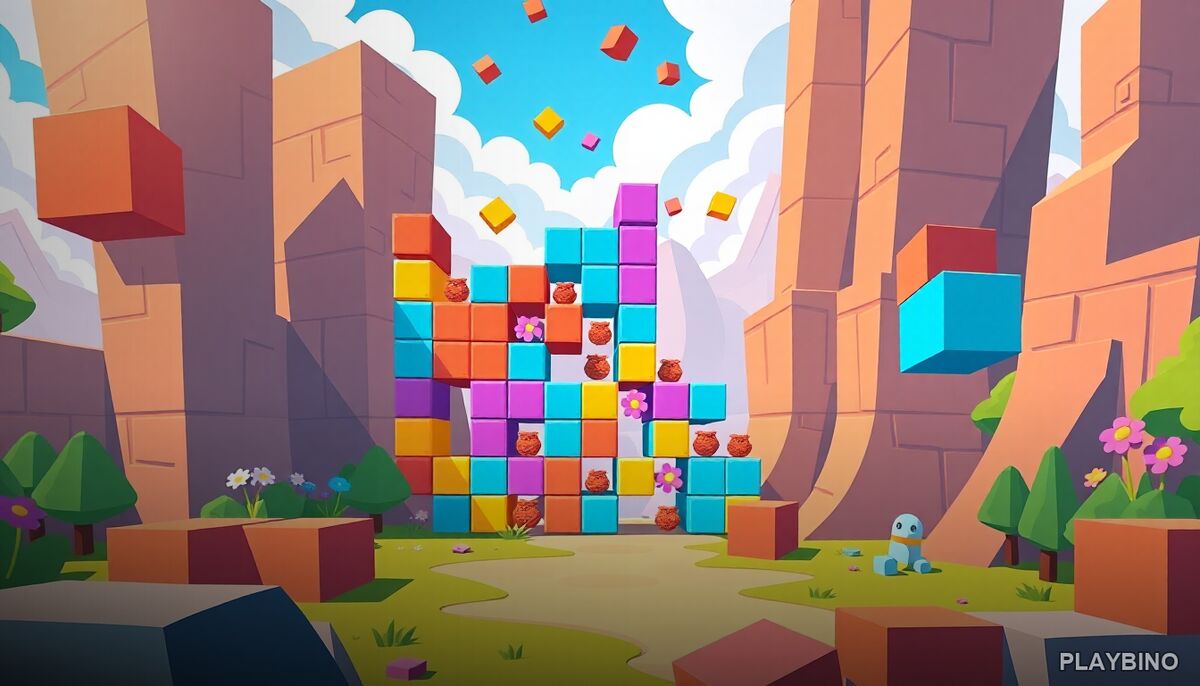
BlocksEliminate drops you onto a grid packed with colored blocks and asks a simple question: how many can you clear before you run out of moves? The answer depends almost entirely on how you think. This is a match-3 puzzle game at its core, but the mechanics lean more toward strategy than speed. There are no timers pushing you into panic mode. Instead, the pressure comes from the board itself — every click reshapes what's available, and a careless move can fragment the grid into clusters too small to remove.
You can play it directly in your browser without downloading anything, making it easy to pick up between tasks or during a break.
How the Matching System Works
The rule is straightforward: click any group of two or more adjacent blocks that share the same color, and they disappear. The blocks above fall down to fill the gap, and new patterns emerge. What makes this interesting is the scoring curve. Small clusters of two or three blocks remove pieces from the board, but they don't reward you generously. Larger groups — five, eight, ten blocks or more — multiply your points significantly.
Why Cluster Size Matters
The scoring system actively punishes impatience. Clearing a group of two might feel productive, but it often breaks apart a larger formation that was one or two moves away from collapsing together. The players who reach high scores on the leaderboard are usually the ones who hold back, scan the board carefully, and wait for the right moment to trigger a large elimination.
Chain Reactions
Sometimes a well-placed click does more than remove one cluster. When blocks fall after a removal, they can land next to matching colors and create secondary groupings. These chain reactions are the most satisfying moments in the game — a single move clears a massive section of the board and sends the score climbing. Setting up chains deliberately is an advanced skill, but even accidental ones feel rewarding.
Reading the Board
As levels progress, the grid becomes denser and the color distribution more complex. Early stages let you experiment freely, but later patterns demand real planning. Before clicking anything, it helps to scan the entire board and identify which color groups are largest, which clusters are isolated, and where a removal might cause useful collapses versus dead-end fragments.
A useful habit is to look for blocks that act as connectors — single pieces sitting between two larger groups of the same color. Removing a small cluster nearby can shift those connectors into alignment and unlock a much bigger move. Candy Shuffle, another color-matching puzzle worth exploring, uses a different approach to grid clearing that can sharpen your pattern recognition in a complementary way.
Scoring and Leaderboard Competition
BlocksEliminate includes a leaderboard, which adds a competitive layer to what might otherwise feel like a solo puzzle exercise. Competing for a high rank means optimizing every decision — not just clearing the board, but clearing it efficiently with the largest possible clusters. Two players can finish the same level with very different scores depending on how they grouped their eliminations.
- Prioritize large color groups over small isolated clusters
- Look for chain reaction setups before committing to a click
- Avoid splitting connected color regions unnecessarily
- Save difficult corners for last when other options are still open
Who This Game Suits
BlocksEliminate works well for anyone who enjoys logic-based puzzles with a scoring incentive. The match-3 format is familiar, but the strategy layer gives it more depth than a typical casual game. There's no reflex requirement — success comes from observation and planning rather than fast clicking. Players who enjoy optimizing outcomes, finding hidden patterns, or competing on leaderboards will find consistent reasons to replay. PlayBino hosts the game alongside a range of other browser puzzles, so it fits naturally into a longer session of casual strategy play.