Chicken Wars: Merge Guns – Tower Defense Strategy with a Twist
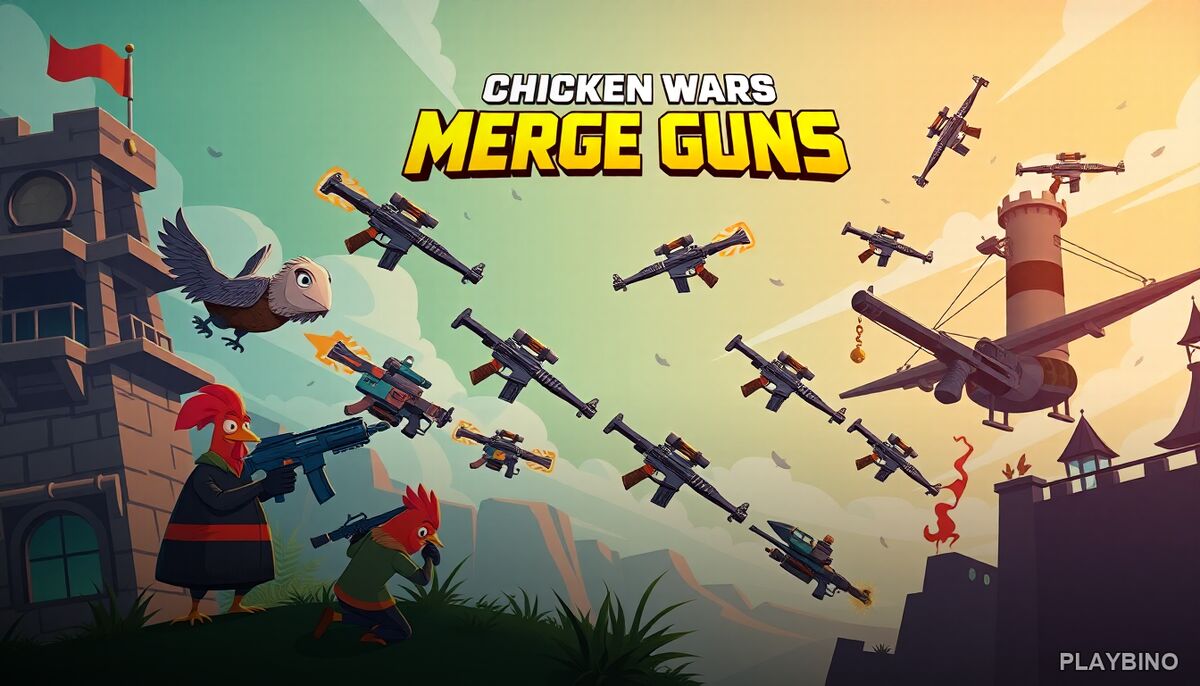
A Tower Defense Game Built Around Merging
Most tower defense games ask you to place units and wait. Chicken Wars: Merge Guns adds a second layer that changes how every decision feels. You're not just defending a position — you're constantly combining identical chicken units to produce stronger defenders with better firepower and wider coverage. That merge mechanic turns a familiar strategy format into something that demands more active thinking throughout each wave. Play it directly in your browser and the dual-system design becomes clear almost immediately.
How the Merge System Works
The core loop is straightforward: drag two identical chicken units together and they combine into a single, more powerful version. That upgraded unit fires faster, covers more ground, or hits harder depending on the type involved. The catch is that merging reduces your total unit count on the field, which means you're temporarily weaker during the process.
Timing Your Merges
This trade-off is where the real strategy lives. Merging too aggressively during a heavy wave leaves gaps in your defense. Waiting too long means you're holding weaker units when tougher enemies arrive. Finding the right moment — usually during a brief lull between waves — becomes one of the most satisfying skills to develop.
Unit Variety
Different chicken types bring different attack patterns. Some focus on single-target damage, others hit multiple enemies in a spread. Understanding which units cover which angles matters more as the battlefield fills up and enemy paths become harder to manage with one defensive style alone.
Positioning and Coverage
Where you place units shapes how well your merges actually perform. A powerful merged unit placed in a poor spot may still miss half the enemies passing through. The battlefield layout pushes you to think about coverage zones, chokepoints, and which areas need consistent fire versus burst damage. Resource management ties directly into this — you can't always afford to fill every position, so prioritizing the right spots early prevents bigger problems later.
Enemy Wave Progression
Early waves introduce the mechanics gently. Enemies are slow, and there's room to experiment with merge timing and placement without heavy consequences. By the mid-game, wave composition shifts. Faster enemies, armored types, and mixed groups start appearing together, which forces you to reconsider defensive setups that worked fine a few rounds earlier. The escalation feels deliberate rather than punishing, giving you enough time to adapt before each new threat type becomes a serious problem.
- Early waves: slow enemies, good for learning merge timing
- Mid-game: faster and more varied enemy types
- Late waves: high-pressure situations requiring strong merged units and smart positioning
- Boss-style threats that stress-test your current setup
Why the Strategy Depth Holds Up
The merge mechanic paired with tower defense structure creates decisions that feel connected rather than isolated. Every merge affects your defensive shape. Every placement affects your merge options. That interconnection is what keeps the strategy layer interesting across multiple sessions rather than feeling solved after the first few waves. The colorful visuals and accessible controls keep things approachable, but the escalating complexity gives experienced strategy players something to work through.
If the merge-based combat in Chicken Wars appeals to you, Merge Shooter covers a similar concept from a different angle — worth exploring if you want another take on the mechanic. Both games are available on PlayBino and share the same satisfying loop of combining units to build stronger offensive power.
Who This Game Suits Best
Players who enjoy tower defense titles but want more active involvement during waves will find the merge system adds exactly that. The game doesn't require fast reflexes — it rewards planning, patience, and knowing when to hold back versus when to upgrade. If you've grown comfortable with static tower defense formats and want something that keeps you engaged between waves, the merge layer here makes a real difference to how the game feels from start to finish.