Color Rings Block Puzzle: Strategy, Placement, and Grid Survival
What You're Actually Doing
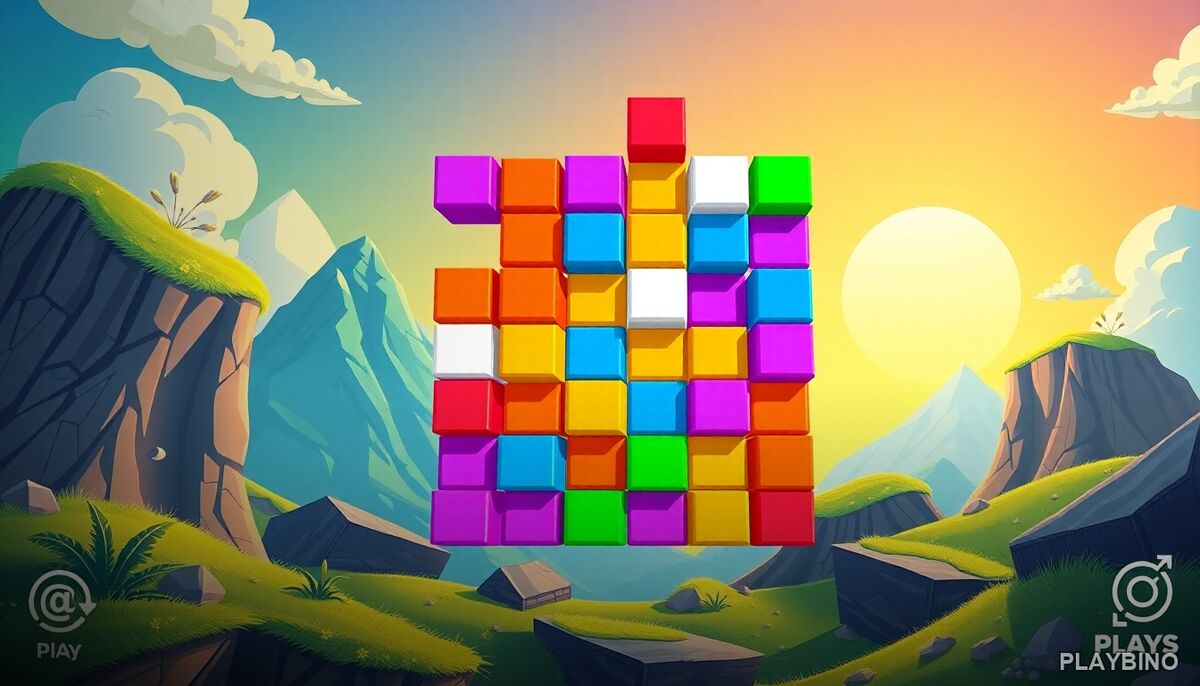
The premise is straightforward: drag colored block shapes onto a grid, fill complete horizontal or vertical lines, and watch them clear. But this browser puzzle quickly reveals that simple rules don't mean simple decisions. Every piece you place affects where the next three can go, and the grid has no mercy for careless moves.
There's no time pressure. No countdown. The challenge comes entirely from spatial logic — figuring out which shape goes where before the board locks up completely.
Placement Without Rotation
One rule changes everything: blocks cannot be rotated. You work with each piece exactly as it appears. That constraint forces you to think differently than in most block puzzles. You can't save a bad position by flipping a shape. If a long horizontal piece appears and your rows are fragmented, you need to find a column that actually fits it — or accept that it's going to cost you space.
Reading the Upcoming Pieces
At any point, you can see the next pieces waiting to be placed. This is where most of the real strategy lives. Before committing to a placement, scan what's coming. A wide piece followed by a tall piece needs different preparation than two compact shapes in a row. Players who ignore the queue tend to run out of room faster.
Keeping Corridors Open
One practical habit: resist the urge to fill the grid edges first. Edge-heavy play tends to create isolated pockets that are hard to clear. Keeping at least two or three open columns and rows in the center gives you flexibility when awkward pieces arrive.
How Scoring Works
Points come from clearing lines. A single line cleared at once gives a base score, but clearing multiple lines simultaneously multiplies the reward. This creates a meaningful tension: you could clear lines one at a time to stay safe, or hold off and set up a multi-line clear for bigger points. The risk is that holding off requires more precise placement, and a mistake during that setup can leave you stuck.
When the Grid Gets Crowded
The puzzle doesn't introduce new mechanics as it progresses — it just gets harder through density. As the grid fills, each new piece has fewer valid landing spots. A shape that seemed easy to place ten moves ago might now have only one legal position, and that position might block two future placements. This compression is what makes the game genuinely demanding as a brain and logic challenge.
The game ends when no incoming piece can be placed anywhere on the board. There's no dramatic countdown — the board simply runs out of room. Recognizing when you're approaching that state, and trying to buy more moves through smart clearing, is the core loop.
Who Plays This Kind of Puzzle
- Players who enjoy spatial reasoning without time limits
- Anyone who likes block-drop mechanics but wants more planning depth
- Logic puzzle fans looking for a single-player brain challenge
- Casual players who prefer short sessions with a clear goal
Food Blocks Puzzle takes a similar approach to grid-based block placement — that puzzle challenge is worth a look if this style of spatial logic appeals to you.
Strategy That Actually Helps
A few habits separate longer runs from short ones. First, prioritize clearing lines over placing pieces in comfortable spots. Second, always check the full queue before placing anything. Third, when the grid is more than two-thirds full, switch to defensive mode — focus on clearing rather than scoring big combos.
Color Rings Block Puzzle, available on PlayBino, rewards patience more than speed. The players who last longest are the ones who slow down, read the board, and resist placing pieces just to place them.
"