Doomsday Zombie TD: Strategy Guide for Surviving Every Wave
What You're Up Against
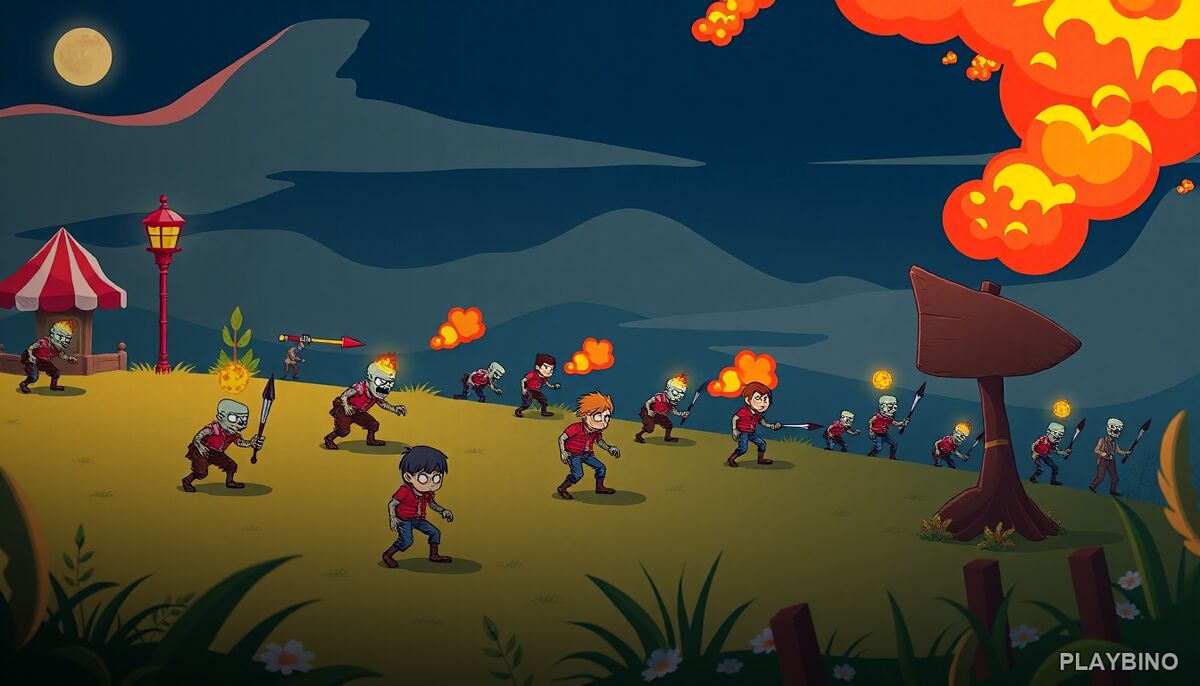
The undead don't wait. From the first wave, Doomsday Zombie TD drops you into a resource-tight scenario where every placement decision carries weight. You're managing a perimeter, watching approach paths, and trying to stretch limited funds across towers that need to cover as much ground as possible. The pressure is immediate, and it only compounds as rounds progress.
This is a strategy-heavy tower defense experience where zombie hordes grow larger and tougher with each passing wave. If you want to take on the full challenge, the game runs directly in your browser with no download required.
Tower Placement and the Spatial Puzzle
Placement is the core mechanic here. Each defensive structure covers a specific range, and how you arrange them across the battlefield determines whether you create overlapping kill zones or leave dangerous gaps. Choke points matter. Funneling zombies through narrow paths where multiple towers can fire simultaneously is the foundation of any strong defense.
Covering Weak Points
As waves escalate, the zombie types change. Some move faster, some absorb more damage, and some seem designed specifically to expose the gaps in a layout you thought was solid. Reinforcing weak flanks between waves is just as important as building new towers. Ignoring a side route because it looked quiet in round three can cost you the run by round eight.
Resource Management
Every tower costs resources, and you rarely have enough to do everything at once. Prioritizing which structures to place first, and which upgrades to delay, is a constant balancing act. Spending too aggressively early leaves nothing for emergencies. Being too conservative means your towers can't handle the volume when the horde scales up.
Upgrading Between Waves
The window between attacks is where long-term strategy takes shape. Upgrading existing towers increases their damage output, range, or fire rate depending on the structure type. A well-upgraded tower in a high-traffic corridor can outperform three under-leveled ones spread across the map. Identifying which towers are doing the most work and investing in them first tends to produce better results than spreading upgrades evenly.
How Difficulty Scales
The game doesn't plateau. Each new wave introduces more zombies, and the composition shifts to include tougher variants that resist the defenses you've already built. This forces adaptation rather than repetition. A static setup that cleared wave five comfortably may buckle under wave ten without adjustments. The strategy layer deepens the longer a run lasts.
- Early waves: establish coverage across main approach paths
- Mid waves: upgrade high-traffic towers and plug side-route gaps
- Late waves: reinforce against fast or armored zombie types
- Crisis moments: recruit defensive units to hold critical points temporarily
Who This Game Suits
Players who enjoy deliberate, map-aware strategy will find a lot to work through here. The zombie theme adds urgency and visual tension without overwhelming the core mechanics. If the tower defense format appeals to you, Tower Defenders — another browser game built around defensive strategy — covers similar ground with its own mechanics worth exploring.
Doomsday Zombie TD rewards patience and planning over reflexes. It's the kind of game where a failed run teaches you something concrete about what to do differently next time, and that loop of adjustment and retry is what keeps the format engaging on PlayBino.