Friends Battle TNT: Two-Player Explosive Arena Action
What Kind of Game Is This?
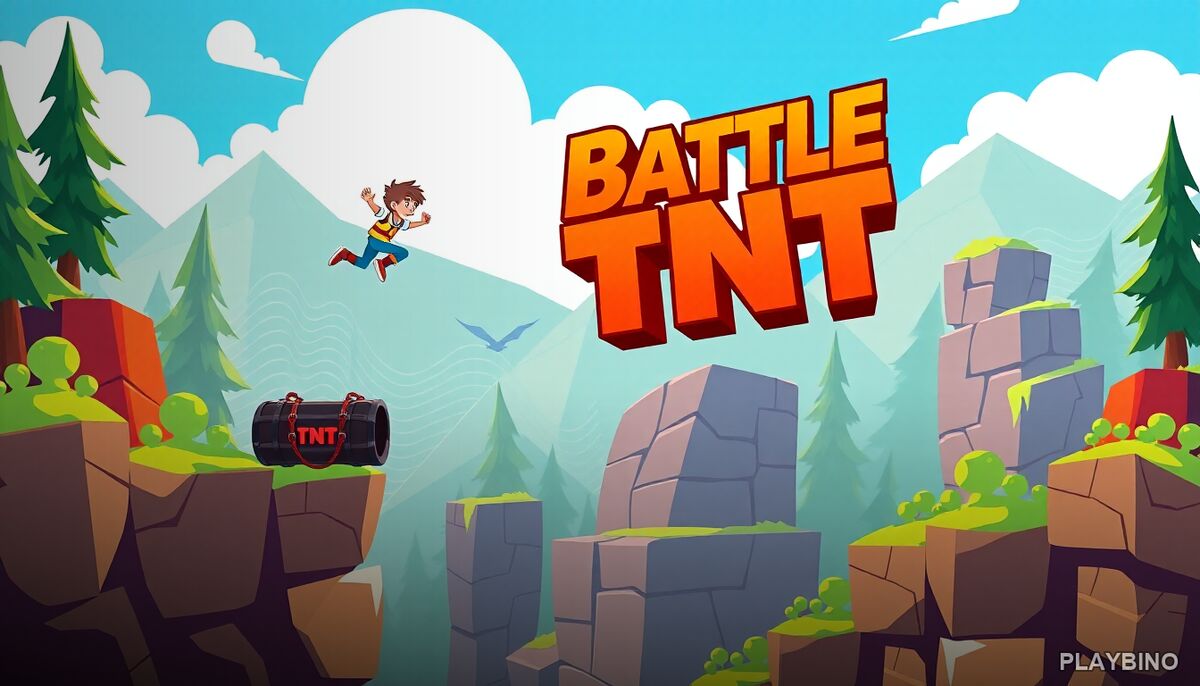
Friends Battle TNT is a local two-player action game built around one simple but surprisingly tense mechanic: TNT crates fall from the sky, and whoever catches twenty of them first wins. Red and blue characters jump around a shared arena, competing directly for the same explosive barrels. There are no health bars, no weapons, and no complex menus. Just two players, falling crates, and a scoreboard climbing toward twenty.
The format is stripped down by design, and that simplicity is exactly what makes each round feel immediate. You can play it directly in your browser without any setup, which makes it an easy pick for a quick competitive session with someone nearby.
How the Catching Mechanic Works
TNT crates appear at random positions across the arena and drop downward. Both players must jump to intercept them before they hit the ground or before the opponent gets there first. The randomness of spawn positions means neither player can settle into a comfortable corner and wait. You have to move constantly, read where the next crate is falling, and commit to the jump.
Timing Over Speed
Raw movement speed matters less than anticipating where the next barrel will land. A player who watches the spawn pattern and positions early will often beat a faster-reacting opponent who waits too long. This gives the game a light strategic layer underneath the chaotic surface.
Contested Catches
When both players leap for the same crate simultaneously, only one gets the point. These contested moments are the emotional core of the game. A well-timed jump that steals a crate from directly under your opponent feels genuinely satisfying, and losing one you were certain about creates instant motivation to push harder.
Arena Feel and Match Pace
Matches move fast. Because the target score is twenty catches, rounds rarely drag on. The scoreboard pressure builds quickly once one player starts pulling ahead, and the trailing player has to take more risks to close the gap. There is no comeback mechanic beyond simply outplaying your opponent in the remaining catches, which keeps the tension honest.
The arena itself is compact enough that both players are always visible and relevant. There is no hiding or stalling. Every second involves a decision about where to move next.
PvP Strategy at a Glance
- Watch the top of the screen for incoming crates rather than tracking your opponent's position exclusively.
- Position yourself near the center when possible to cover more of the arena with a single jump.
- If your opponent is ahead, prioritize contested catches over safe ones to slow their progress.
- Avoid committing to a jump too early when two crates drop close together.
- Short bursts of aggression near the end of a match can flip the result quickly.
Who Plays Best With This Format
Friends Battle TNT works best as a same-device competitive game between two people in the same room. The controls are simple enough that anyone can pick it up immediately, but the competitive tension rewards players who start reading patterns and making smarter positioning choices. It fits naturally into a short gaming session where you want something quick, direct, and repeatable.
The Friends Battle series on PlayBino follows this kind of head-to-head structure across different themes. If the TNT format appeals to you, another competitive entry in the series takes the same two-player rivalry into melee combat territory with a different set of mechanics to learn.
Replay Value and Round Structure
Because matches are short and outcomes can shift quickly, the natural response after losing is to play again immediately. The randomized crate spawns prevent any single strategy from dominating across multiple rounds, which keeps the competition from going stale. Two evenly matched players will find that results stay unpredictable across many sessions, which is exactly what a local PvP game needs to stay engaging over time.