Funky Bottle: Timing, Physics, and the Art of the Perfect Jump
What Kind of Game Is This?
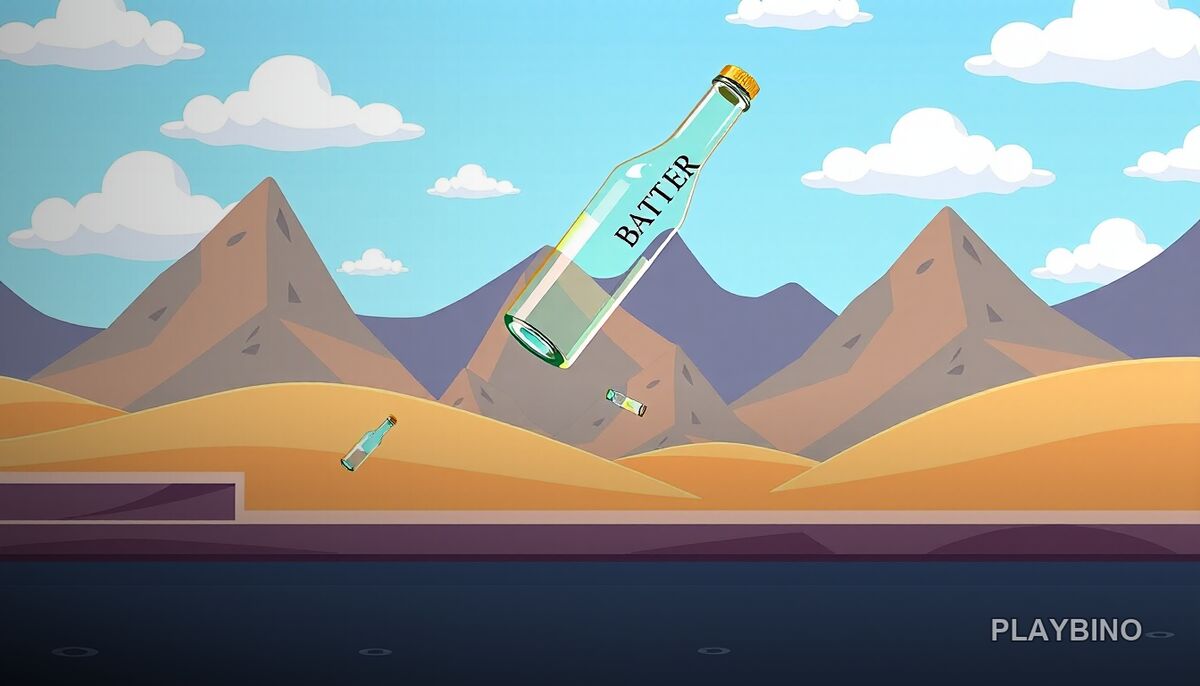
At first glance, Funky Bottle looks like a simple hopping game. A glass bottle, a series of platforms, and one goal: get across without shattering. But within a few attempts, the real challenge becomes clear. The physics engine gives the bottle genuine weight and wobble, and every landing feels like a small negotiation between momentum and fragility. This browser arcade challenge sits comfortably at the intersection of puzzle thinking and reflex-based skill.
The Core Mechanic: Force Control
The entire game revolves around one variable — how much force you apply to each jump. Too little and the bottle drops short of the platform. Too much and it hits hard, shatters, and you restart. There is no margin for carelessness.
What makes this interesting is that the correct force is never the same twice. Platform height, gap distance, and the angle of approach all affect how the bottle lands. You are constantly recalibrating, building an instinct for what each situation requires.
Reading the Layout
Before jumping, it helps to scan the upcoming arrangement. Some platforms are close together and demand short, controlled hops. Others are spaced far apart or sit at awkward heights, requiring a stronger push with a softer arc. Rushing without reading the layout is the most common reason runs end early.
Landing Stability
The bottle tilts and wobbles on contact, which means even a technically good jump can go wrong if the landing angle is off. Learning to account for tilt — and sometimes using a slightly weaker jump to reduce bounce — becomes part of the skill set as levels get harder.
How Difficulty Scales
Early levels introduce the basic jump mechanic with forgiving platform spacing. As you progress, the arrangements grow more complex. Platforms become narrower, gaps widen, and obstacle placement forces you to think about trajectory rather than just distance. The puzzle element strengthens here — it stops feeling like pure reflex and starts requiring spatial reasoning about each sequence of moves.
This gradual escalation is one of the game's strengths. Nothing feels unfair. Every failed run teaches something specific about the physics, and that knowledge carries forward.
Visuals and Feedback
The colorful art style keeps things light despite the precision the game demands. Animations are smooth, and the shattering effect when a jump goes wrong is satisfying in a frustrating way — it communicates exactly what happened and why. That clarity of feedback is important in a skill-based arcade game. You always know what went wrong, which makes improvement feel achievable rather than random.
Who Plays This Well
Players who enjoy puzzle games with a physical component will find a lot to like here. The game rewards patience over speed. Rushing leads to broken glass. Taking a moment to judge each jump before committing is almost always the better approach. If you enjoy games that ask for precision and punish guesswork, the challenge here will feel satisfying rather than frustrating.
For a different kind of placement puzzle, Set The Box offers a comparable logic-based experience worth exploring alongside this one.
Tips for Longer Runs
- Start with a conservative force estimate and adjust upward only when the gap clearly demands it.
- Watch how the bottle wobbles on the previous landing — it gives clues about your current force calibration.
- On narrow platforms, aim for the center rather than the edge to reduce tilt risk.
- When a level feels impossible, slow down further. Most failures come from rushing, not from the game being unfair.
- PlayBino runs the game smoothly in-browser, so there is no loading friction between attempts — use that to stay in a rhythm.